ESP32-C5-Pico
- ESP32-C5-Pico (Onboard antenna)
- ESP32-C5-Pico-M (Onboard antenna - With pre-soldered header)
- ESP32-C5-Pico-U (External FPC antenna)
- ESP32-C5-Pico-UM (External FPC antenna - With pre-soldered header)
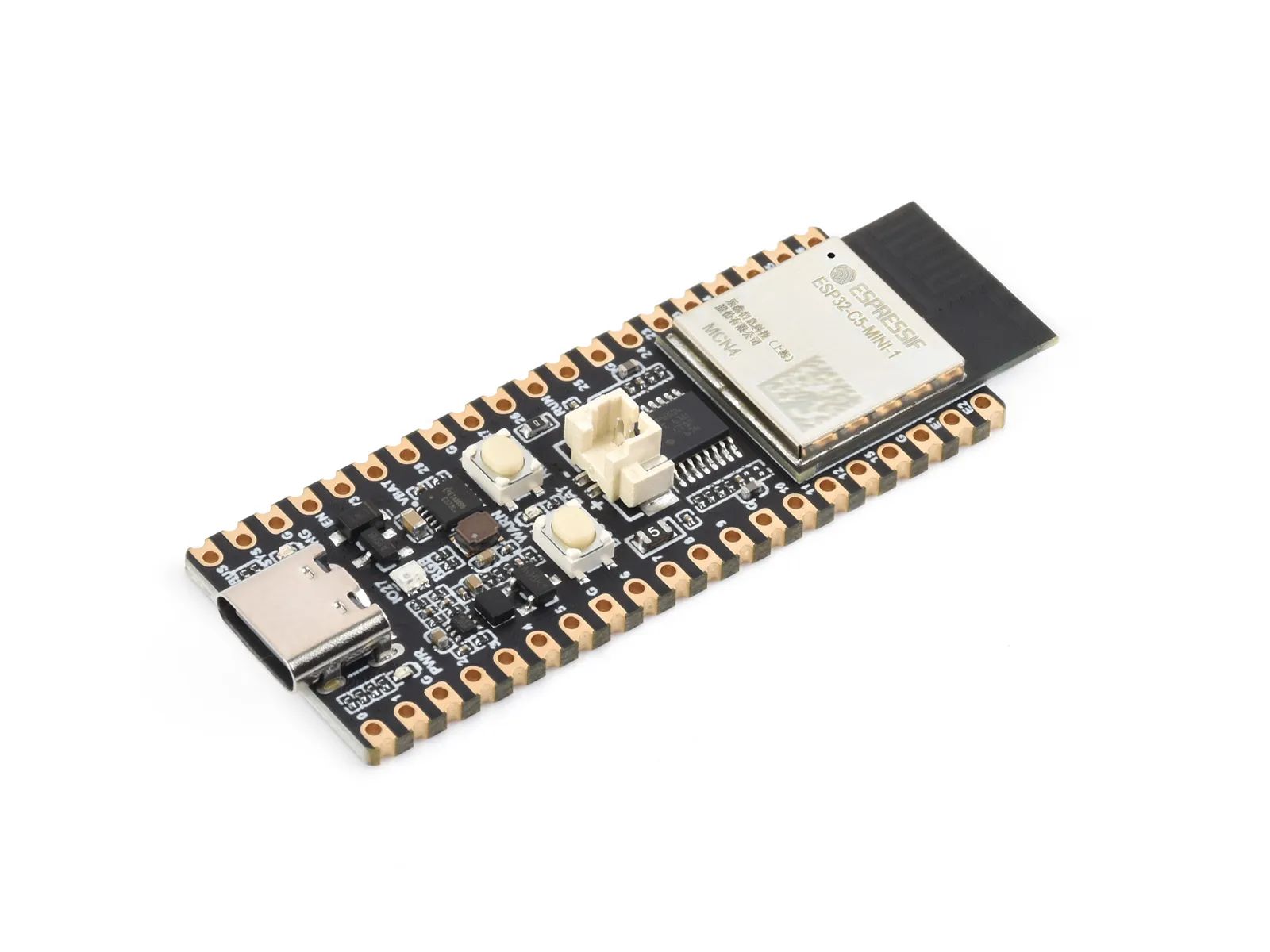
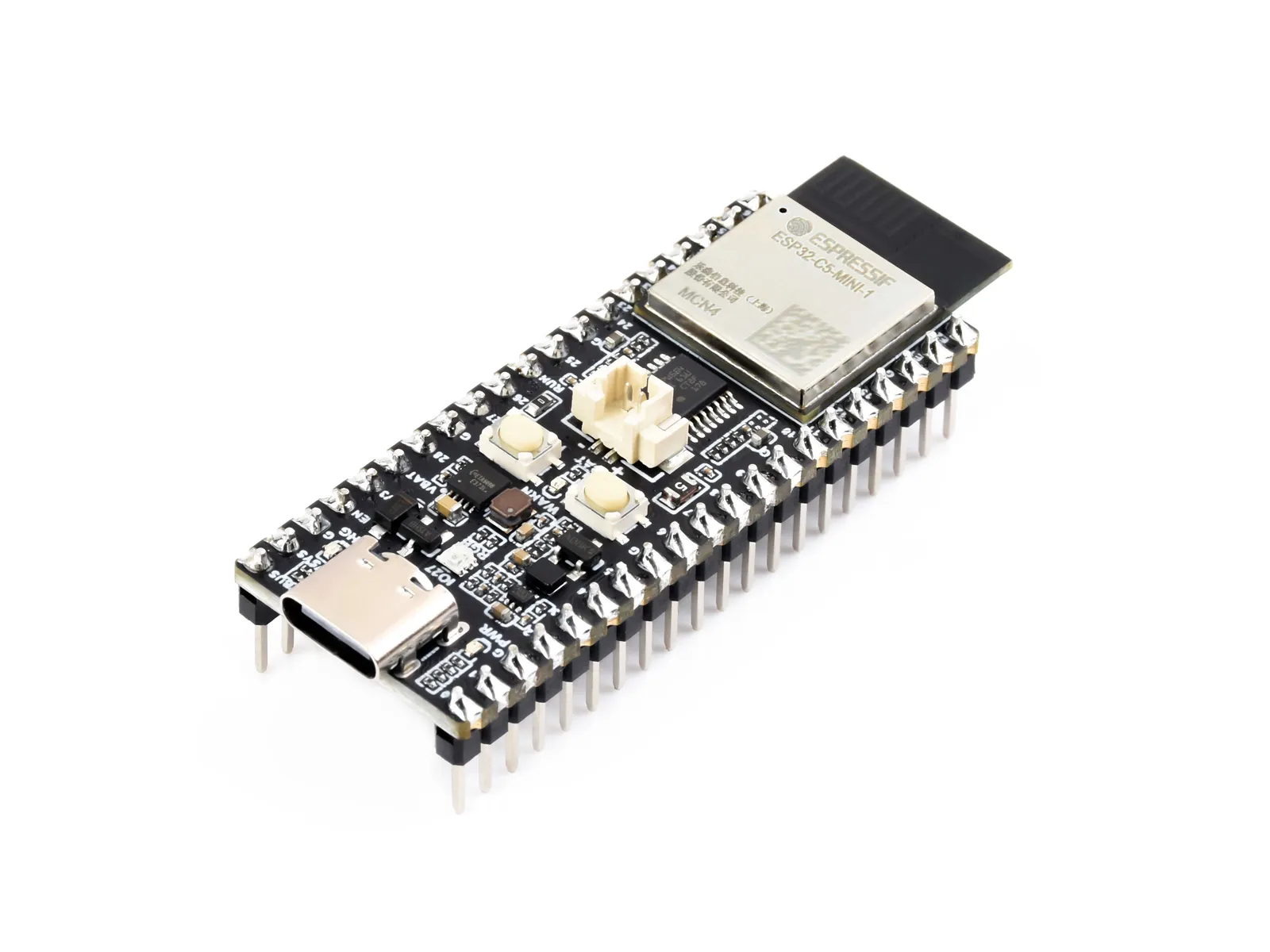
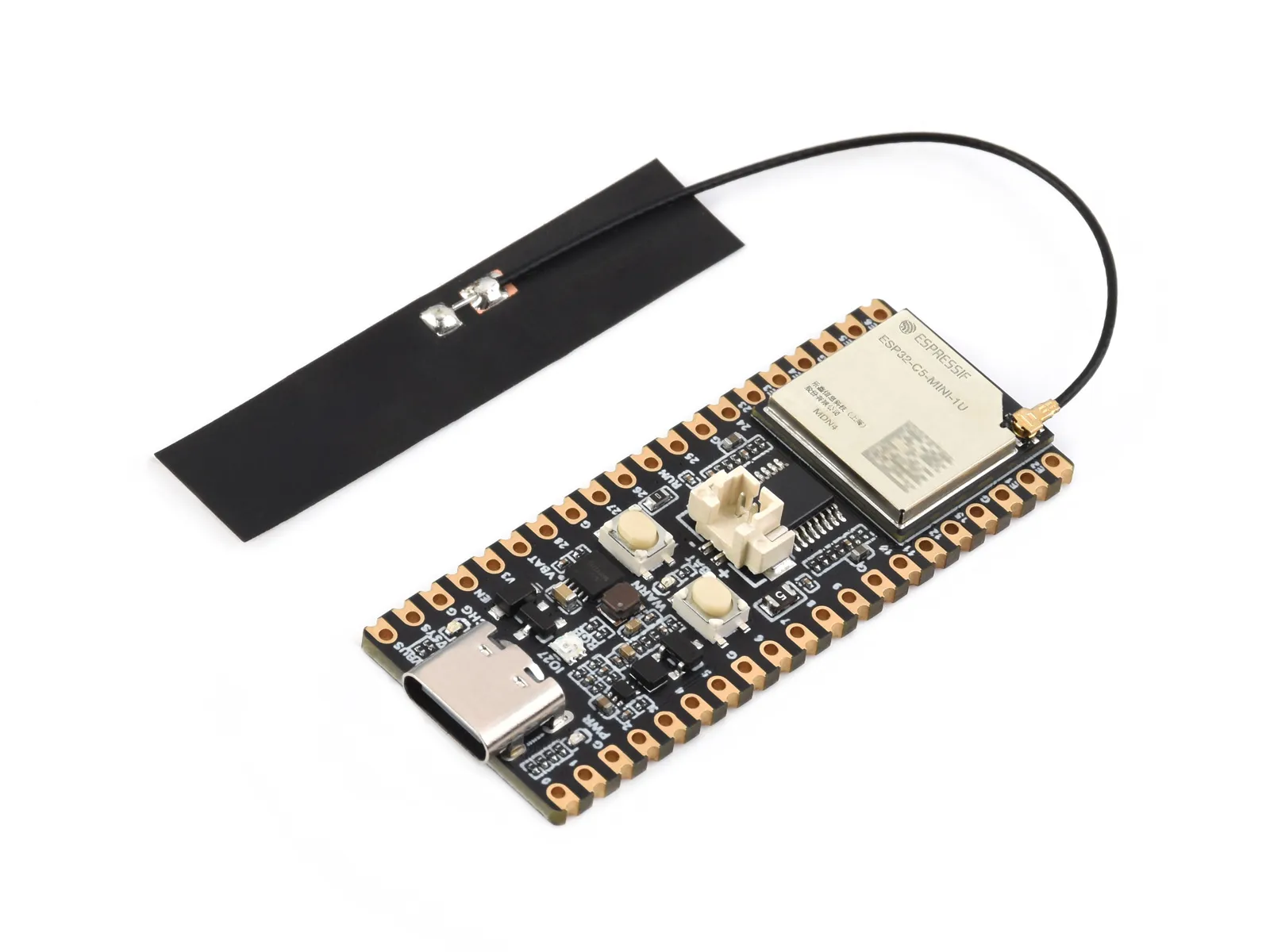
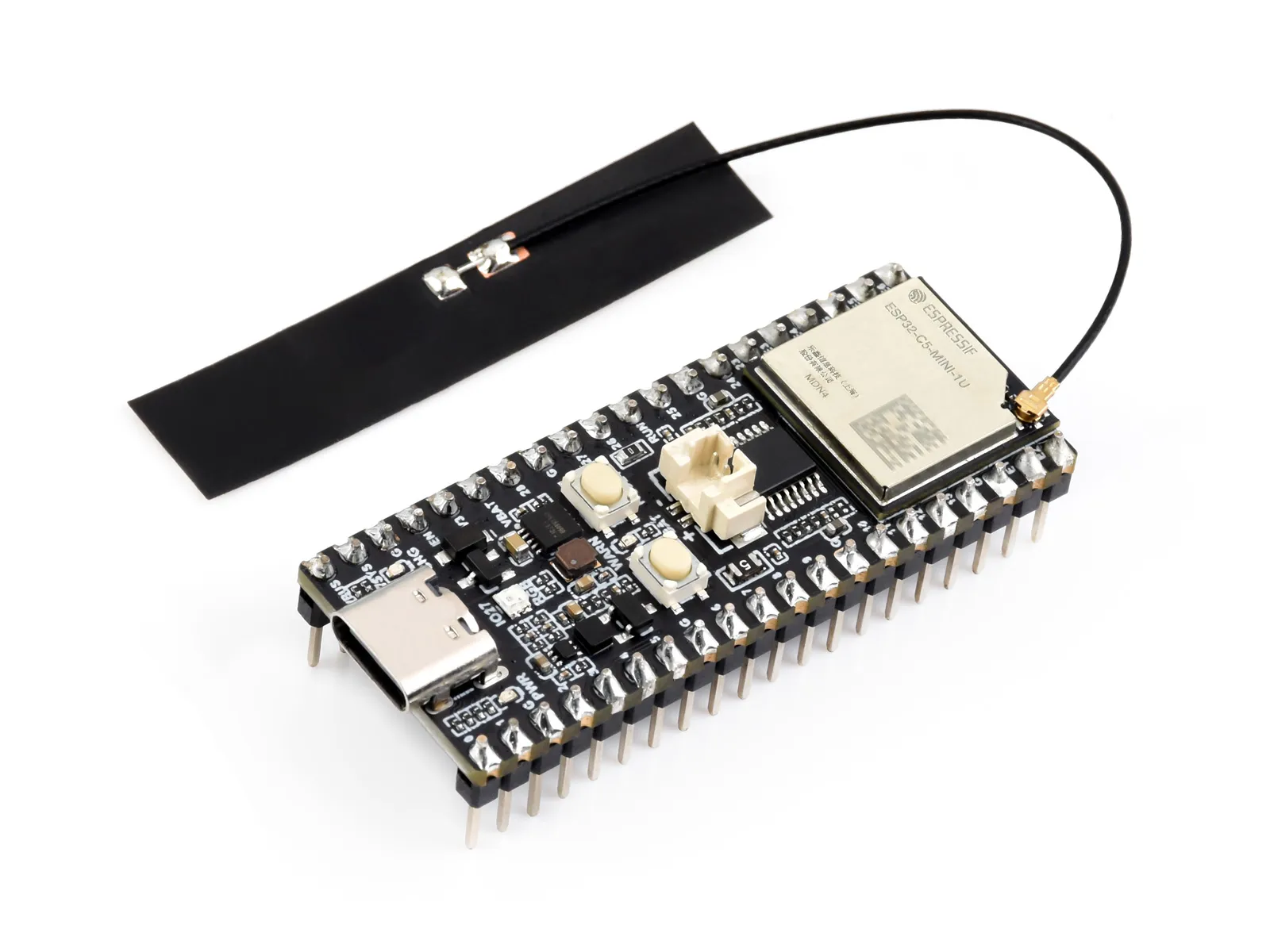
The ESP32-C5-Pico is a development board designed by Waveshare based on the ESP32-C5-MINI-1 module, targeting dual-band Wi-Fi and multi-protocol IoT gateway applications. The ESP32-C5 is Espressif's single-core RISC-V chip that supports Wi-Fi 6 dual-band (2.4 GHz and 5 GHz) and also integrates BLE 5, Zigbee, and Thread protocols, making it flexible for use as a smart-home hub or cross-protocol communication gateway. On the hardware side, it features a 240 MHz RISC-V processor, 384 KB SRAM, and 4 MB Flash, capable of stably handling concurrent multi-protocol stack tasks and moderate-load applications. Developers can leverage mature frameworks such as ESP-IDF or Arduino for rapid prototyping and product implementation, making it suitable for real-world IoT scenarios like smart gateways and multi-protocol device access.
| SKU | Product |
|---|---|
| 35342 | ESP32-C5-Pico |
| 35341 | ESP32-C5-Pico-M |
| 35532 | ESP32-C5-Pico-U |
| 35533 | ESP32-C5-Pico-UM |
Features
- Utilizes the ESP32-C5-MINI-1 series module, equipped with a RISC-V 32-bit processor running at up to 240MHz.
- Integrated with 384KB SRAM, 320KB ROM, and 4MB Flash
- Integrates dual-band 2.4GHz & 5GHz Wi-Fi, Bluetooth 5 (LE), and IEEE 802.15.4 (supporting Zigbee 3.0 and Thread) wireless communication, delivering excellent RF performance.
- Onboard battery charging management module, with a reserved 3.7V GH1.25 lithium battery interface for external battery power supply.
- Features a reversible USB Type-C connector.
- Exposes rich peripheral interfaces with a castellated module design, facilitating soldering and integration onto user-designed carrier boards.
- Supports various low-power operating states, allowing flexible adjustment between communication range, data rate, and power consumption to meet the power requirements of various application scenarios.
Resource Interface
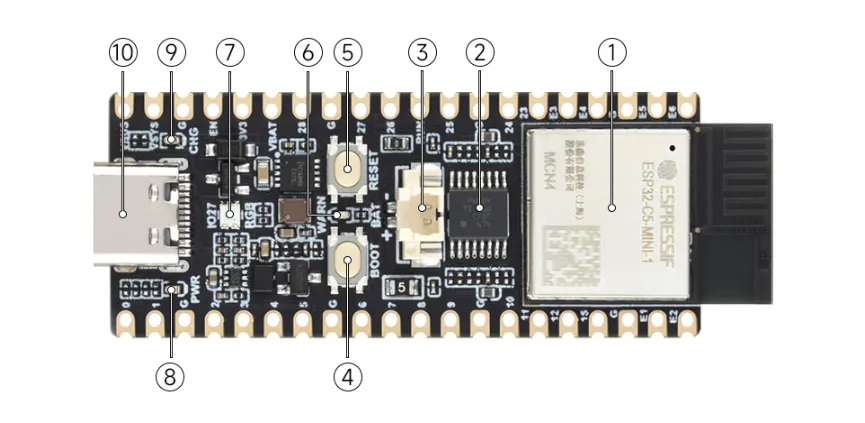
- ESP32-C5-MINI-1 module
- TCA9554PWR GPIO expander, providing 7 extra pins (E1-E7)
- 3.7V lithium battery header GH1.25 2P connector for connecting a 3.7V lithium battery, supports charging and discharging
- BOOT button Press while resetting to enter download mode
- RESET button Reset button
- Battery reverse polarity warning LED
- RGB indicator
- Power indicator
- Charging indicator
- USB Type-C port For program downloading and serial debugging
Dimensions
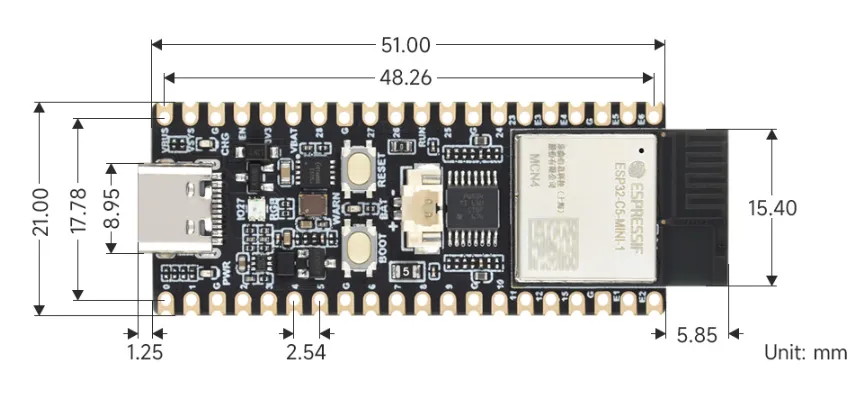
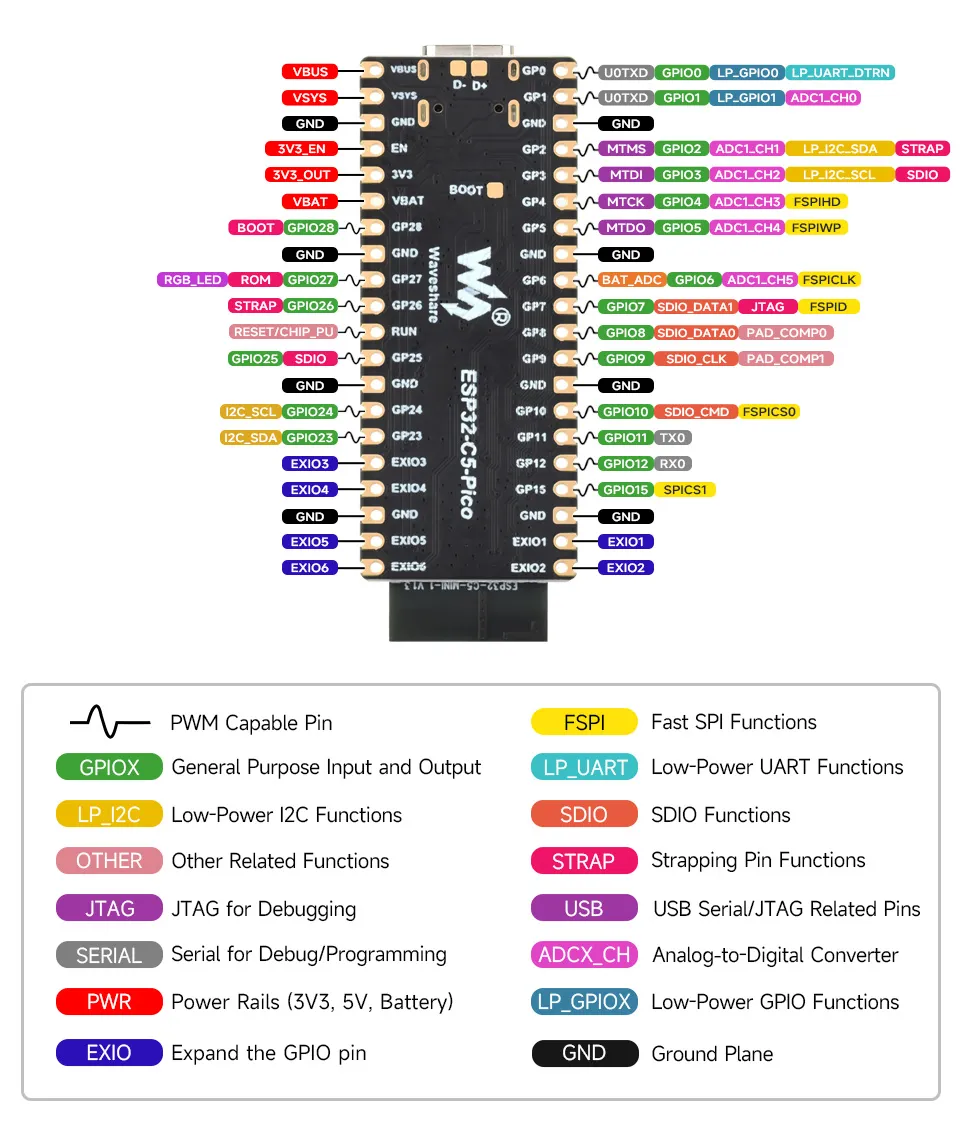
Pinout Definition
Development Methods
The ESP32 supports multiple development methods, allowing for professional development using the Espressif official ESP-IDF framework, or rapid prototyping using platforms like the Arduino IDE.
The main development platforms include:
-
ESP-IDF: Espressif's official development framework, specifically built for the ESP32 series chips, providing a complete development toolchain, code libraries, and documentation. It can fully leverage all the performance and features of ESP32 and is the preferred solution for professional development and commercial products.
-
Arduino: A well-known open-source hardware/software platform offering a simple and standard C++ interface, supporting numerous microcontrollers including ESP32. Arduino has rich libraries and examples, widely used in prototyping and education, and is a popular entry-level platform for beginners. For the development environment configuration, please refer to Working with Arduino page.
-
Other Development Methods: The ESP32 ecosystem is very rich. Beyond the platforms mentioned above, it also supports development via PlatformIO, ESPHome, and other tools, catering to developers with different technical backgrounds.