ESP32-C5-WIFI6-KIT
- ESP32-C5-WIFI6-KIT 16MB (With built-in antenna, without header)
- ESP32-C5-WIFI6-KIT 16MB (With built-in antenna, with header)
- ESP32-C5-WIFI6-KIT 32MB (With built-in antenna, without header)
- ESP32-C5-WIFI6-KIT 32MB (With built-in antenna, with header)
- ESP32-C5-WIFI6-KIT 32MB (With external dual-band Wi-Fi antenna, without header)
- ESP32-C5-WIFI6-KIT 32MB (With external dual-band Wi-Fi antenna, with header)
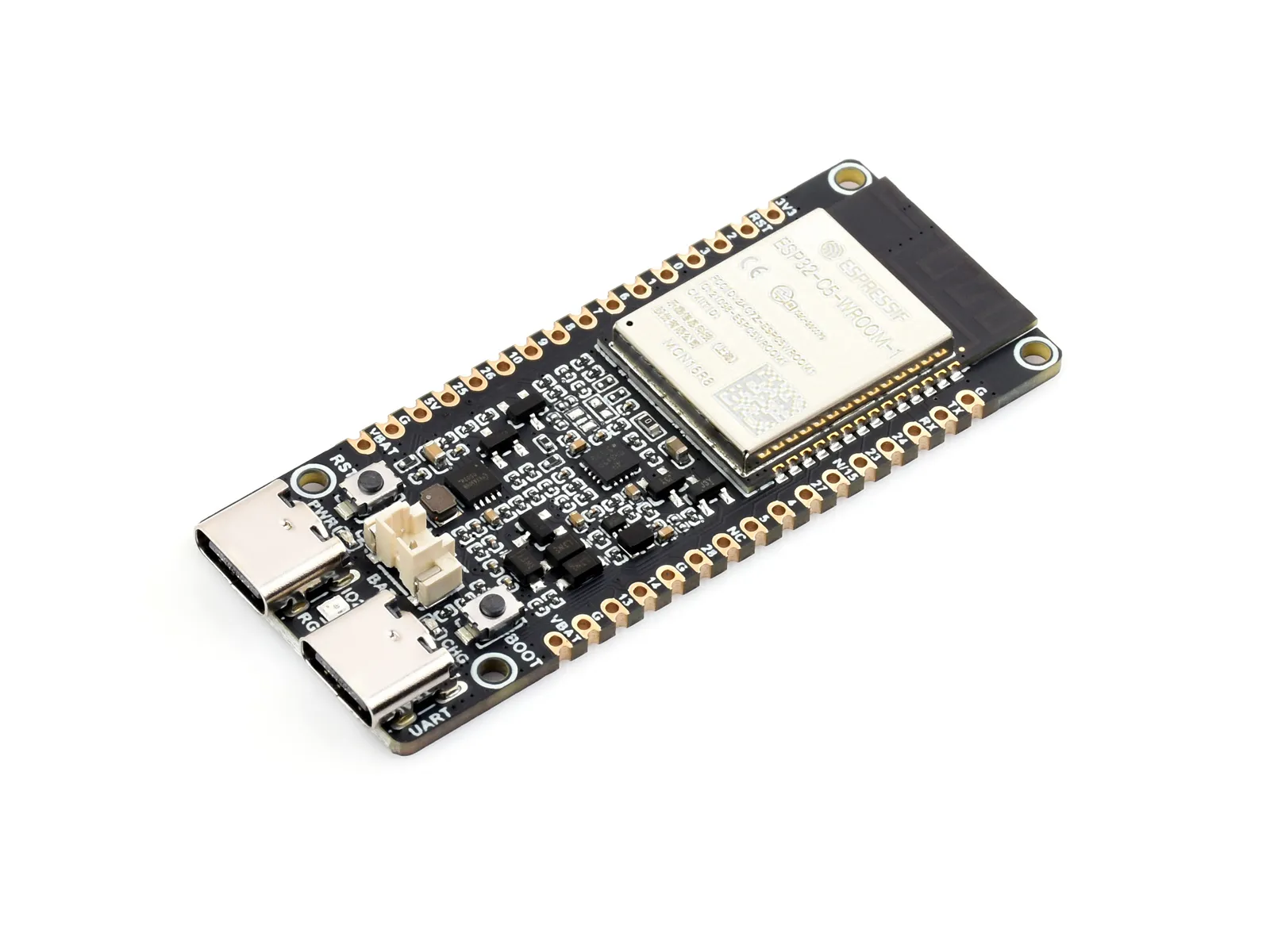
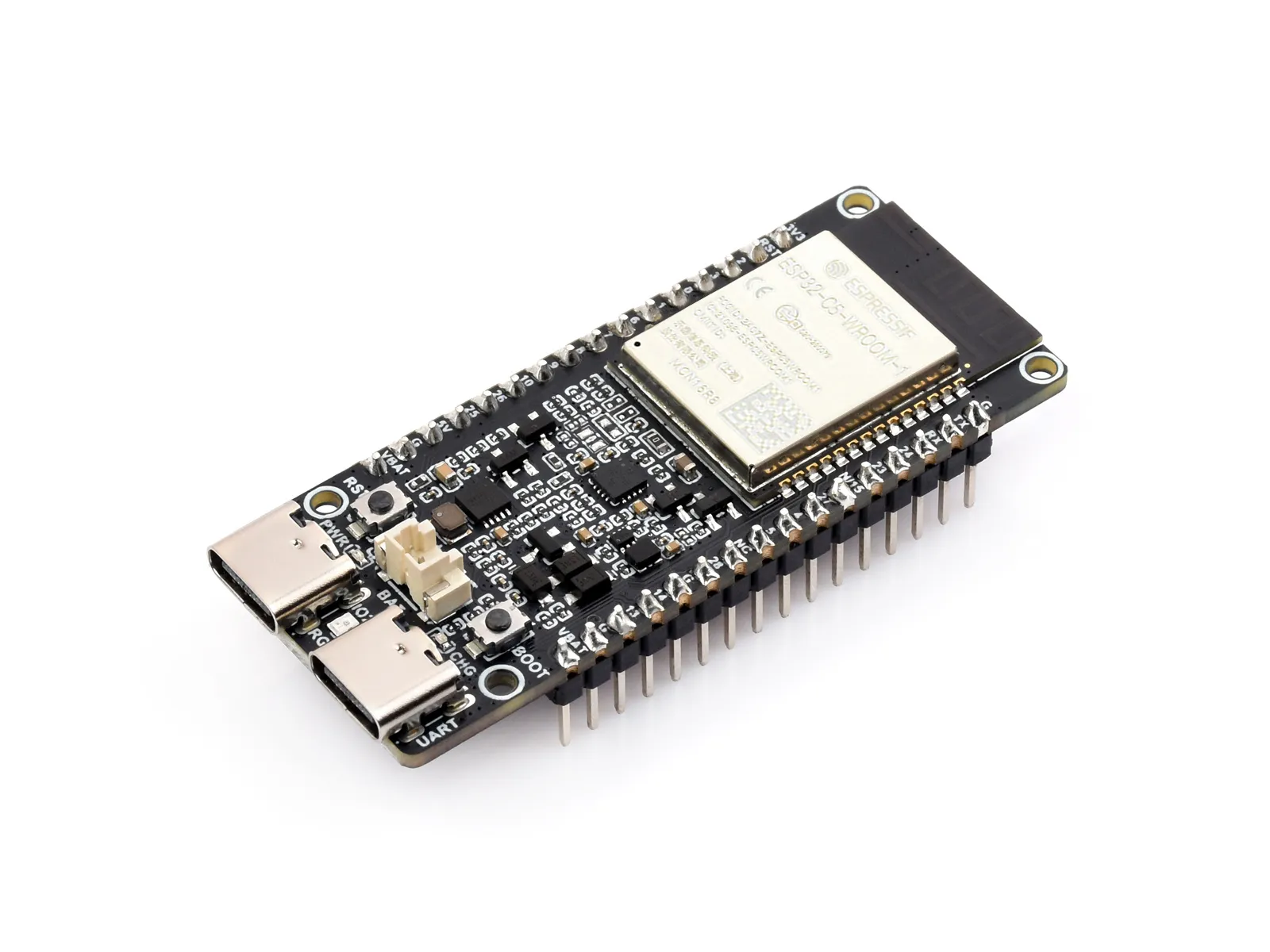
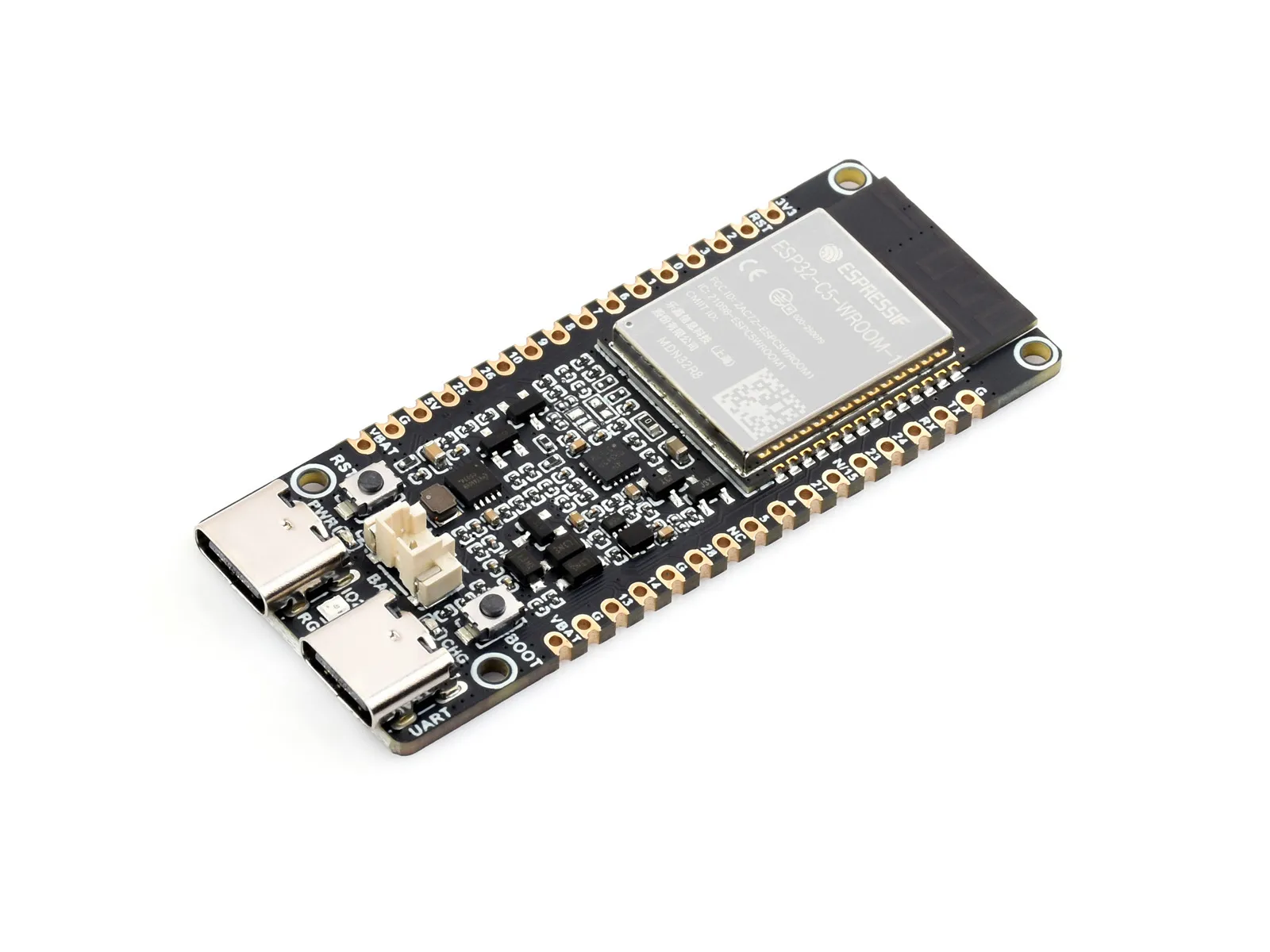
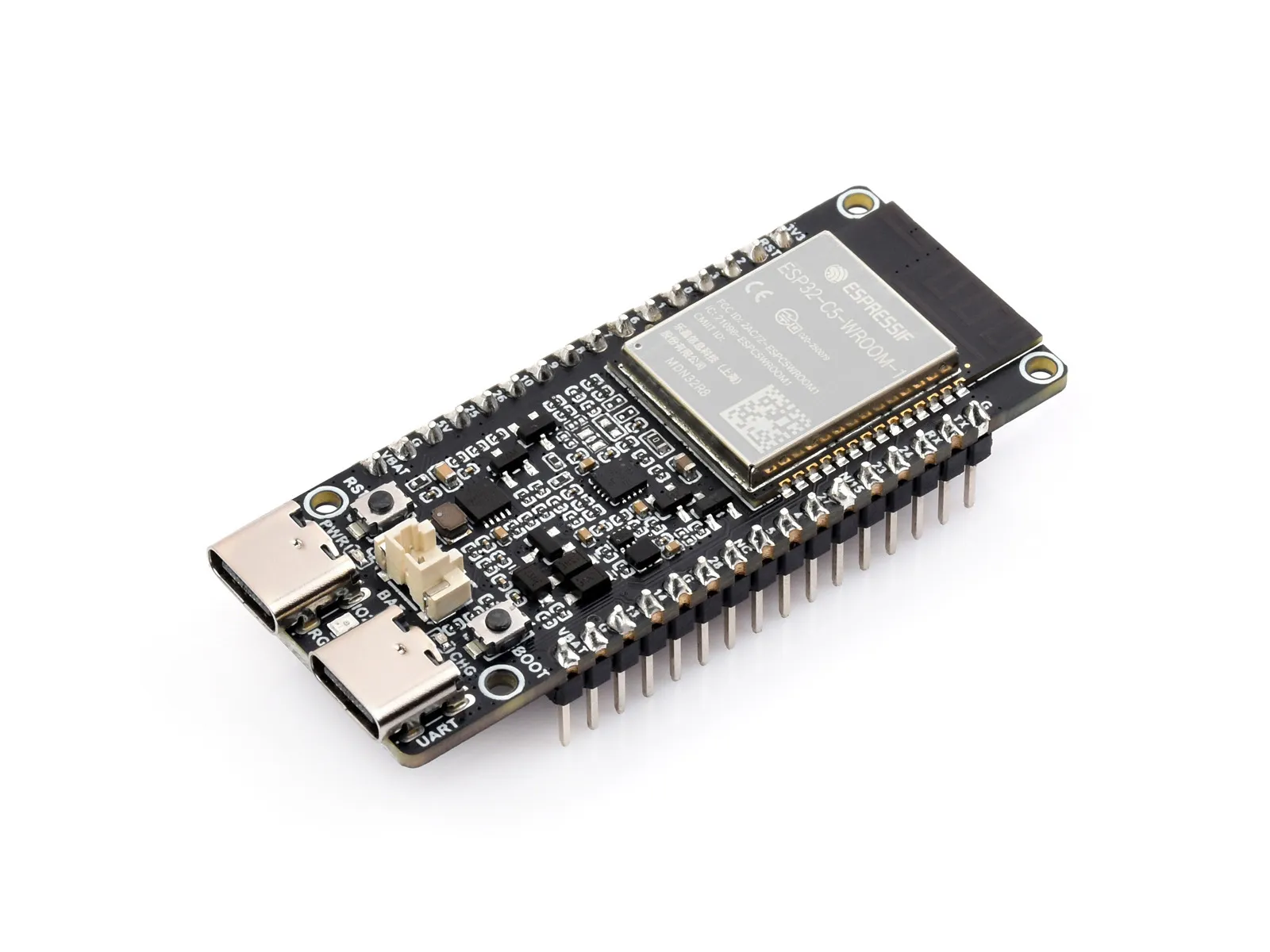
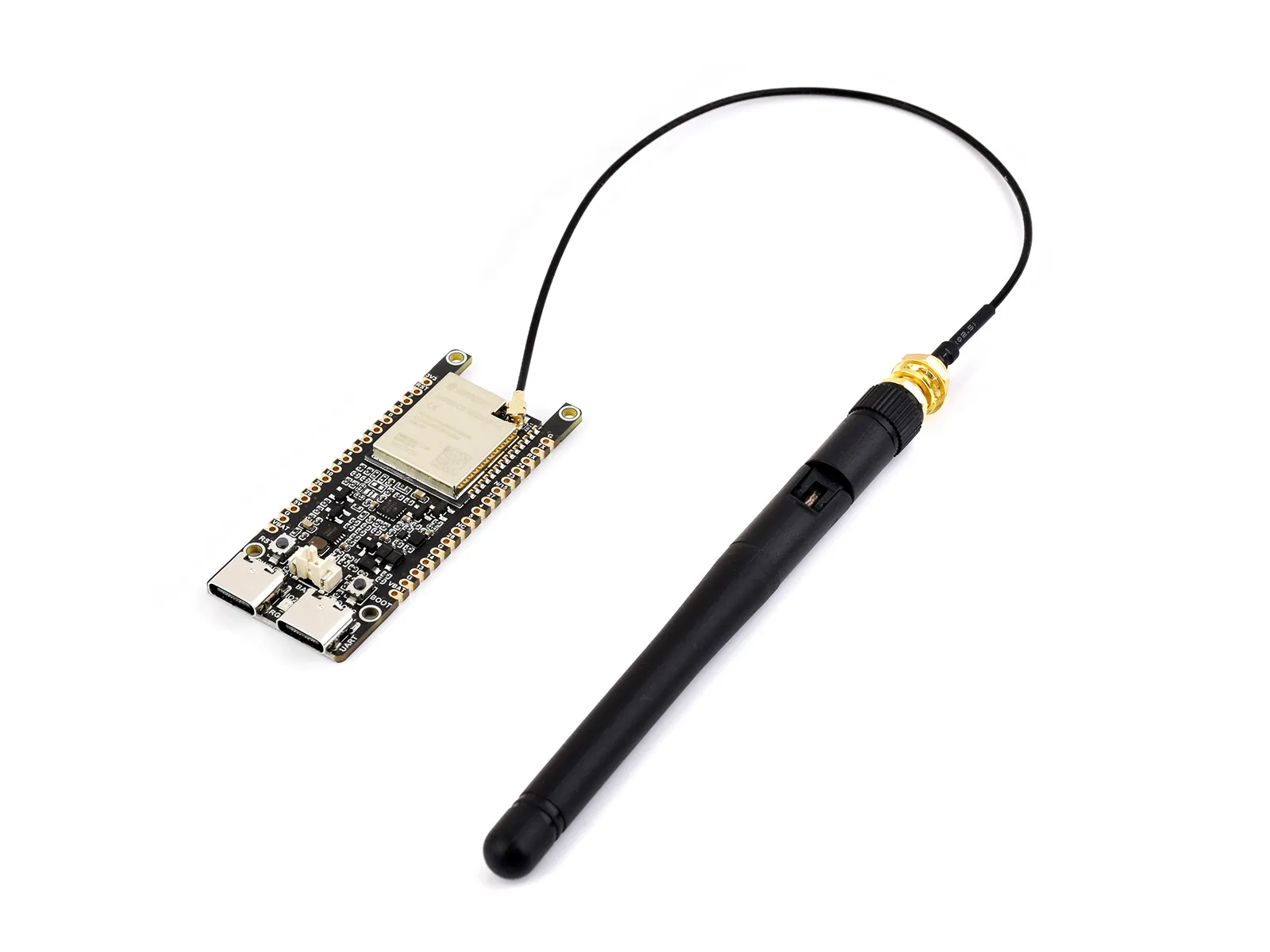
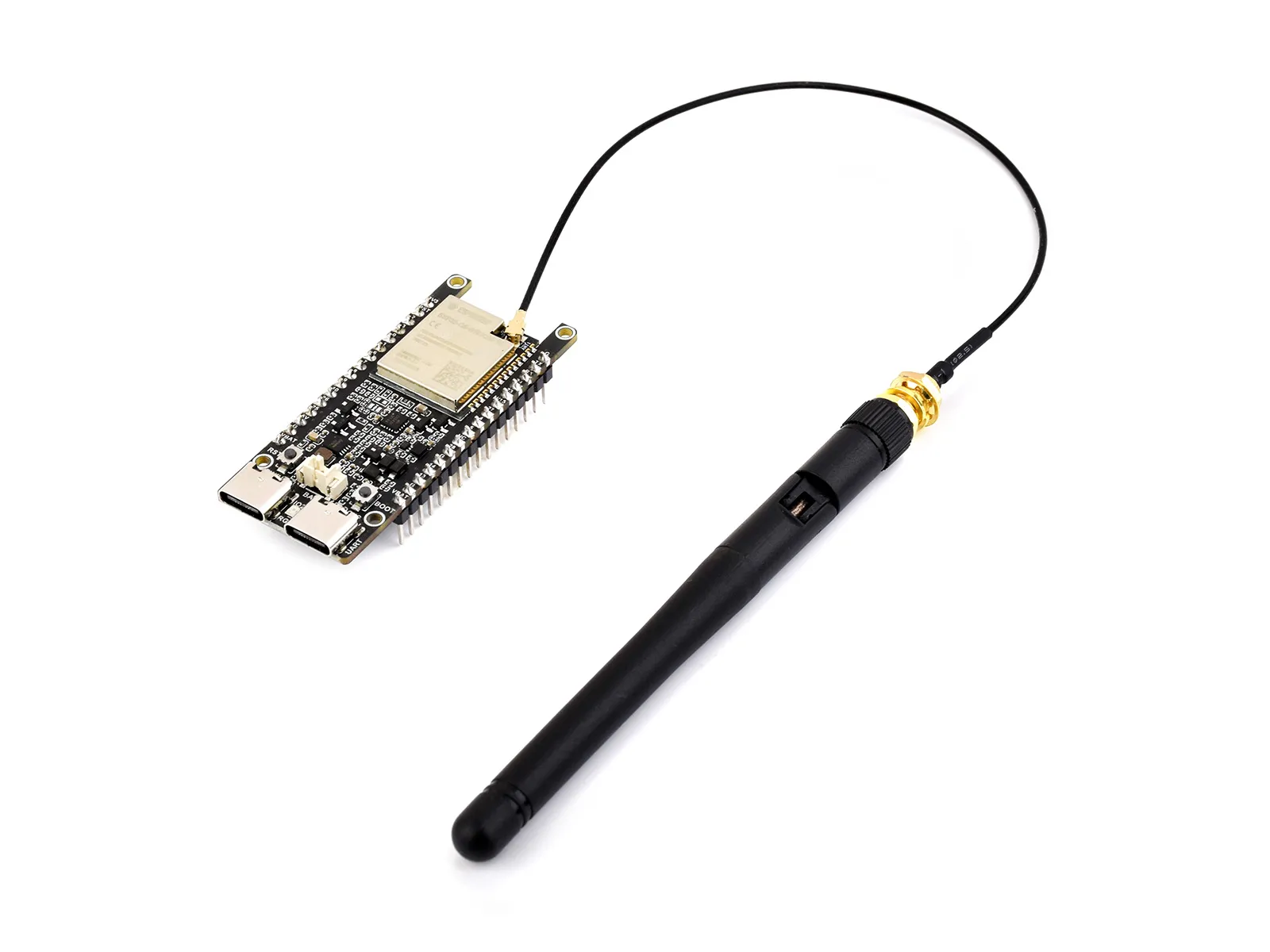
The ESP32-C5-WIFI6-KIT is a development board designed by Waveshare based on the ESP32-C5-WROOM-1 module for dual-band Wi-Fi and multi-protocol IoT gateway scenarios. The ESP32-C5 is a single-core chip by Espressif supporting Wi-Fi 6 dual-band (2.4GHz and 5GHz) RISC-V, which also integrates BLE 5, Zigbee, and Thread protocols, allowing it to be flexibly used as a smart home hub or cross-protocol communication gateway. On the hardware side, it features a 240MHz RISC-V processor, 384KB SRAM, 8MB PSRAM, and optional 16MB or 32MB Flash, capable of stably handling multi-protocol stack concurrent tasks and medium-load applications. Developers can quickly prototype and implement products with the help of mature development frameworks such as ESP-IDF or Arduino, which are suitable for practical IoT scenarios such as smart gateways and multi-protocol device access.
| SKU | Product |
|---|---|
| 32577 | ESP32-C5-WIFI6-KIT-N16R8 |
| 32470 | ESP32-C5-WIFI6-KIT-N16R8-M |
| 34454 | ESP32-C5-WIFI6-KIT-N32R8 |
| 34241 | ESP32-C5-WIFI6-KIT-N32R8-M |
| 34455 | ESP32-C5-WIFI6-KIT-N32R8-U |
| 34456 | ESP32-C5-WIFI6-KIT-N32R8-UM |
If you are looking for:
- Coding with AI tools: Click Ask AI and select an AI tool to ask questions about this page, or choose Copy page to copy its content and paste it into an AI tool for coding assistance.
- Schematics, datasheets, and example code: See Resources
- Arduino development: See Working with Arduino
- ESP-IDF development: See Working with ESP-IDF
- Troubleshooting: See Product FAQ or contact Technical Support
Features
- Utilizes the ESP32-C5-WROOM-1 series module, equipped with a RISC-V 32-bit processor running at up to 240MHz.
- Integrates 384KB SRAM, 320KB ROM, and 8MB PSRAM, with optional 16MB or 32MB Flash versions
- Integrates dual-band 2.4GHz & 5GHz Wi-Fi, Bluetooth 5 (LE), and IEEE 802.15.4 (supporting Zigbee 3.0 and Thread) wireless communication, delivering excellent RF performance.
- Onboard battery charging management module, with a reserved 3.7V MX1.25 lithium battery interface for external battery power supply.
- Features a reversible USB Type-C connector.
- Exposes rich peripheral interfaces with a castellated module design, facilitating soldering and integration onto user-designed carrier boards.
- Supports various low-power operating states, allowing flexible adjustment between communication range, data rate, and power consumption to meet the power requirements of various application scenarios.
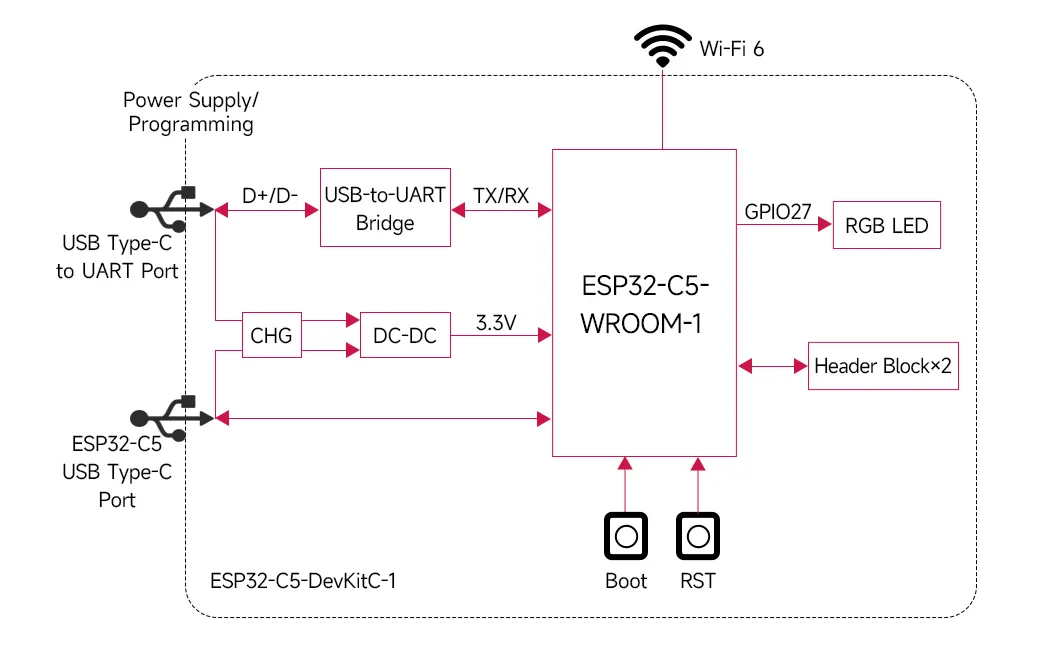
Functional Block Diagram
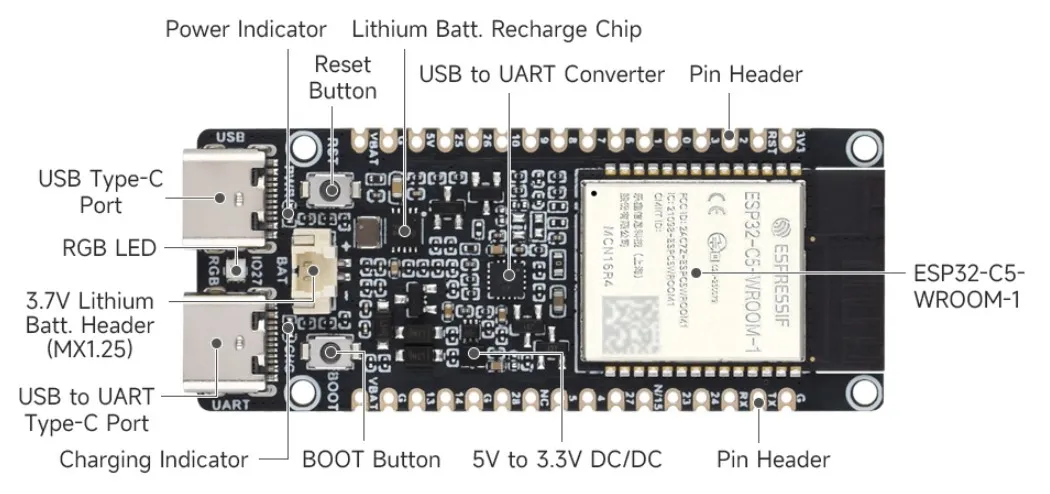
Resource Interface
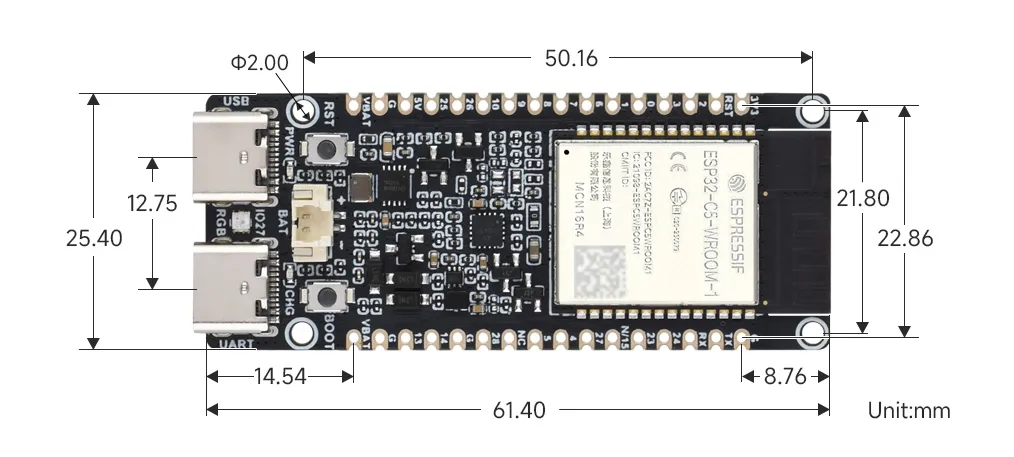
Dimensions
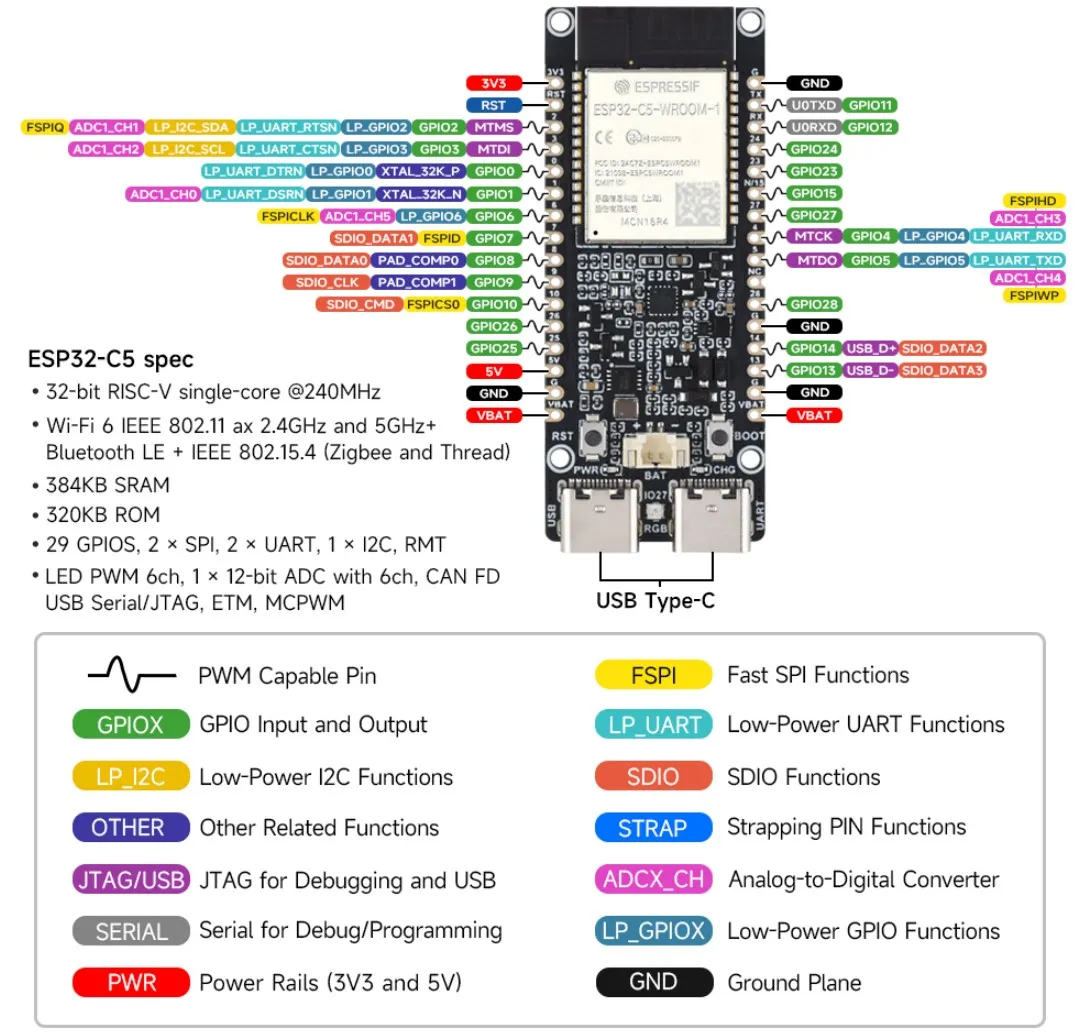
Pinout Definition
Development Methods
The ESP32 supports multiple development methods, allowing for professional development using the Espressif official ESP-IDF framework, or rapid prototyping using platforms like the Arduino IDE.
The main development platforms include:
-
ESP-IDF: Espressif's official development framework, specifically built for the ESP32 series chips, providing a complete development toolchain, code libraries, and documentation. It can fully leverage all the performance and features of ESP32 and is the preferred solution for professional development and commercial products.
-
Arduino: A well-known open-source hardware/software platform offering a simple and standard C++ interface, supporting numerous microcontrollers including ESP32. Arduino has rich libraries and demos, widely used in prototyping and education, and is a popular entry-level platform for beginners. For the development environment configuration, please refer to Arduino Development page.
-
Other Development Methods: The ESP32 development ecosystem is very rich. Besides the aforementioned platforms, development is also supported via platforms like PlatformIO, Mongoose OS, Espruino (JavaScript), ESPHome, etc., catering to the needs of developers with different technical backgrounds.