ESP32-H2-DEV-KIT-N4
- ESP32-H2-DEV-KIT-N4 (Standard version)
- ESP32-H2-DEV-KIT-N4-M (With pre-soldered headers)
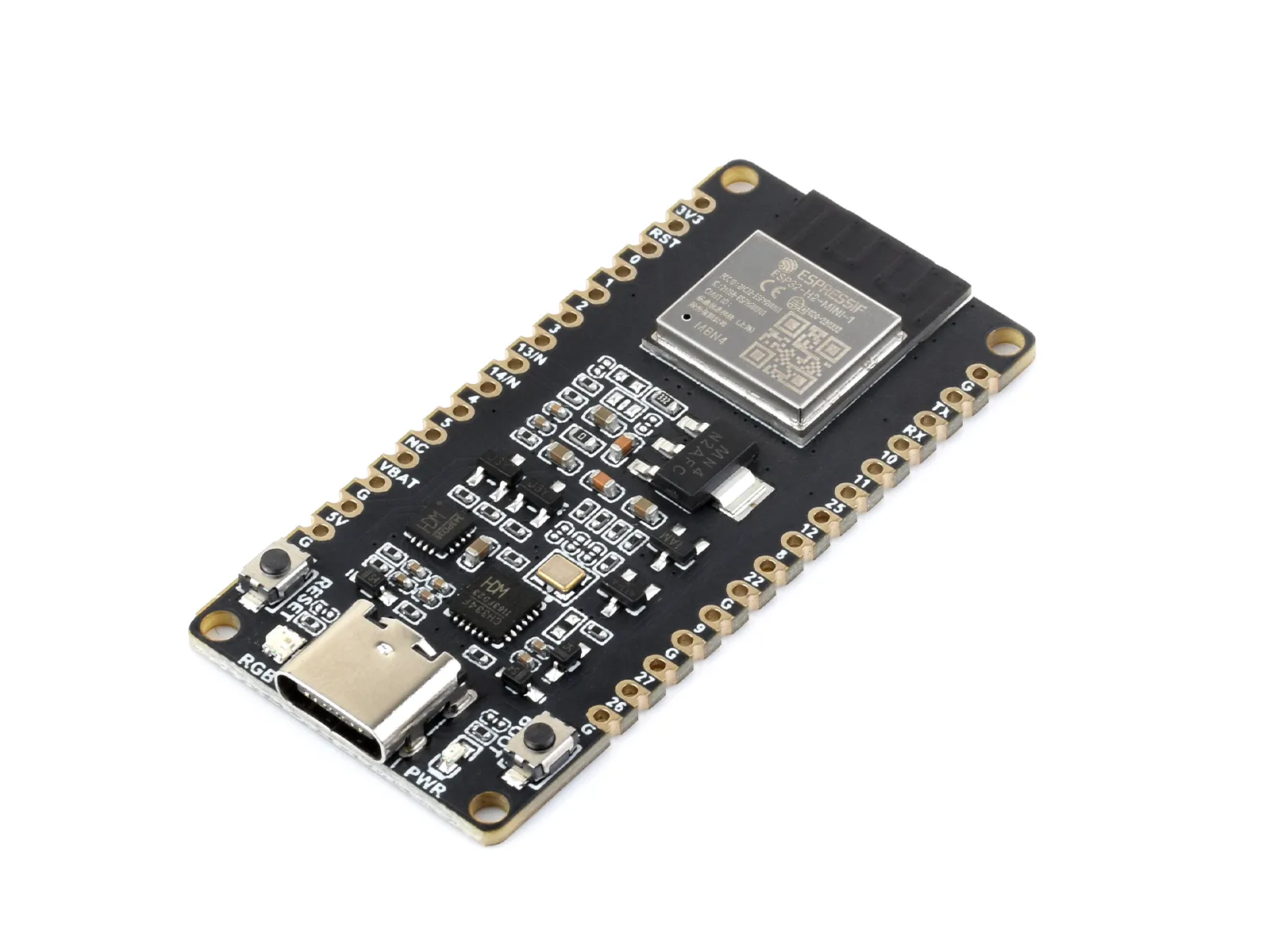
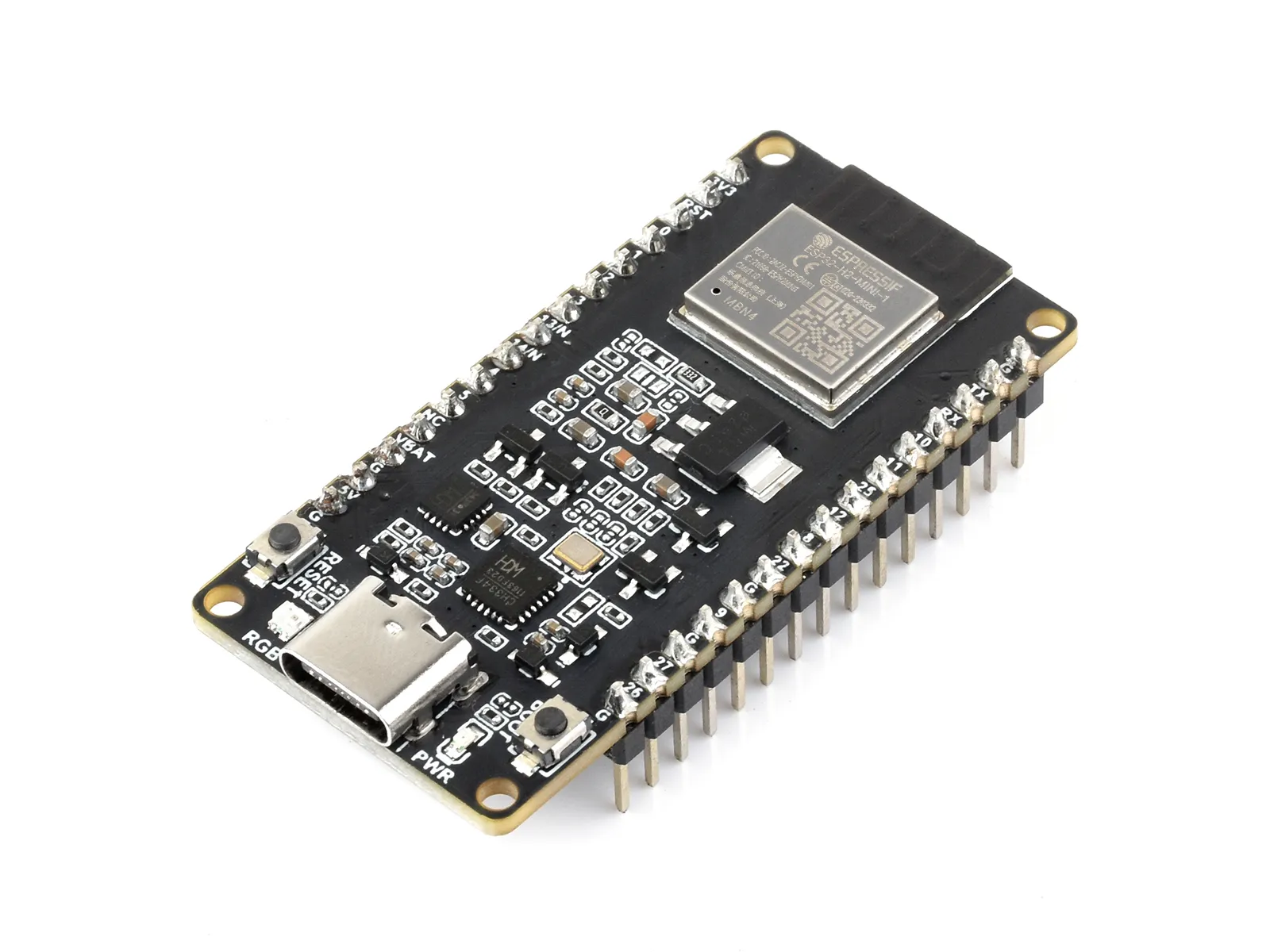
The ESP32-H2-DEV-KIT-N4 is a compact microcontroller development board equipped with multiple digital interfaces.
Hardware-wise, it uses the ESP32-H2-MINI-1 module, which integrates a RISC-V 32-bit single-core processor running at up to 96 MHz, with built-in 320 KB SRAM, 128 KB ROM, and 4 KB LP memory. The board also features CH343 and CH334 chips, allowing both USB and UART development through a single USB-C interface. Its pinout is compatible with the ESP32-H2-DevKitM-1 board, enabling expansion with various peripherals for greater convenience.
On the software side, you can choose to develop in the ESP-IDF development environment or on the Arduino IDE, making it easy and quick to get started and apply it to products.
| SKU | Product |
|---|---|
| 26507 | ESP32-H2-DEV-KIT-N4 |
| 26508 | ESP32-H2-DEV-KIT-N4-M |
If you are looking for:
- Coding with AI tools: Click Ask AI and select an AI tool to ask questions about this page, or choose Copy page to copy its content and paste it into an AI tool for coding assistance.
- Schematics and datasheets: See Resources
- Arduino development: See Working with Arduino
- ESP-IDF development: See Working with ESP-IDF
- Troubleshooting: See Product FAQ or contact Technical Support
Features
- Utilizes the ESP32-H2-MINI-1 module with RISC-V 32-bit single-core processor running at up to 96 MHz
- Integrated 320 KB SRAM, 128 KB ROM, 4 KB LP memory, and 4 MB Flash
- Integrated Bluetooth LE wireless communication and IEEE 802.15.4 technology with excellent RF performance
- USB Type-C interface, eliminating concerns about plug orientation
- Onboard CH343 and CH334 chips, meeting USB and UART development needs through a single Type-C port
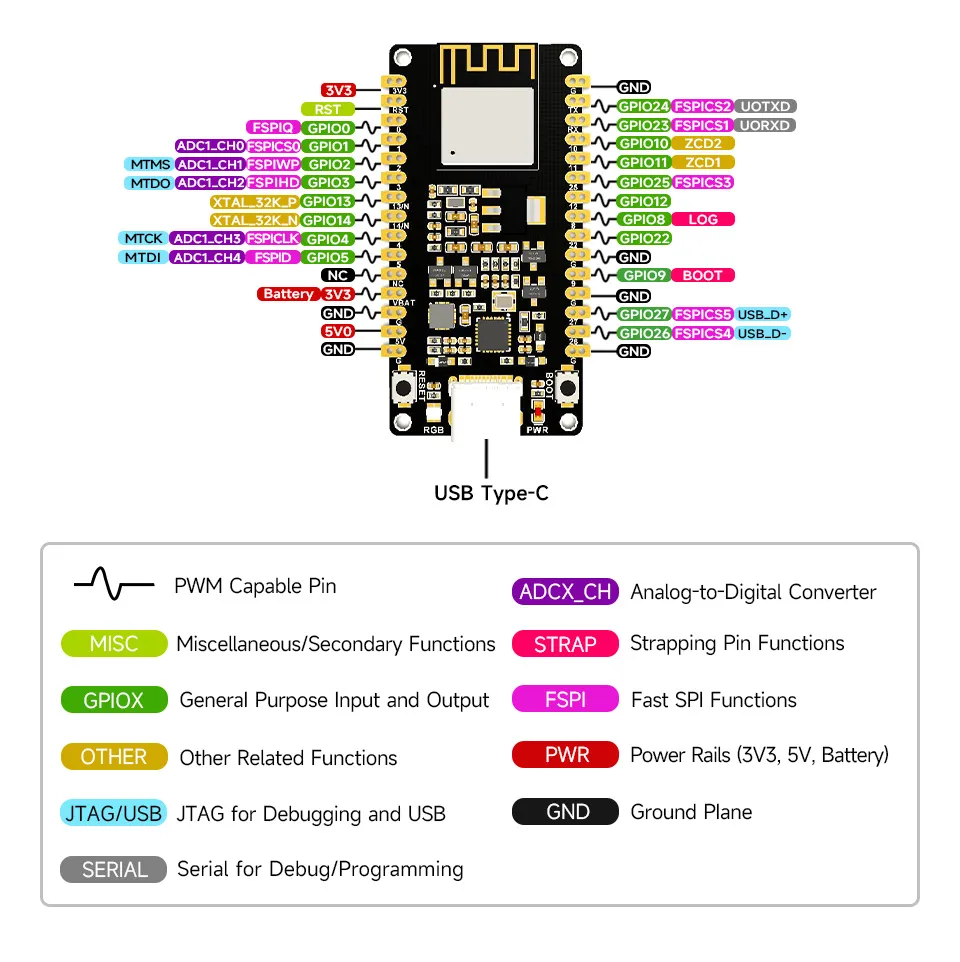
- Rich peripheral interfaces brought out; compatible with the pins of ESP32-H2-DevKitM-1 development board for strong compatibility and expandability
- Castellated module design allows direct soldering and integration onto user-designed carrier boards
- Supports multiple low-power operating states, balancing communication distance, data rate, and power consumption to meet the power needs of various application scenarios
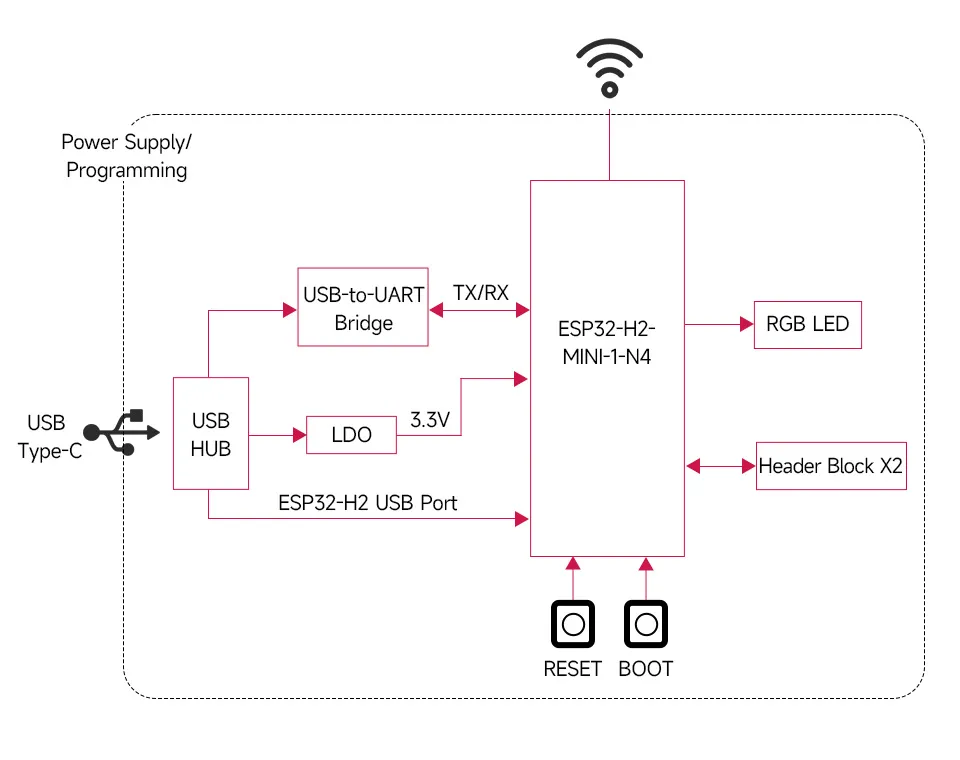
Functional Block Diagram
Pinout Definition
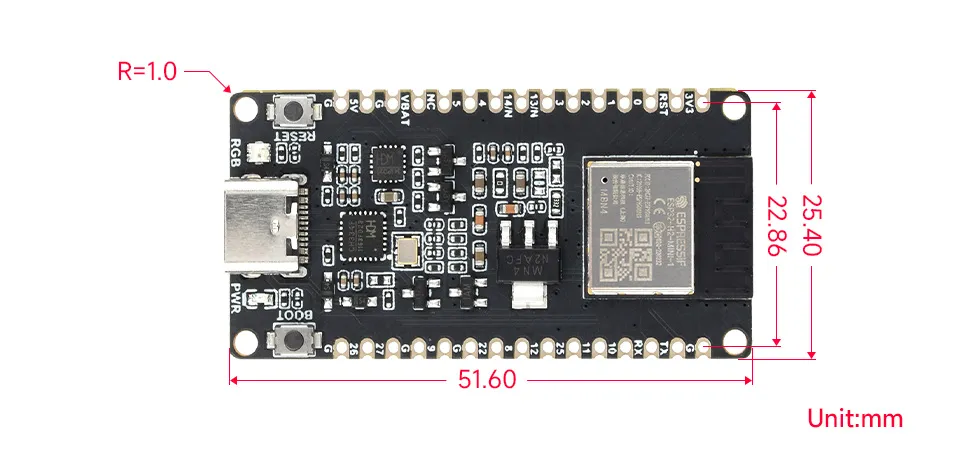
Dimensions