ESP32-P4-ETH
- ESP32-P4-ETH
- ESP32-P4-ETH-M
- ESP32-P4-POE-ETH
- ESP32-P4-POE-ETH-KIT-A
- ESP32-P4-POE-ETH-KIT-B
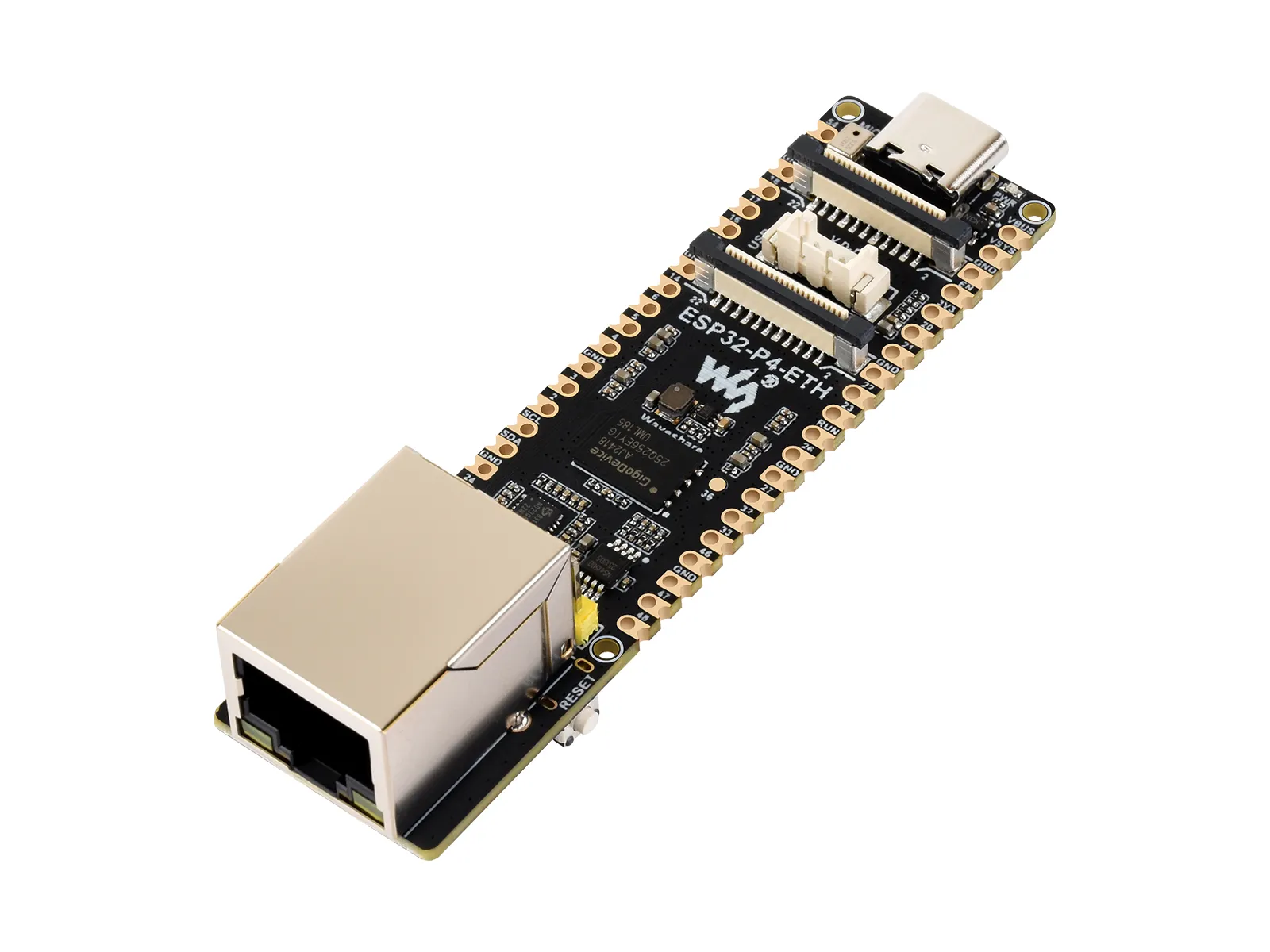
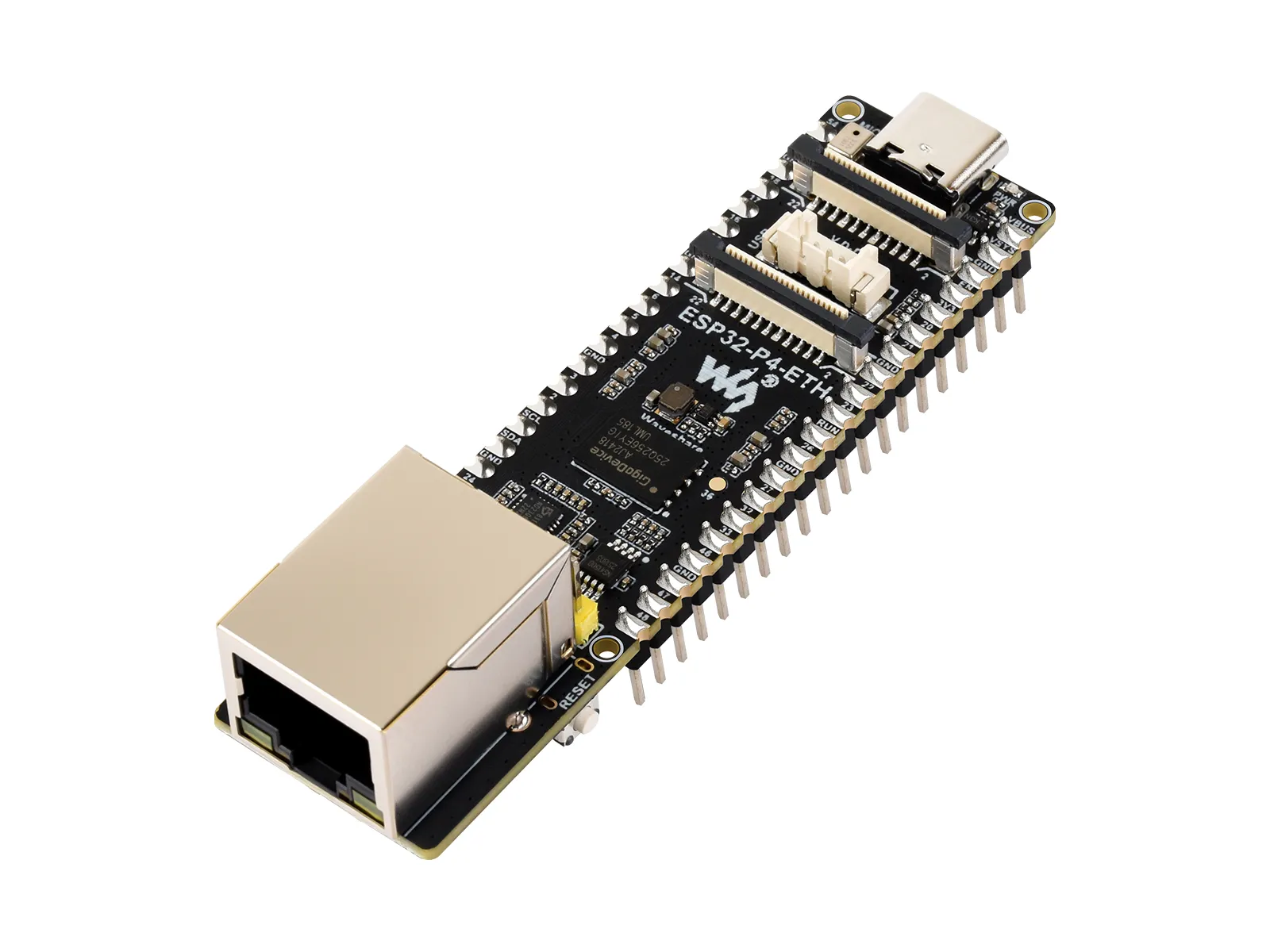
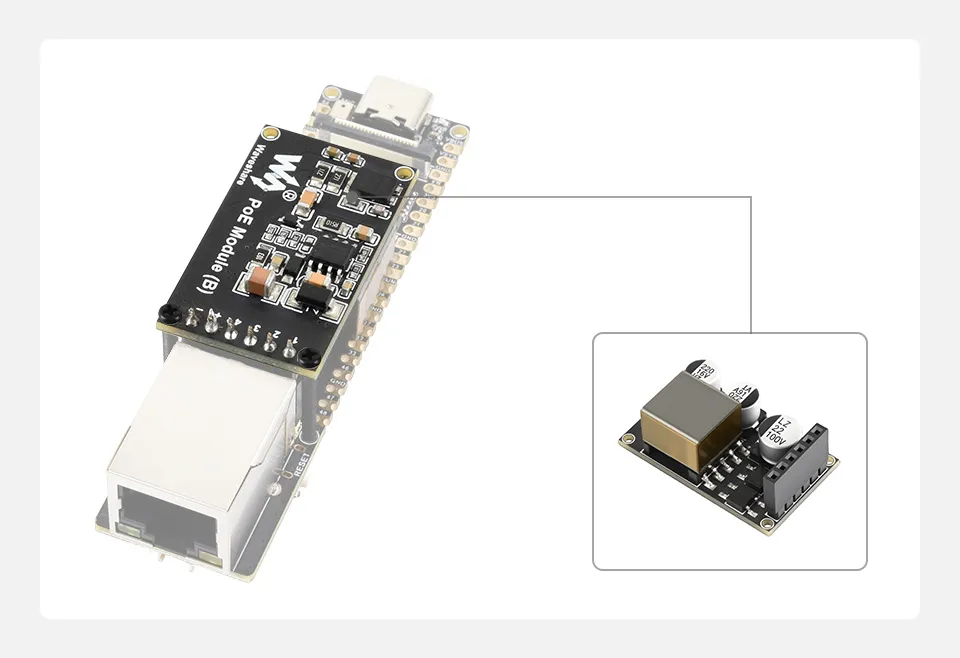
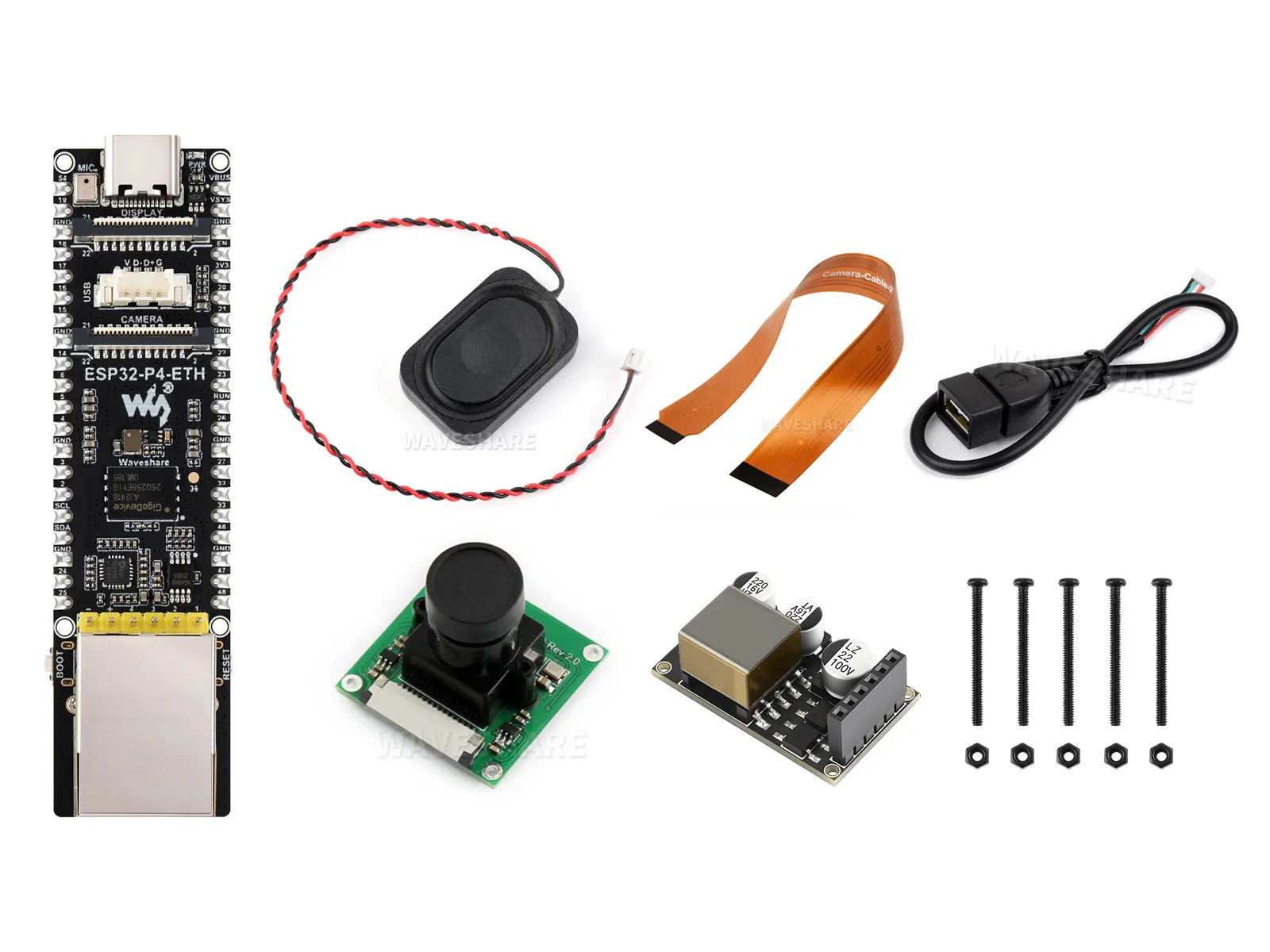
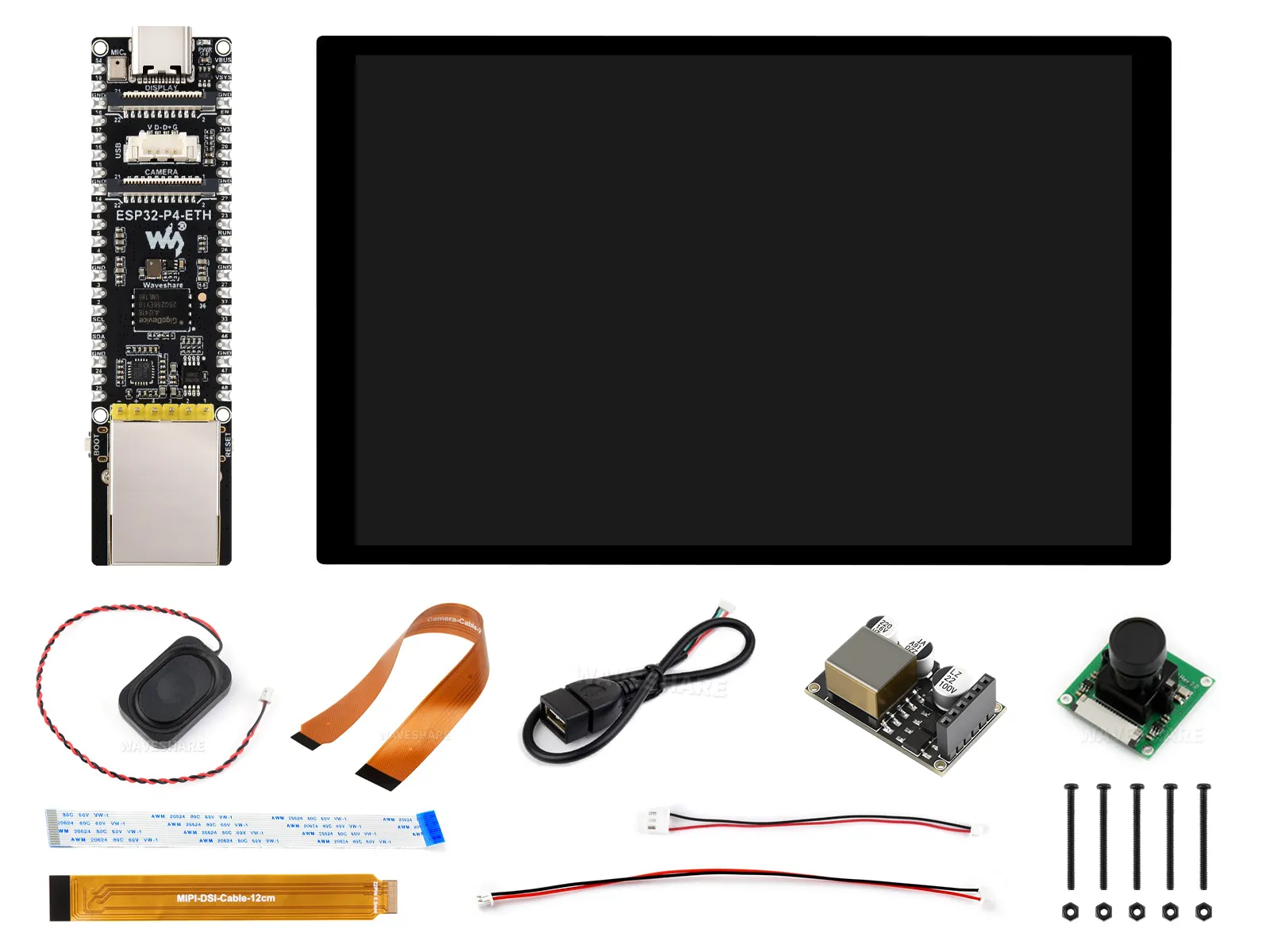
The ESP32-P4-ETH is a multimedia development board based on the ESP32-P4. It provides a rich set of human-machine interfaces, including MIPI-CSI (integrated image signal processor ISP), MIPI-DSI, SPI, I2S, I2C, LED PWM, MCPWM, RMT, ADC, UART, TWAI, etc. Additionally, it supports USB OTG 2.0 HS and Ethernet, and features an onboard 40PIN GPIO expansion header compatible with some Raspberry Pi Pico expansion boards for broader application adaptability. The ESP32-P4 is powered by a RISC-V dual-core processor, supports up to 32MB PSRAM, and integrates peripherals such as USB 2.0, MIPI-CSI/DSI, and an H.264 encoder, meeting the demands of low-cost, high-performance, and low-power multimedia development. In addition, the ESP32-P4 integrates a digital signature peripheral and a dedicated key management unit to ensure data and operation security. The ESP32-P4-ETH is specially designed for high-performance and high-security applications, meeting the needs of embedded systems in human-machine interaction, edge computing, and IO expansion.
| SKU | Product |
|---|---|
| 32086 | ESP32-P4-ETH |
| 32087 | ESP32-P4-ETH-M |
| 34247 | ESP32-P4-POE-ETH-NH |
| 32088 | ESP32-P4-POE-ETH |
| 34248 | ESP32-P4-POE-ETH-NH-KIT-A |
| 32089 | ESP32-P4-POE-ETH-KIT-A |
| 34249 | ESP32-P4-POE-ETH-NH-KIT-B |
| 32090 | ESP32-P4-POE-ETH-KIT-B |
Features
- Processor
- Equipped with a RISC-V 32-bit dual-core processor (HP system), featuring DSP and ISA extensions, a Floating-Point Unit (FPU), with a main frequency of up to 360 MHz.
- Equipped with a RISC-V 32-bit single-core processor (LP system), with a main frequency of up to 40 MHz.
- Memory
- 128 KB of high-performance (HP) system read-only memory (ROM).
- 16 KB of low-power (LP) system read-only memory (ROM).
- 768 KB of high-performance (HP) L2 memory (L2MEM).
- 32 KB of low-power (LP) SRAM.
- 8 KB of system tightly coupled memory (TCM).
- 32 MB PSRAM stacked in the package, onboard 32MB Nor Flash
- Peripheral Interfaces
- 2 × 20 pin headers onboard, exposing 27 remaining programmable GPIOs
- Onboard speaker interface and microphone, enabling ideal audio functionality using the Codec chip and amplifier chip
- Onboard MIPI-CSI high-definition camera interface, supporting Full HD 1080P image capture and encoding, integrated Image Signal Processor (ISP), H.264 video encoder, supports H.264 & JPEG video encoding (1080P @30fps), facilitating applications in computer vision, machine vision, and other fields
- Onboard MIPI-DSI high-definition display interface, integrated Pixel Processing Accelerator (PPA), 2D graphics acceleration controller (2D DMA), supports JPEG image decoding (1080P @30fps), providing strong support for high-definition display and smooth HMI experiences, suitable for applications such as smart home control panels, industrial control panels, and vending machines
Hardware Description
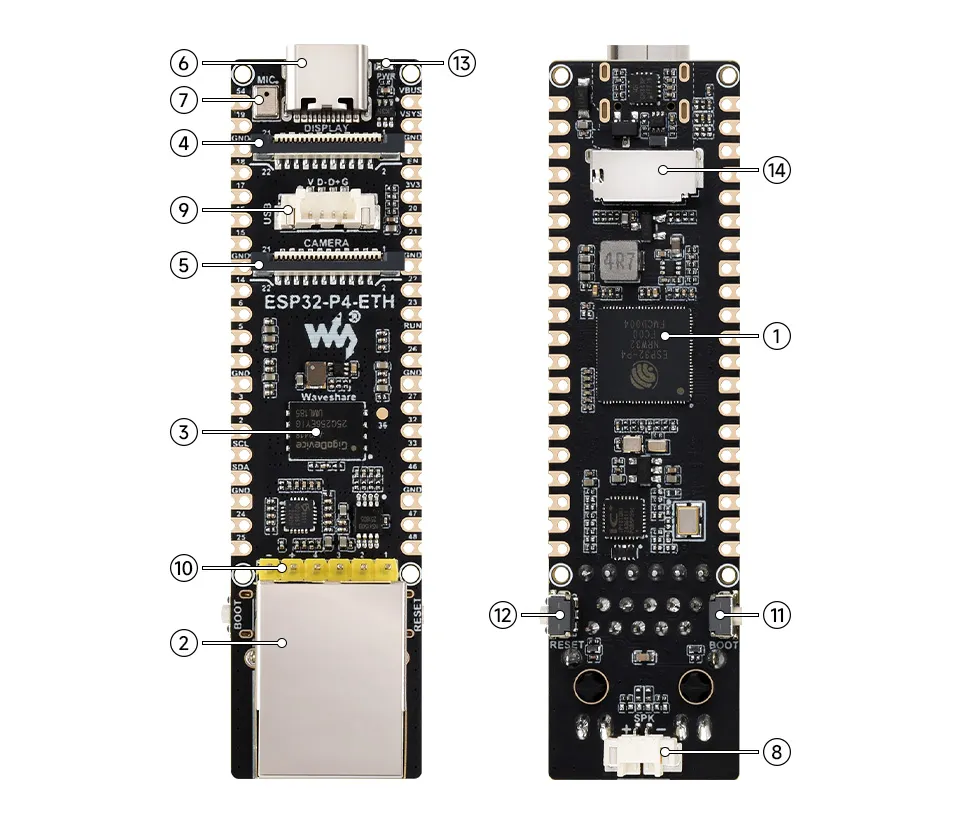
- ESP32-P4NRW32 ESP32-P4 with 32MB stacked PSRAM
- 100M RJ45 Ethernet Port
- 32MB Nor Flash
- Display Interface 2-lane MIPI-DSI, 22-pin, 0.5 mm pitch, compatible with
5/7/8/10.1inch DSI screens - Camera Interface 2-lane MIPI-CSI, 22-pin, 0.5 mm pitch, compatible with cameras such as
OV5647 - Type-C Interface For power supply, programming, and debugging
- SMD Microphone
- Speaker Interface MX1.25 2P connector, supports 8Ω 2W speaker
- 4PIN USB Interface MX1.25 4Pin connector, breaks out the ESP32-P4 USB 2.0 High-Speed OTG signals for connecting USB peripherals or configuring the board as a USB device
- PoE Module & Power Supply Header
- BOOT Button Press during power-up or reset to enter download mode
- RESET Button Reset button
- Power Indicator
- TF Card Slot SDIO 3.0 interface protocol
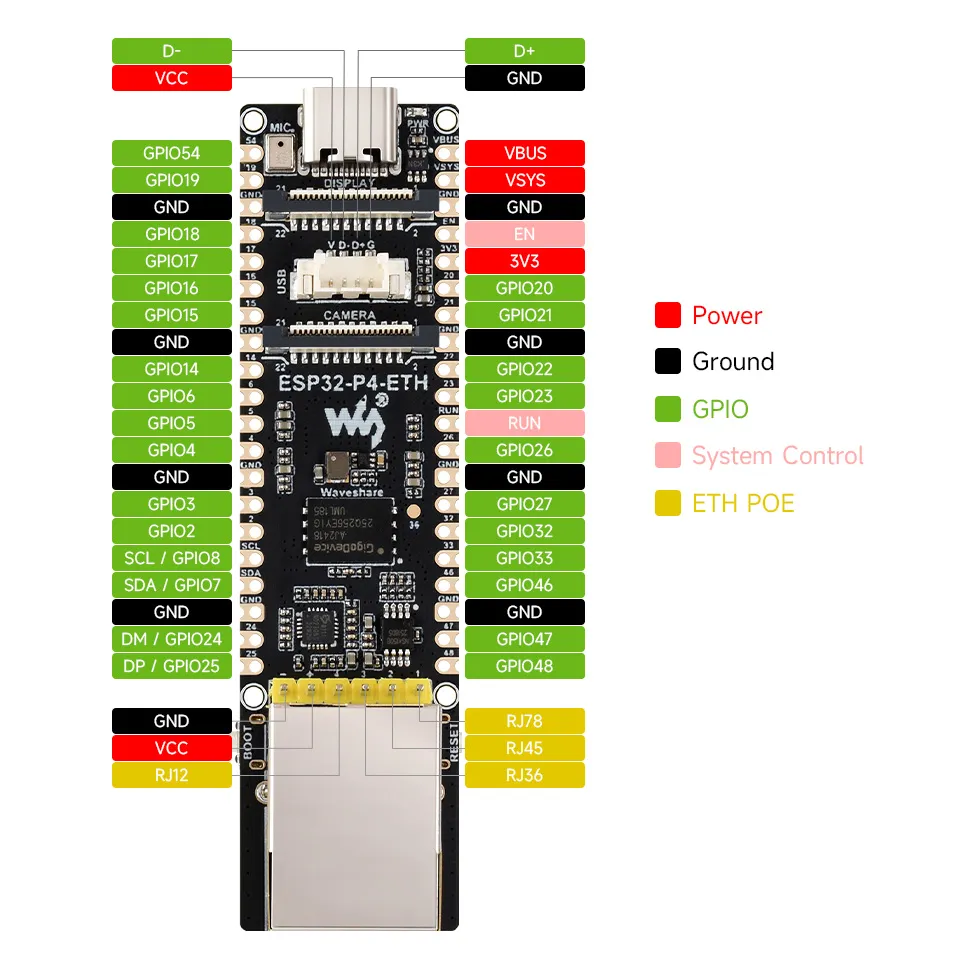
Pinout Definition
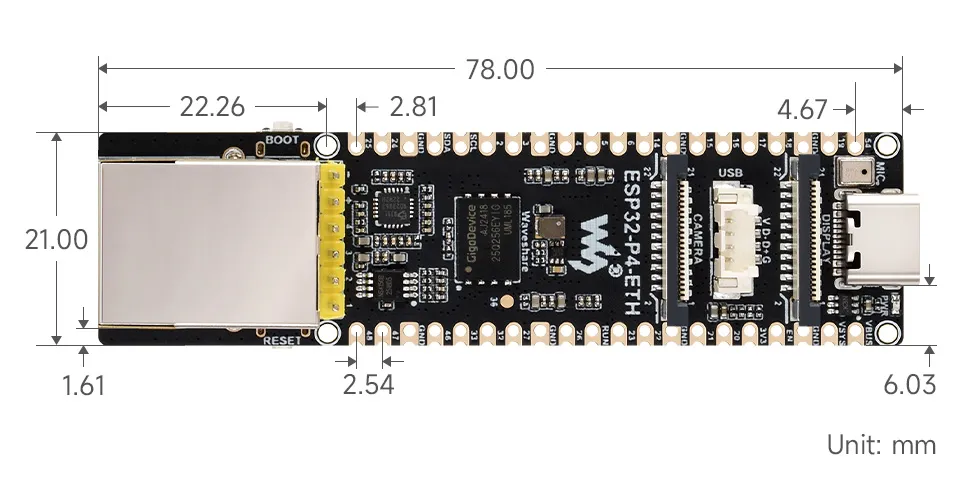
Dimensions
Development Tools
Arduino generally offers a gentler learning curve and may be more approachable for beginners and hobbyists. ESP-IDF provides advanced tooling and finer control over system behavior, making it better suited to complex projects and applications with demanding performance requirements.
ESP32-P4 currently has limited adaptation on the Arduino platform. To ensure development stability, it is recommended to use ESP-IDF for development at this stage. If you have requirements for using the Arduino platform, you can participate in the discussion on GitHub: Support of Arduino
- ESP-IDF, short for Espressif IoT Development Framework, is a development framework provided by Espressif for the ESP series chips. It is developed using the C language, including a compiler, debugger, and flashing tool, etc., and can be developed via the command lines or through an integrated development environment (such as Visual Studio Code with the Espressif IDF plugin). The plugin offers features such as code navigation, project management, and debugging, etc. We recommend using VS Code for development. For the specific configuration process, please refer to the Working with ESP-IDF. The tutorial also provides relevant examples for reference.