ESP32-P4-WIFI6-Touch-LCD-7B
- Standard version
- With OV5647 camera
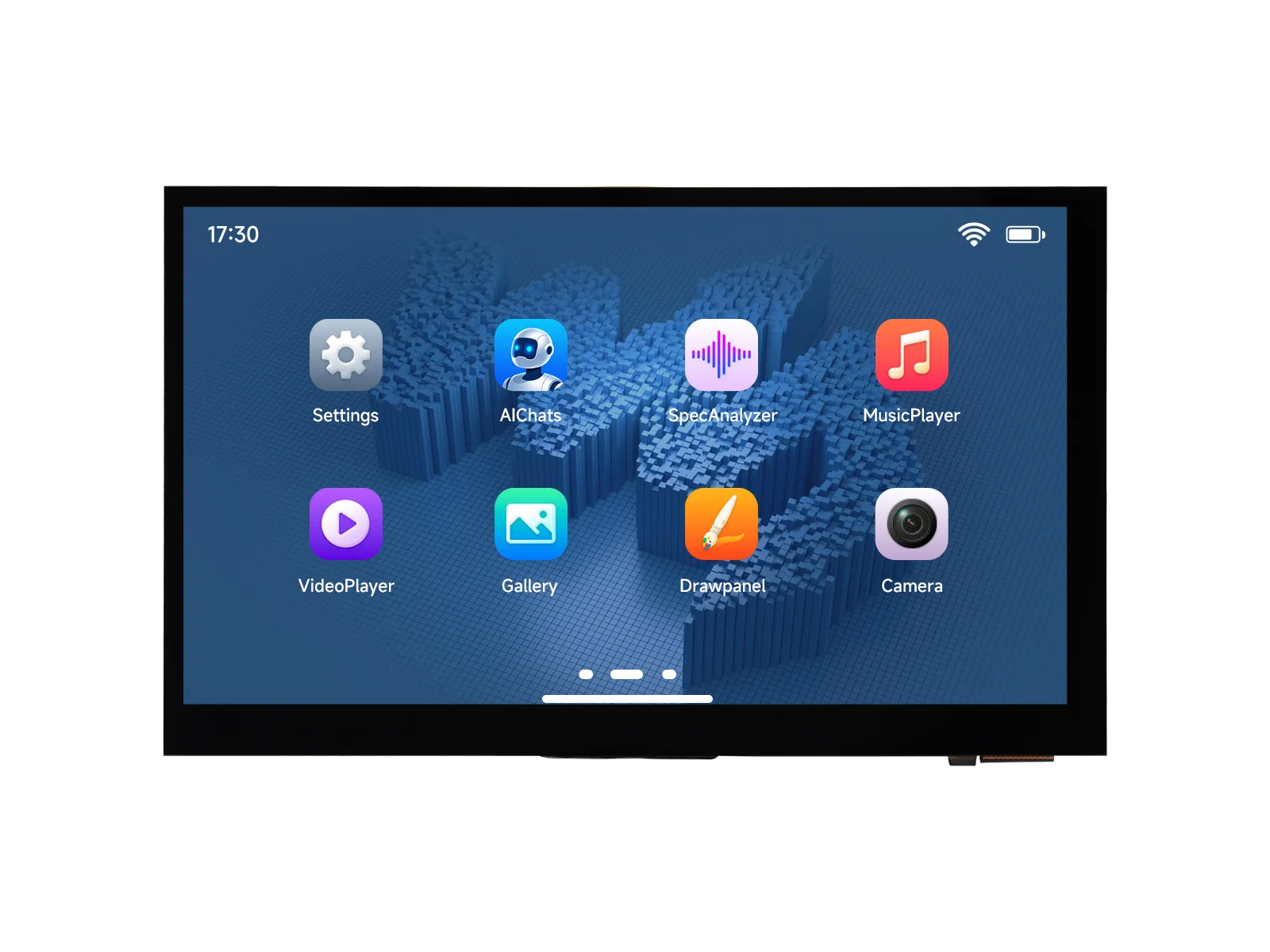
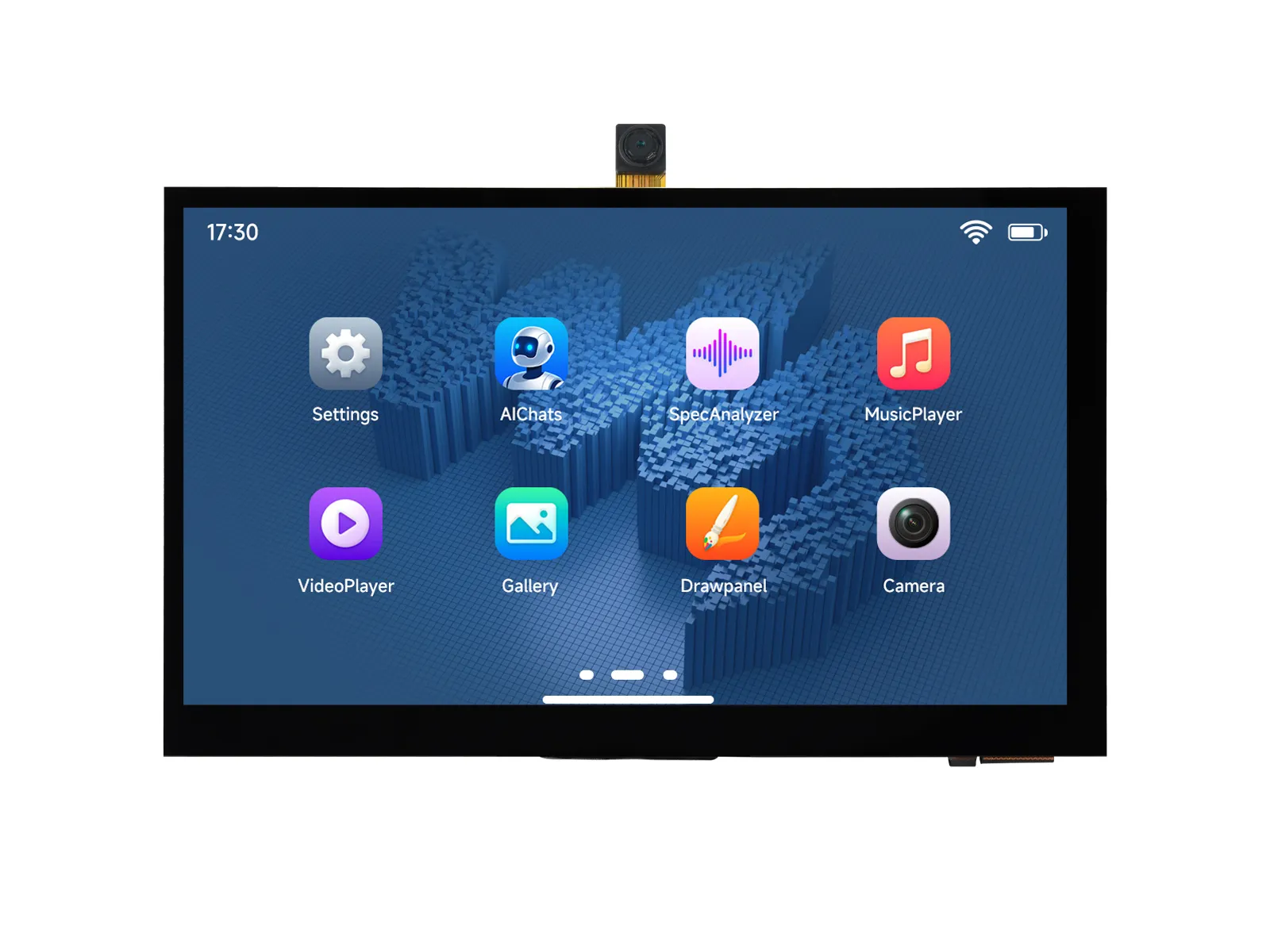
This product is a high-performance development board based on the ESP32-P4 chip, featuring a dual-core plus single-core RISC-V architecture. It comes with a 7inch 1024 × 600 landscape touch display, supports rich human-machine interaction interfaces, includes MIPI-CSI (integrated Image Signal Processor, ISP), and also supports USB OTG 2.0 HS for high-speed connectivity, enabling broader application adaptation. The ESP32-P4 chip integrates a digital signature peripheral and a dedicated key management unit to ensure data and operational security. It is designed for high performance and high security applications, and fully meets the higher requirements of embedded applications for human-computer interface support, edge computing capabilities and IO connection features.
| SKU | Product |
|---|---|
| 32510 | ESP32-P4-WIFI6-Touch-LCD-7B |
| 32511 | ESP32-P4-WIFI6-Touch-LCD-7B-C |
Features
- Processor
- Equipped with a RISC-V 32-bit dual-core processor (HP system), featuring DSP and ISA extensions, a Floating-Point Unit (FPU), with a main frequency of up to 360 MHz.
- Equipped with a RISC-V 32-bit single-core processor (LP system), with a main frequency of up to 40 MHz.
- Equipped with an ESP32-C6 WIFI/BT co-processor, expanding WIFI 6/Bluetooth 5 and other functions through SDIO
- Memory
- 128 KB of high-performance (HP) system read-only memory (ROM).
- 16 KB of low-power (LP) system read-only memory (ROM).
- 768 KB of high-performance (HP) L2 memory (L2MEM).
- 32 KB of low-power (LP) SRAM.
- 8 KB of system tightly coupled memory (TCM).
- 32 MB PSRAM stacked in the package, plus 32 MB Nor Flash externally
- Peripheral Interfaces
- Onboard 2*12 GPIO header with 17 x remaining programmable GPIOs
- Onboard common peripheral interfaces including MIPI-CSI, MIPI-DSI, USB 2.0 OTG HS, SDIO 3.0 TF card slot, dual microphones with echo cancellation, speaker terminal, and RTC battery holder
Hardware Description
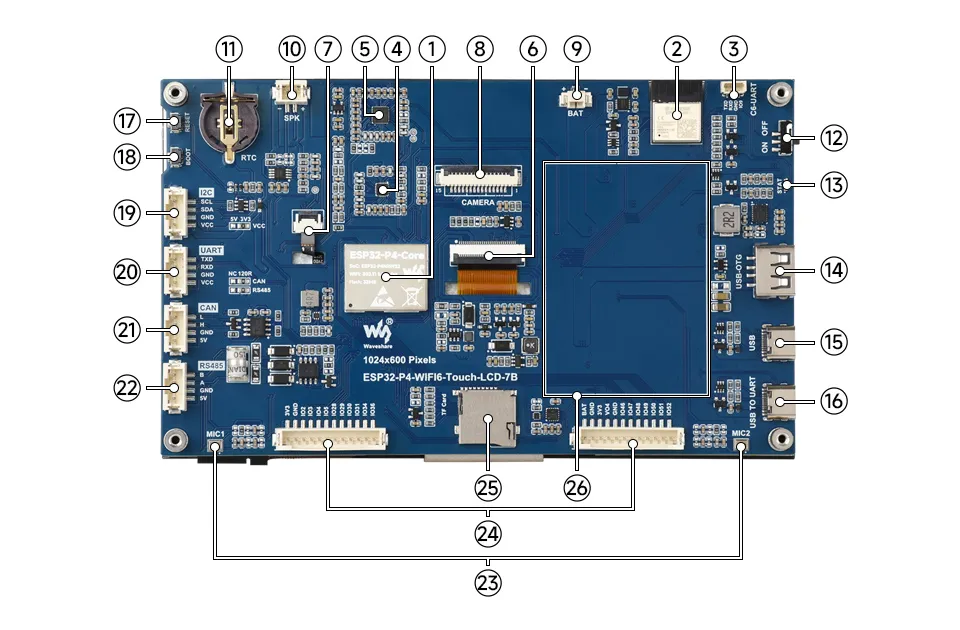
- ESP32-P4-Core Integrates ESP32-P4NRW32 and 32MB Nor Flash
- ESP32-C6-MINI-1 SDIO interface protocol, expands the board with Wi-Fi 6, Bluetooth 5 (LE)
- ESP32-C6 UART Terminal For flashing firmware to the ESP32-C6 module
- ES8311 Low-Power Audio Codec Chip For audio encoding and decoding
- ES7210 Echo Cancellation Chip Used for echo cancellation and improving audio acquisition accuracy
- MIPI DSI LCD Interface For connecting the MIPI 7inch screen
- Touch Interface
- MIPI-CSI (2-lane) Interface 15Pin pitch 1.0mm connector for connecting MIPI (2-lane) cameras, supports RPi FPC Camera (B) / RPi Camera (B) and other cameras
- MX1.25 Battery Interface (forward polarity)
- PH2.0 Speaker Header (non-polarized)
- RTC Battery Holder Size 1220 (12mm diameter*2mm thickness), only supports rechargeable 3V–3.3V batteries
- Power Supply ON/OFF Switch
- LED Operating Status Indicator
- Type-A Port USB OTG 2.0 High Speed interface
- Type-C Port USB1.1 FS Direct Out For power supply, program flashing, and debugging
- Type-C Port USB TO UART For power supply, program flashing, and debugging
- RESET Button Reset button
- BOOT Button Press during power-up or reset to enter download mode
- PH2.0 4PIN I2C Header For connecting to I2C devices
- PH2.0 4PIN UART Header For connecting to UART devices
- PH2.0 4PIN CAN Header For connecting to CAN devices
- PH2.0 4PIN RS485 Header For connecting to RS485 devices
- Onboard Microphones Microphone input with echo cancellation
- PH2.0 12Pin GPIO Headers Expands 17 programmable GPIOs and power supply pins
- TF Card Slot SDIO 3.0 interface protocol
- Reserved Area For placing a rechargeable battery
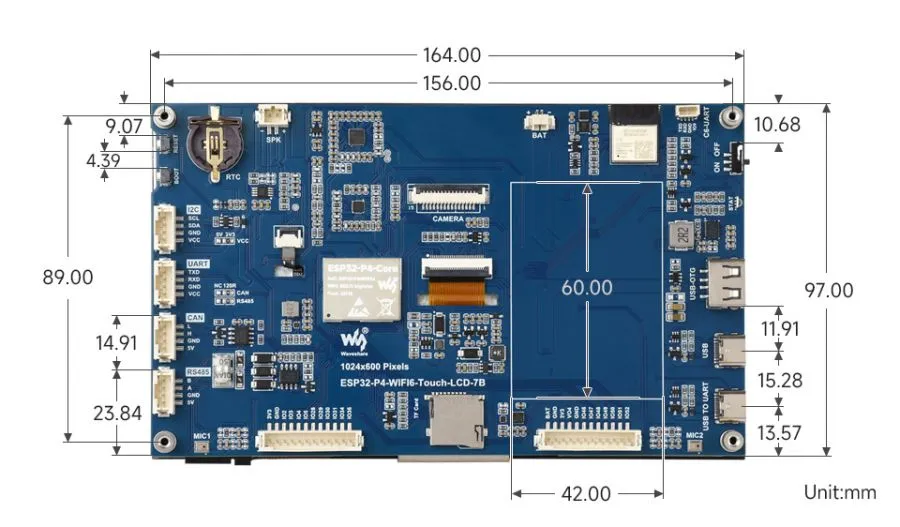
Dimensions

Development Tools
Arduino generally offers a gentler learning curve and may be more approachable for beginners and hobbyists. ESP-IDF provides advanced tooling and finer control over system behavior, making it better suited to complex projects and applications with demanding performance requirements.
ESP32-P4 currently has limited adaptation on the Arduino platform. To ensure development stability, it is recommended to use ESP-IDF for development at this stage. If you have requirements for using the Arduino platform, you can participate in the discussion on GitHub: Support of Arduino
- ESP-IDF, short for Espressif IoT Development Framework, is a development framework provided by Espressif for the ESP series chips. It is developed using the C language, including a compiler, debugger, and flashing tool, etc., and can be developed via the command lines or through an integrated development environment (such as Visual Studio Code with the Espressif IDF plugin). The plugin offers features such as code navigation, project management, and debugging, etc. We recommend using VS Code for development. For the specific configuration process, please refer to the Working with ESP-IDF. The tutorial also provides relevant example programs for reference.