ESP32-S3-LR1121-OLED-1.54
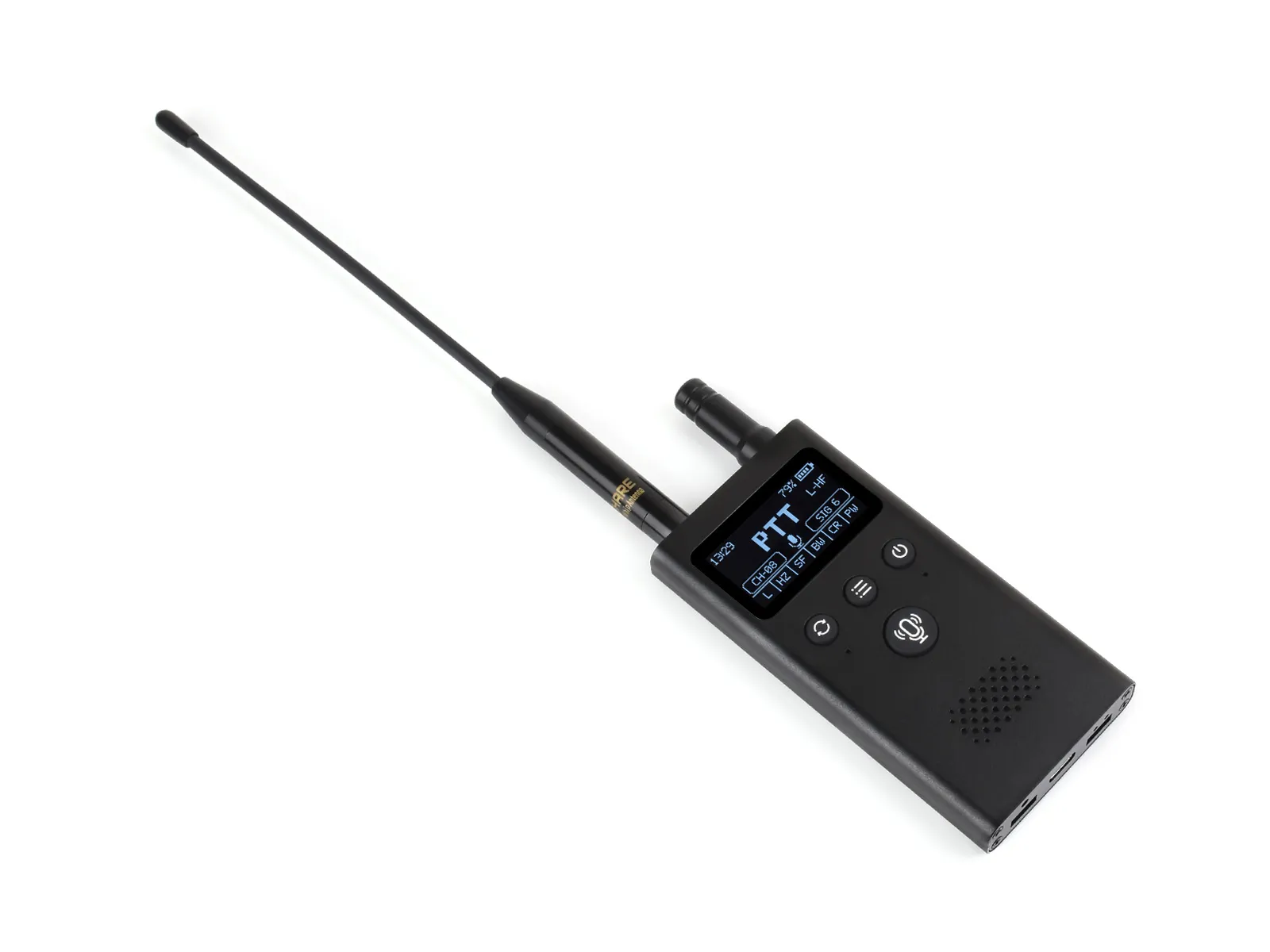
ESP32-S3-LR1121-OLED-1.54 is a LoRa IoT development board designed by Waveshare. Based on the ESP32-S3 main controller, it features an onboard LR1121 LoRa wireless module, a 1.54inch OLED display, an audio system (microphone and speaker), an RTC, a battery fuel gauge, and a TF card slot, making it suitable for developing IoT applications such as LoRa communication and voice intercom.
| SKU | Product |
|---|---|
| 35898 | ESP32-S3-LR1121-OLED-1.54-HF-EN |
| 35899 | ESP32-S3-LR1121-OLED-1.54-HF |
| 35900 | ESP32-S3-LR1121-OLED-1.54-LF-EN |
| 35901 | ESP32-S3-LR1121-OLED-1.54-LF |
If you are looking for:
- Coding with AI tools: Click Ask AI and select an AI tool to ask questions about this page, or choose Copy page to copy its content and paste it into an AI tool for coding assistance.
- Schematics, datasheets, and example code: See Resources
- Arduino development: See Working with Arduino
- ESP-IDF development: See Working with ESP-IDF
- Troubleshooting: See Product FAQ or contact Technical Support
Features
- Equipped with an ESP32-S3 dual-core Xtensa LX7 processor, 240 MHz clock speed, supporting 2.4 GHz Wi-Fi and BLE 5
- Features 16 MB Flash and 8 MB Octal PSRAM
- Onboard LR1121 LoRa wireless module, supporting LoRa and GFSK modulation, SPI interface
- Onboard 1.54inch OLED display (SSD1309, 128 × 64, I2C interface)
- Onboard ES7210 microphone ADC and ES8311 audio DAC, supporting voice capture and playback
- Onboard PCF85063A RTC, BQ27220 battery fuel gauge, TF/MMC card slot
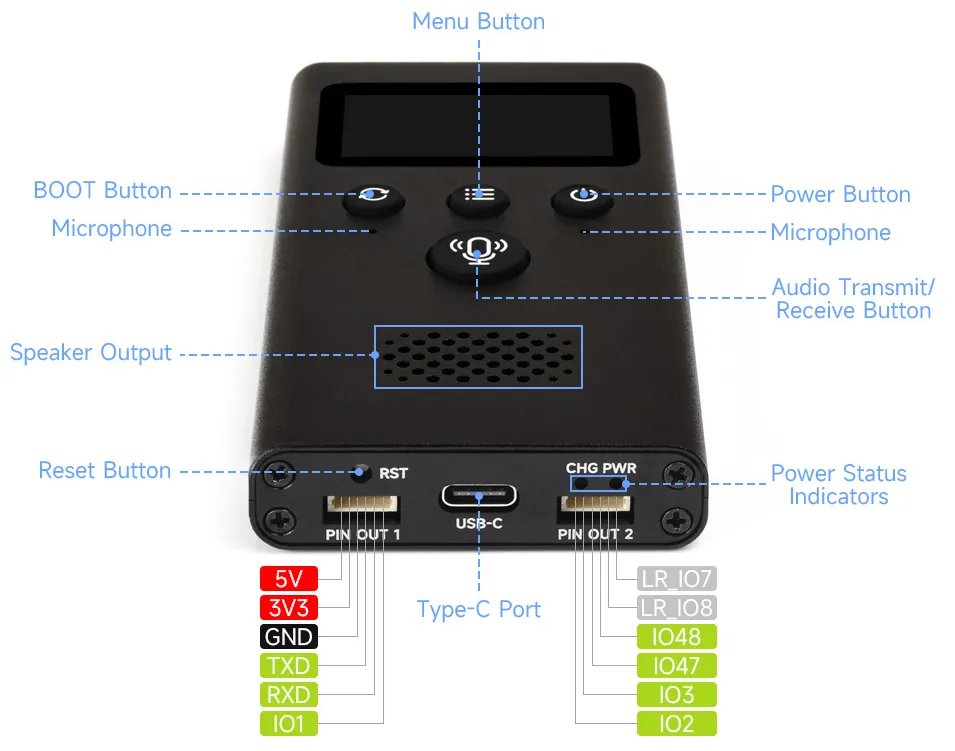
- 4 function buttons (BOOT, PWR, MENU, PTT) and 1 reset button (RST); the walkie-talkie example provides Light Sleep and button wake-up functions
Frequency Band Description
- The HF version corresponds to the 850-930MHz frequency band
- The LF version corresponds to the 410-510MHz frequency band
Function Overview
LR1121 LoRa Module
| LR1121 Pin | ESP32-S3 GPIO | Description |
|---|---|---|
| SCK | 40 | SPI clock |
| MISO | 46 | SPI data input |
| MOSI | 45 | SPI data output |
| CS | 42 | Chip select |
| BUSY | 41 | Busy status |
| IRQ | 38 | Interrupt |
| RST | 39 | Reset |
OLED Display (SSD1309)
| OLED Pin | ESP32-S3 GPIO | Description |
|---|---|---|
| SDA | 13 | I2C data |
| SCL | 14 | I2C clock |
Audio System
| Function | Chip | ESP32-S3 GPIO | Description |
|---|---|---|---|
| Microphone ADC | ES7210 | MCLK=17, BCLK=18, WS=21, DOUT=15 | I2S TDM input, slot configuration determined by the example |
| Audio DAC | ES8311 | MCLK=17, BCLK=18, WS=21, DIN=16 | I2S standard mode |
| Amplifier enable | - | 8 | GPIO controlled |
The microphone capture example uses 4 TDM slots; the current walkie-talkie example uses 2 physical slots, capturing only slot 0. The number of slots does not represent the number of onboard microphones.
TF Card
| TF Card Pin | ESP32-S3 GPIO | Description |
|---|---|---|
| CLK | 12 | SDMMC clock |
| CMD | 10 | SDMMC command |
| D0 | 11 | SDMMC data |
The SDMMC on this board uses 1-line mode, with only CLK, CMD, and D0 connected.
RTC (PCF85063A)
| RTC Pin | ESP32-S3 GPIO | Description |
|---|---|---|
| SDA | 13 | I2C data (shared with other I2C devices) |
| SCL | 14 | I2C clock (shared with other I2C devices) |
| INT | 7 | RTC alarm interrupt output |
Buttons
| Button | ESP32-S3 GPIO | Description |
|---|---|---|
| BOOT | 0 | Boot button / navigation |
| PWR | 4 | Power / low-power wake-up |
| MENU | 5 | Menu / navigation |
| PTT | 6 | Push-To-Talk transmit button |
| RST | - | Reset button, connected to the chip reset signal |
PWR, BOOT, MENU, and PTT are active low. When powered on, long press PWR for 3S to power off, and when powered off, long press for 3S to power on.
I2C Bus Device Address Summary
The following are all 7-bit I2C addresses.
| Device | I2C Address | Description |
|---|---|---|
| SSD1309 OLED | 0x3C | OLED display driver |
| ES8311 | 0x18 | Audio codec |
| ES7210 | 0x40 | Microphone ADC |
| PCF85063A RTC | 0x51 | Real-time clock |
| BQ27220 | 0x55 | Battery fuel gauge |
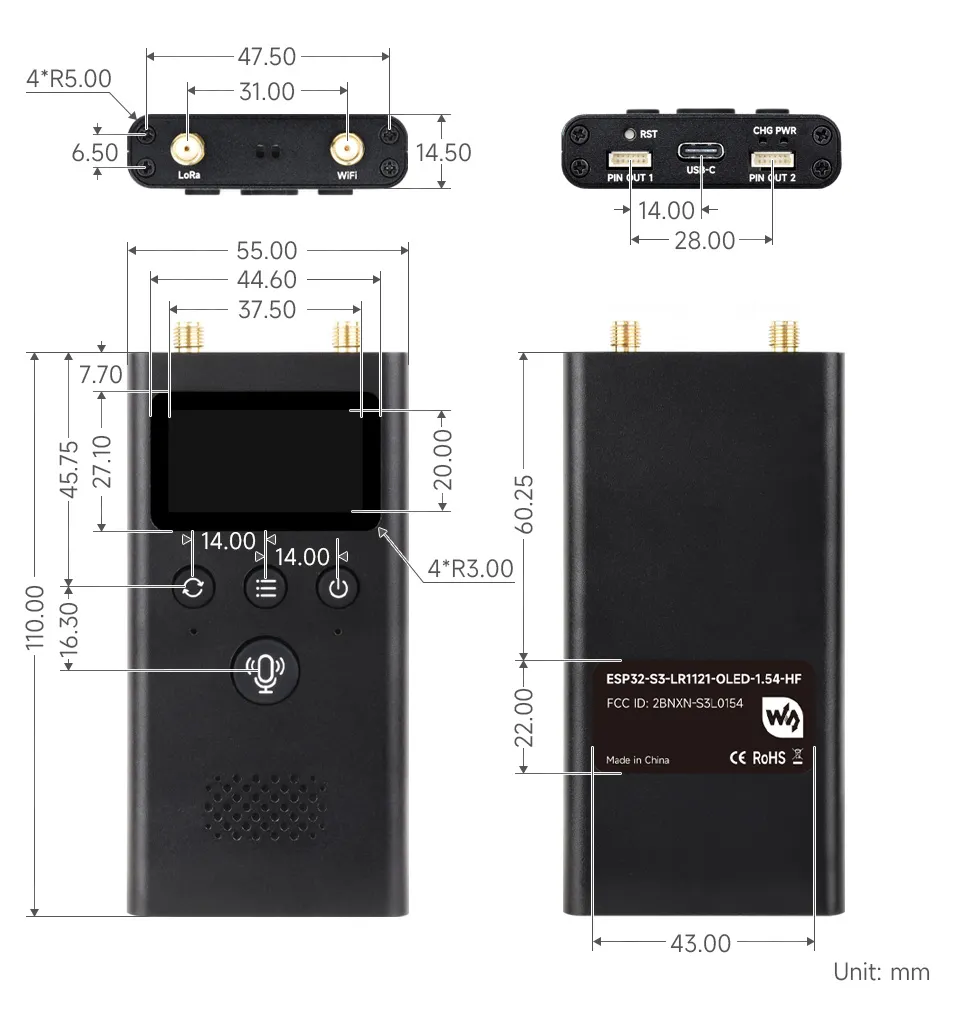
Dimensions
Development Methods
The ESP32-S3-LR1121-OLED-1.54 supports both the Arduino IDE and ESP-IDF development frameworks.
- Arduino IDE: Convenient, flexible, and easy to get started with, suitable for rapid prototyping. Please refer to Working with Arduino.
- ESP-IDF: Espressif's official professional development framework, providing a complete toolchain and fine-grained system control. Please refer to Working with ESP-IDF.