ESP32-S3-LR1121-XF
- ESP32-S3-LR1121-HF (Base Version)
- ESP32-S3-LR1121-LF (Base Version)
- ESP32-S3-LR1121-HF-Kit (USB Type-C adapter board + FFC cable)
- ESP32-S3-LR1121-LF-Kit (USB Type-C adapter board + FFC cable)
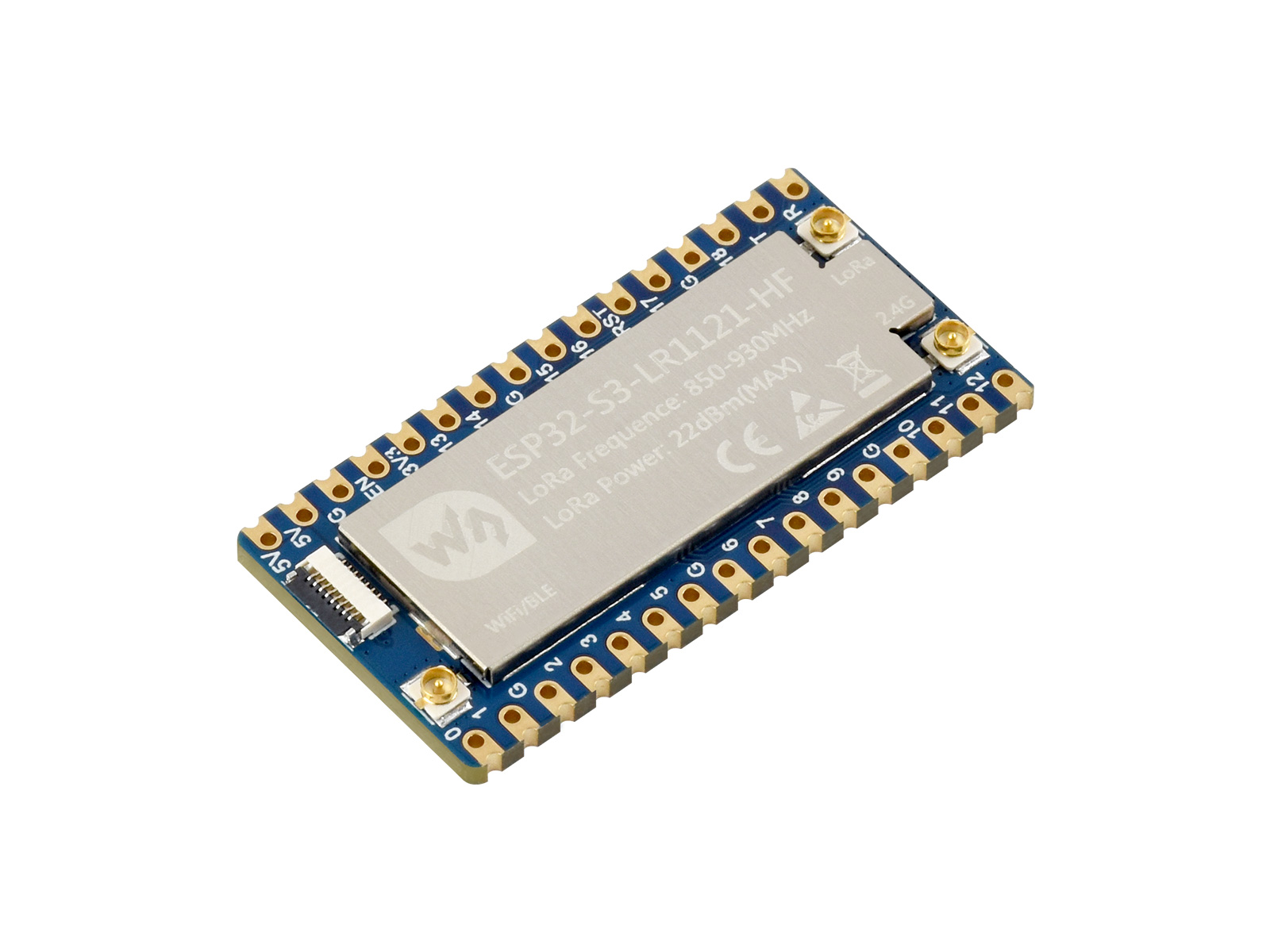
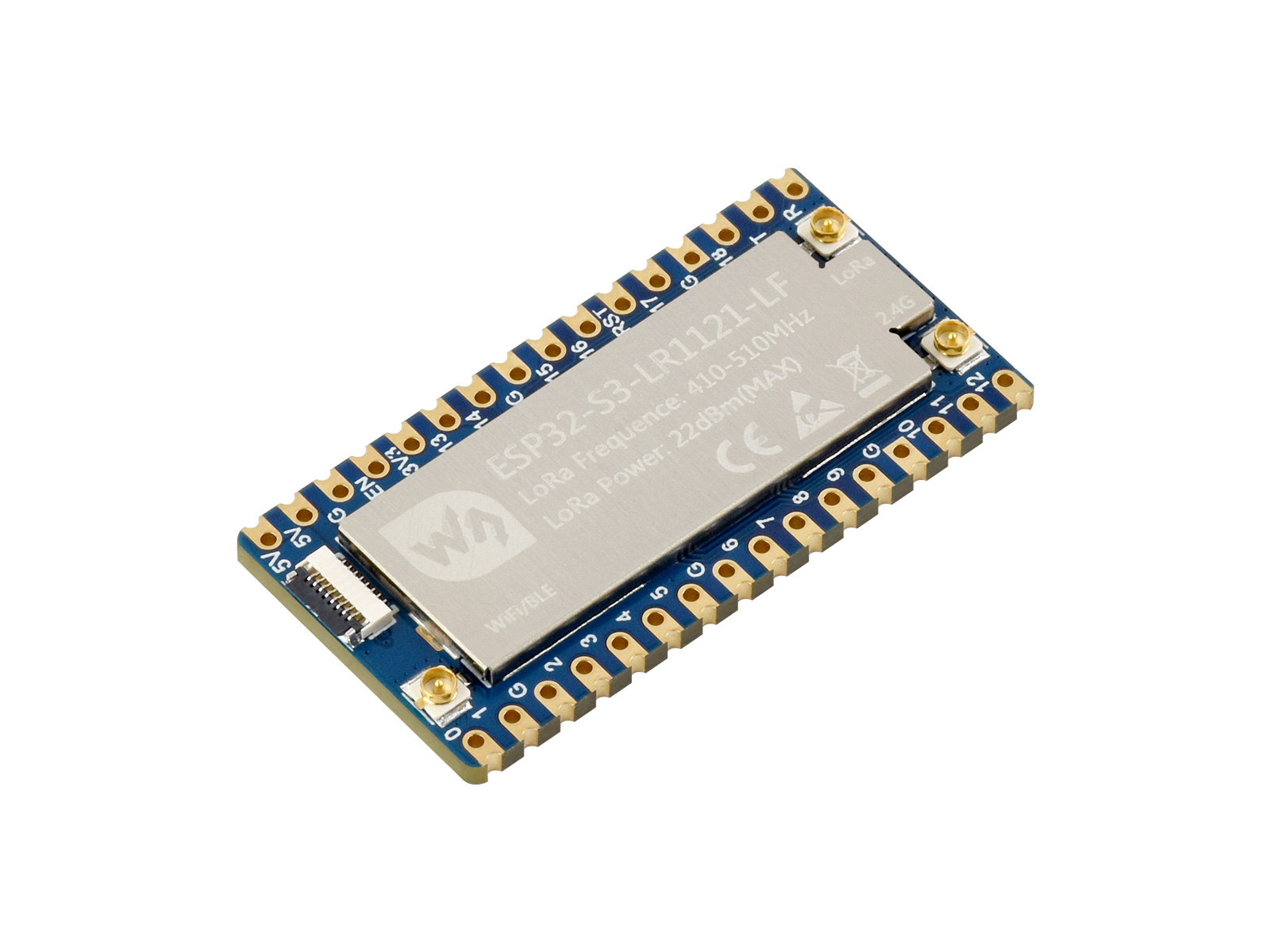
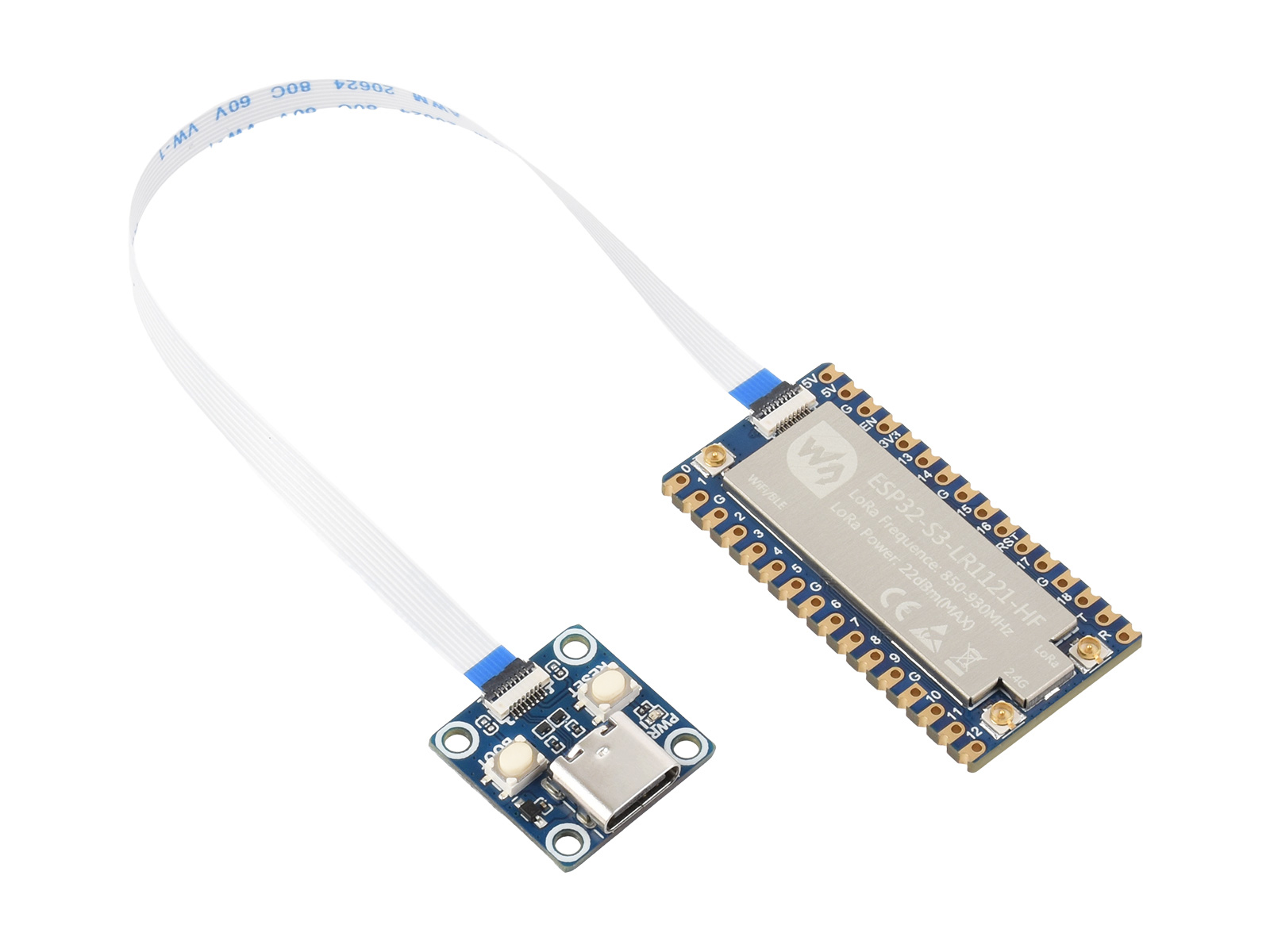
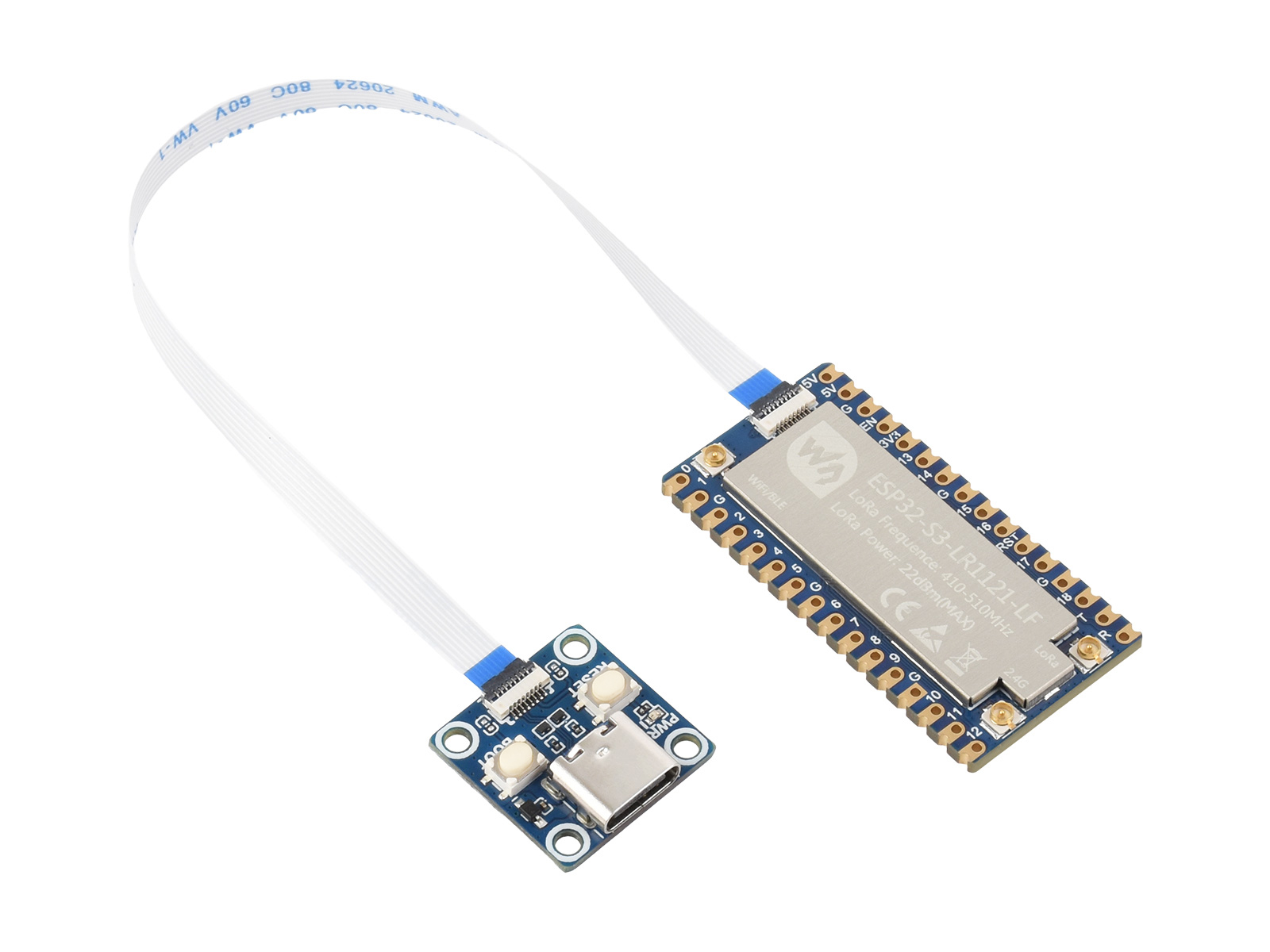
If you are looking for:
- Coding with AI tools: Click Ask AI and select an AI tool to ask questions about this page, or choose Copy page to copy its content and paste it into an AI tool for coding assistance.
- Schematics, datasheets, and example code: See Resources
- Arduino development: See Working with Arduino
- ESP-IDF development: See Working with ESP-IDF
- Troubleshooting: See Product FAQ or contact Technical Support
| SKU | Product |
|---|---|
| 34010 | ESP32-S3-LR1121-HF |
| 34011 | ESP32-S3-LR1121-HF-Kit |
| 33928 | ESP32-S3-LR1121-LF |
| 33929 | ESP32-S3-LR1121-LF-Kit |
Features
-
The ESP32-S3-LR1121-XF is a LoRa development board based on the ESP32-S3 main controller and integrated with the LR1121 RF chip, enabling longer-distance and more stable wireless communication under low power consumption. Compared to traditional LoRa solutions, it offers significant advantages in link reliability, energy efficiency, and multi-band adaptability.
-
Leveraging LoRa modulation technology, the system ensures long-distance communication while maintaining good anti-interference performance and ultra-low power consumption. When paired with a LoRa gateway, it can connect to servers like TTN and ChirpStack, facilitating cloud integration and application validation. The main board supports multi-band configuration and a rich set of peripheral interfaces, making it suitable for various IoT scenarios such as outdoor communication, sensor networks, emergency interconnection, and community networking.
Onboard Resources
- Powered by a high-performance Xtensa® 32-bit LX7 dual-core processor, with a main frequency of up to 240 MHz.
- Supports 2.4 GHz Wi-Fi (802.11 b/g/n) and Bluetooth® 5 (LE), meeting diverse wireless requirements.
- Features 512KB SRAM and 384KB ROM internally, with stacked 4MB Flash and 2MB PSRAM.
- Utilizes the castellated design for enhanced integration, facilitating user-customized baseboard design.
- Rich peripherals including 4 × SPI, 2 × I2C, 3 × UART, 2 × I2S, and 2 × ADC.
- Equipped with the Semtech LR1121 low-power LoRa transceiver.
- Supports Sub-GHz (150MHz ~ 960MHz), S-Band (1.9GHz ~ 2.1GHz), and 2.4GHz ISM bands.
- Enables connection to the cloud via LoRa or LoRaWAN protocols combined with a gateway, building low-power wide-area networks.
- Supports LoRa, (G)FSK, and LR-FHSS modulation schemes, compatible with SX126x / SX127x frequency bands for easy product upgrades.
- Integrated AES-128 encryption engine enhances data security.
- Onboard TCXO ensures frequency stability under high and low temperature conditions.
- Suitable for IoT applications such as industrial telemetry, smart homes, environmental monitoring, and remote data acquisition.
- Comes with C example programs and a user manual for easy development and rapid application.
Specifications
| Item | ESP32-S3-LR1121-HF | ESP32-S3-LR1121-LF |
|---|---|---|
| Operating Frequency Bands | 850 ~ 930MHz 1900 ~ 2100MHz 2400 ~ 2500MHz | 410 ~ 510MHz 1900 ~ 2100MHz 2400 ~ 2500MHz |
| Modulation | LoRa, (G)FSK, LR-FHSS | LoRa, (G)FSK, LR-FHSS |
| Communication Rate | LoRa: 0.091 ~ 62.5Kbps (G)FSK: 0.6 ~ 300Kbps | LoRa: 0.091 ~ 62.5Kbps (G)FSK: 0.6 ~ 300Kbps |
| Transmission Power | -9 ~ 22dBm@Sub-GHz Bands -18 ~ 13dBm@ISM Bands | -9 ~ 22dBm@Sub-GHz Bands -18 ~ 13dBm@ISM Bands |
| Receive Sensitivity | -127dBm@Sub-GHz Bands, SF=7, CR4_5, BW=125KHz -111dBm@ISM Bands, SF=7, CR4_5, BW=800KHz | -127dBm@Sub-GHz Bands, SF=7, CR4_5, BW=125KHz -111dBm@ISM Bands, SF=7, CR4_5, BW=800KHz |
| Reference Communication Distance | Sub-GHz Bands: 5km ISM Bands: 2km | Sub-GHz Bands: 5km ISM Bands: 2km |
| Spreading Factor | SF5 ~ SF12 | SF5 ~ SF12 |
| Logic Level | 3.3V (Level shifters required for other logic levels) | 3.3V (Level shifters required for other logic levels) |
| Module Current Consumption | Tx Current: 111.2mA@22dBm, 49.6mA@13dBm Rx Current: 9.2mA@125KHz Sub-GHz, 8.1mA@125KHz ISM | Tx Current: 87.7mA@22dBm, 52.7mA@13dBm Rx Current: 9.2mA@125KHz Sub-GHz, 8.1mA@125KHz ISM |
| Antenna Connector | IPEX-1 | IPEX-1 |
| Antenna Protection | TVS Protection | TVS Protection |
| Operating Temperature | -40 ~ 85℃ | -40 ~ 85℃ |
| Interface Type | Castellated / Pin Headers, 2.54mm pitch | Castellated / Pin Headers, 2.54mm pitch |
| Dimensions | 19.00 × 22.00mm | 19.00 × 22.00mm |
Interface Description
ESP32-S3-LR1121-XF Pinout Table (click to expand)
| Signal Function | Macro Name | Corresponding GPIO |
|---|---|---|
| Chip Select (CS) | RADIO_CS | GPIO 42 |
| Clock (SCK / CLK) | RADIO_CLK | GPIO 40 |
| Master Out Slave In (MOSI) | RADIO_MOSI | GPIO 45 |
| Master In Slave Out (MISO) | RADIO_MISO | GPIO 46 |
| Reset | RADIO_RESET | GPIO 39 |
| Busy Status | RADIO_BUSY | GPIO 41 |
| Interrupt (IRQ) | RADIO_IRQ | GPIO 38 |
Dimensions
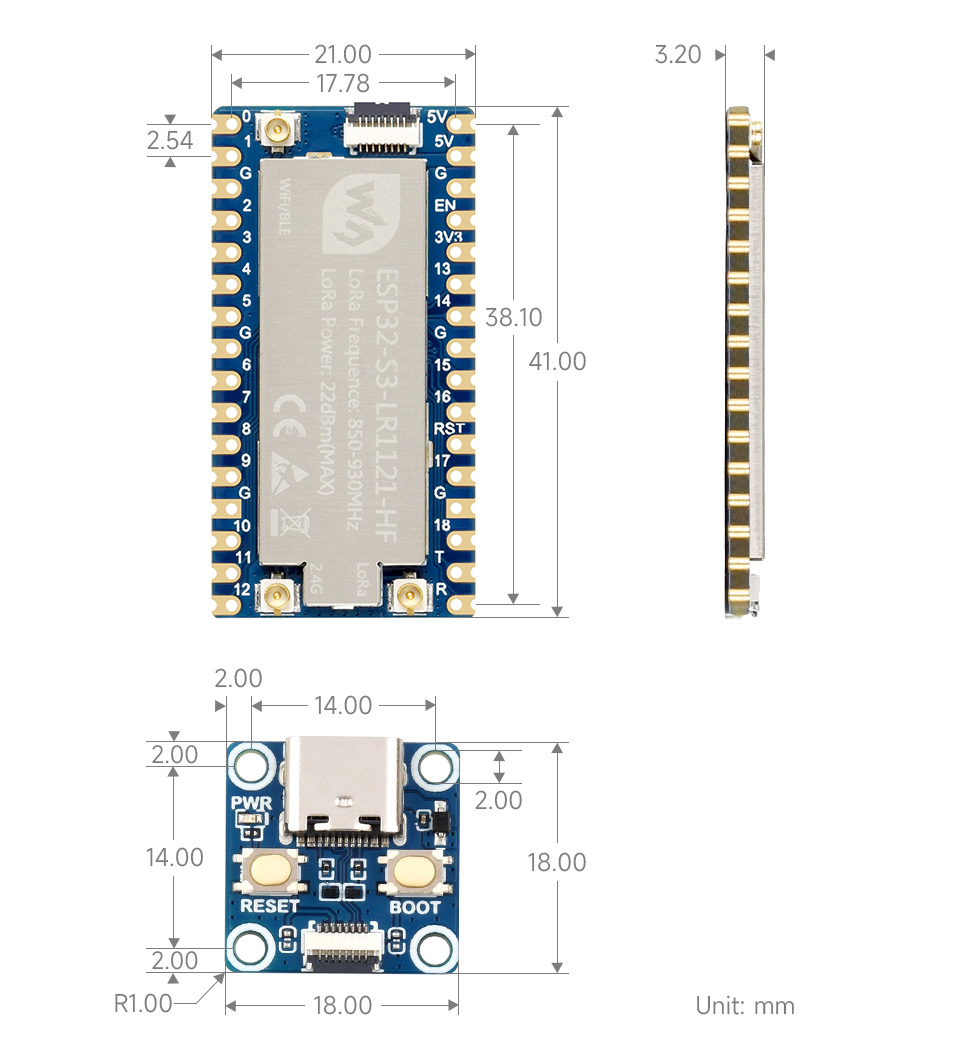
Development Methods
The ESP32-S3-LR1121-XF supports both the Arduino IDE and ESP-IDF development frameworks, offering developers flexible options. You can choose the appropriate development tool based on your project requirements and personal preferences.
Arduino generally offers a gentler learning curve and may be more approachable for beginners and hobbyists. ESP-IDF provides advanced tooling and finer control over system behavior, making it better suited to complex projects and applications with demanding performance requirements.
-
Arduino IDE is a convenient, flexible, and easy-to-use open-source electronics prototyping platform. It requires minimal foundational knowledge, allowing for rapid development after a short learning period. Arduino has a vast global community that provides a wealth of open-source code, project examples, tutorials, and rich libraries that encapsulate complex functionalities, enabling developers to implement various features quickly. You can refer to the Working with Arduino to complete the initial setup, and the tutorial also provides related demos for reference.
-
ESP-IDF (Espressif IoT Development Framework) is a professional development framework released by Espressif for its ESP series chips. It is developed based on the C language, including a compiler, debugger, and flashing tool, etc. It supports development via command line or an Integrated Development Environment (such as Visual Studio Code with the Espressif IDF plugin), which provides features like code navigation, project management, and debugging, etc. We recommend using VS Code for development. For the specific configuration process, please refer to the Working with ESP-IDF. The tutorial also provides relevant demos for reference.