ESP32-S3-Nano
- ESP32-S3-Nano
- ESP32-S3-Nano-M
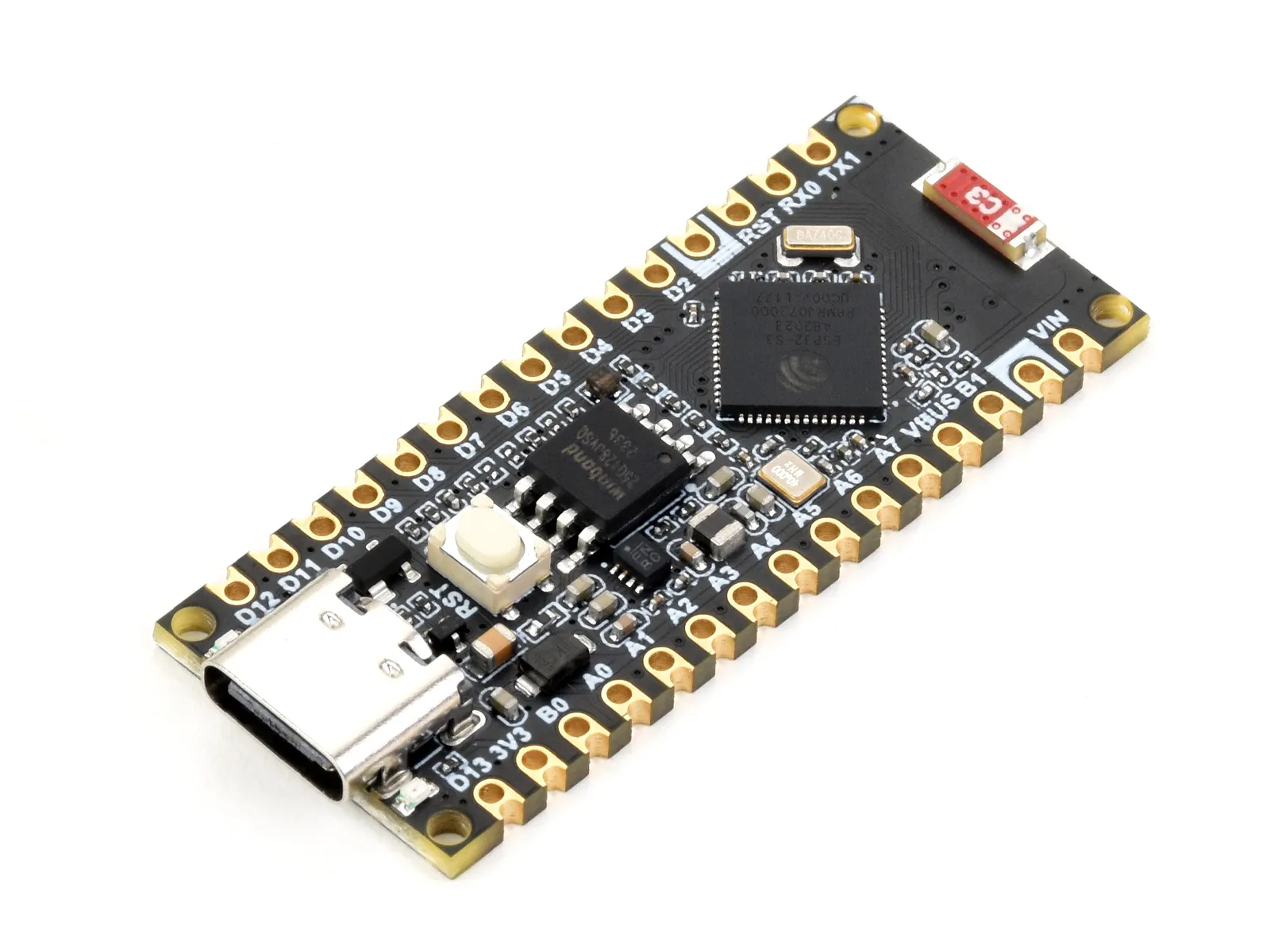
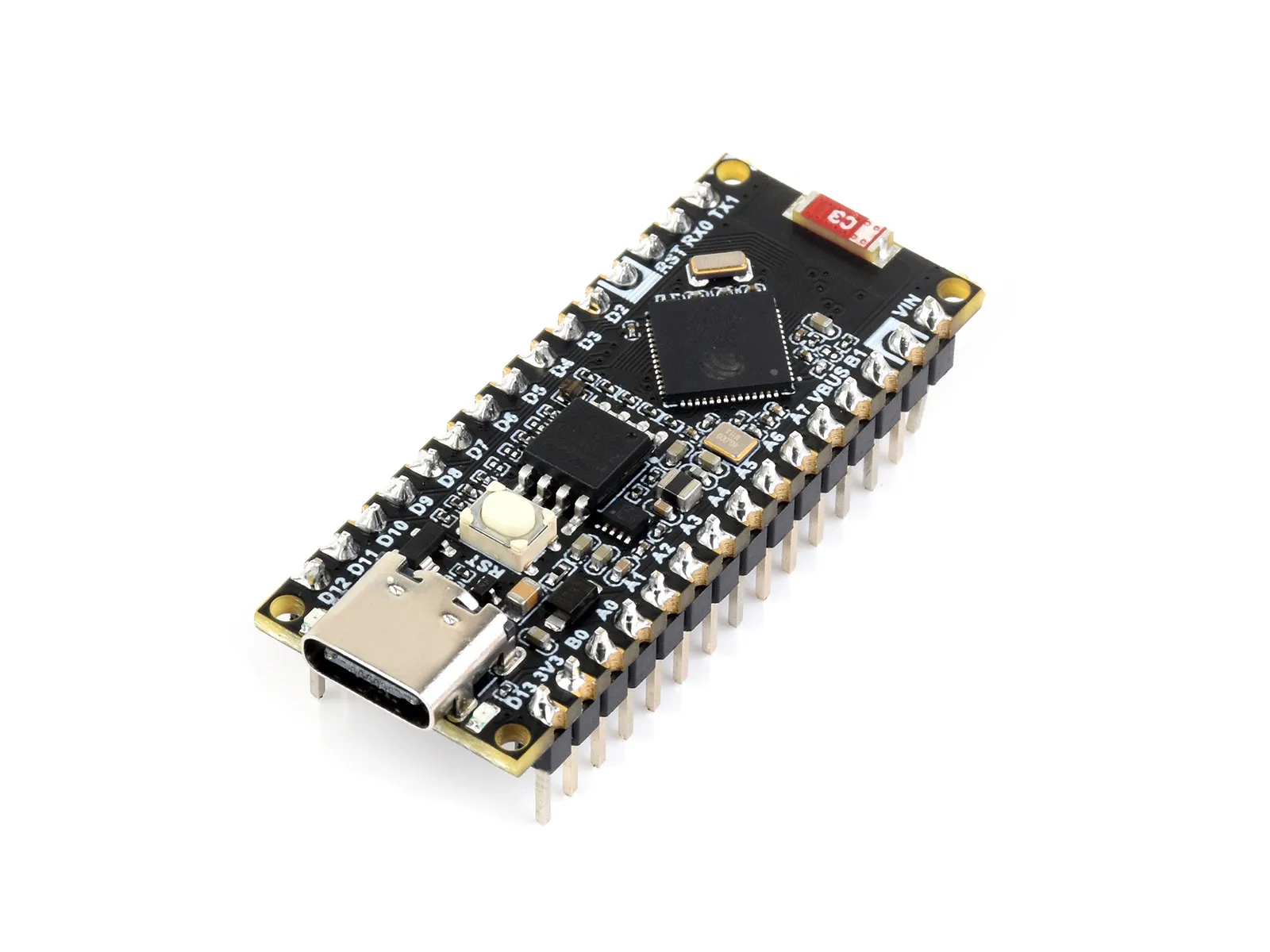
The ESP32-S3-Nano uses the ESP32-S3R8 as its main chip and is compatible with the Arduino Nano ESP32. It is suitable for applications such as IoT or MicroPython. With its compact size and powerful performance, it is ideal for embedding into standalone projects.
If you are looking for:
- Coding with AI tools: Click Ask AI and select an AI tool to ask questions about this page, or choose Copy page to copy its content and paste it into an AI tool for coding assistance.
- Schematics, datasheets, and example code: See Resources
- Arduino development: See Working with Arduino
- MicroPython development: See Working with MicroPython
- Troubleshooting: See FAQ or contact Technical Support
| SKU | Product |
|---|---|
| 26745 | ESP32-S3-Nano |
| 26752 | ESP32-S3-Nano-M |
Features
- Adopts ESP32-S3R8 as the main chip, equipped with a high-performance Xtensa® 32-bit LX7 dual-core processor, up to 240MHz
- Integrated 512kB RAM, 384kB ROM, 8MB PSRAM, 16MB Flash memory
- Integrated 2.4GHz Wi-Fi and Bluetooth LE dual-mode wireless communication with excellent RF performance
- Supports seamless switching between Arduino and MicroPython programming, offering greater flexibility
- Compatible with Arduino IoT Cloud, allowing you to monitor and control your projects from anywhere using the Arduino IoT Cloud app
- Supports HID, emulating human interface devices (such as a keyboard or mouse) via USB for more convenient interaction with a computer
Product Parameter Comparison
| Model |  |  |  |
|---|---|---|---|
| Microcontroller | Renesas R7FA4 (32-bit ARM Cortex-M4) | Renesas R7FA4 (32-bit ARM Cortex-M4); Espressif ESP32-S3FN8 (32-bit Xtensa LX7 dual-core) | Espressif ESP32-S3R8 (32-bit Xtensa LX7 dual-core) |
| Clock Speed | R7FA4: 48MHz | R7FA4: 48MHz; ESP32-S3FN8: 240MHz | ESP32-S3R8: 240MHz |
| Memory | R7FA4: 256kB Flash, 32kB RAM | R7FA4: 256kB FLASH, 32kB RAM; ESP32-S3FN8: 384kB ROM, 512kB RAM, 8MB Flash | ESP32-S3R8: 384kB ROM, 512kB RAM, 16MB Flash, 8MB PSRAM |
| Wireless Communication | None | 2.4GHz WiFi + Bluetooth LE | 2.4GHz WiFi + Bluetooth LE |
| Operating Voltage | 5V/3.3V selectable, supports more peripherals | 5V/3.3V selectable, supports more peripherals | 3.3V |
| External Supply Voltage | 6-24V | 6-24V | 6-21V |
| Reset Button | Side-mounted, easy to reset after attaching an expansion board | Side-mounted, easy to reset after attaching an expansion board | Upright |
| IO Pin Output Current | 8mA | 8mA | 40mA |
| Digital Pins | 14 | 14 | 14 |
| Analog Pins | 6 | 6 | 8 |
| DAC | 2 | 2 | None |
| PWM | 6 | 6 | 5 |
| UART | 1 | 1 | 2 |
| I2C | 1 | 1 | 1 |
| SPI | 1 | 1 | 1 |
| CAN | 1 | 1 | None |
| DC Power Jack | Low-profile DC jack, so you don't have to worry about not being able to plug in certain expansion boards | Low-profile DC jack, so you don't have to worry about not being able to plug in certain expansion boards | None |
| Power Output Interface | Configurable as 5V or 3.3V output, convenient for external power supply and common ground handling | Configurable as 5V or 3.3V output, convenient for external power supply and common ground handling | None |
| 5V Power Output | 2000mA Max, stronger driving capability, can drive larger expansion boards | 2000mA Max, stronger driving capability, can drive larger expansion boards | 1000mA Max |
| Breadboard Compatibility | Supported; users can solder the corresponding connectors to plug into a breadboard | Supported; users can solder the corresponding connectors to plug into a breadboard | Supported |
Hardware Description
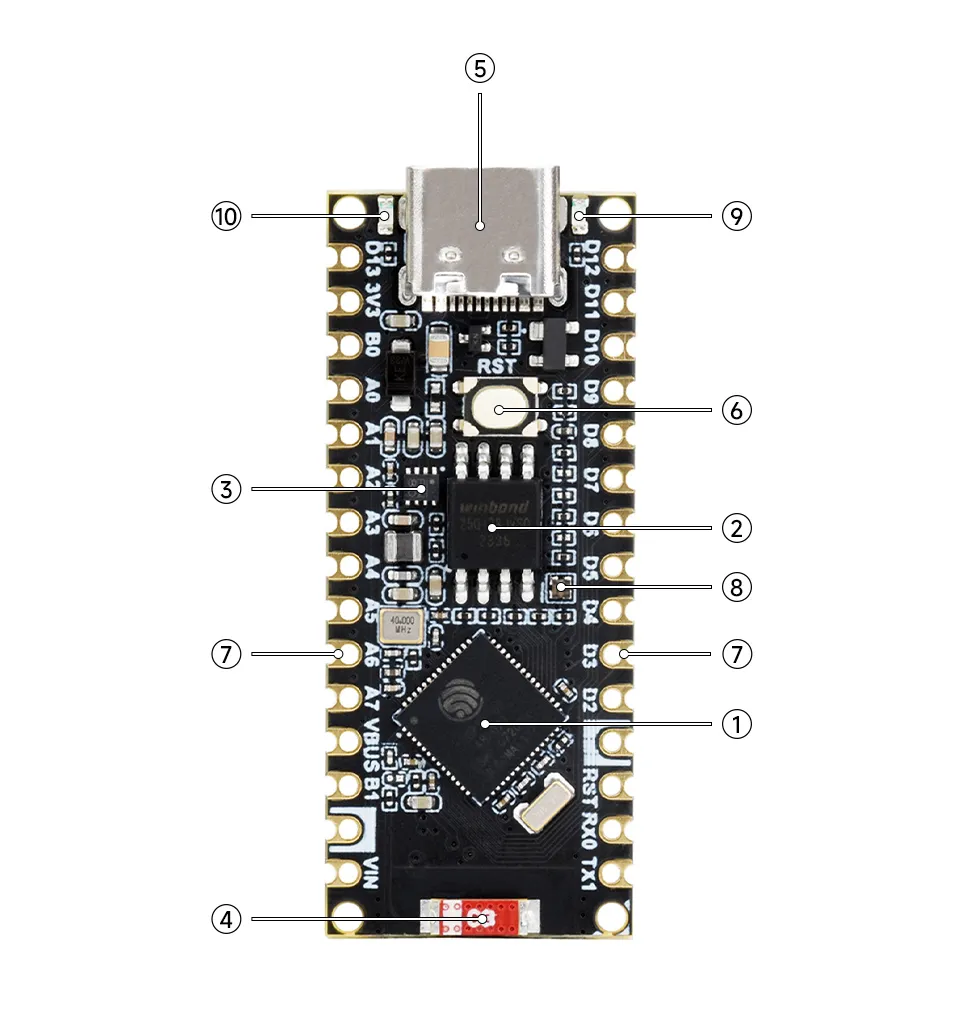
- ESP32-S3R8 dual-core processor Operating frequency up to 240MHz
- W25Q128JVSIQ 16MB Flash for storing programs and data
- MP2322GQH 3.3V voltage regulator
- 2.4GHz ceramic antenna
- USB Type-C interface For program download and serial debugging
- RST button For resetting the ESP32-S3R8
- Arduino Nano interface Compatible with the Arduino interface, with 2.54mm pitch pin header pads on the side, can be plugged directly into a breadboard
- RGB indicator On power-up or reset, the RGB LED flashes and then turns off; after normal startup, it can be controlled by user programs
- Power indicator
- LED indicator
Pin Definitions
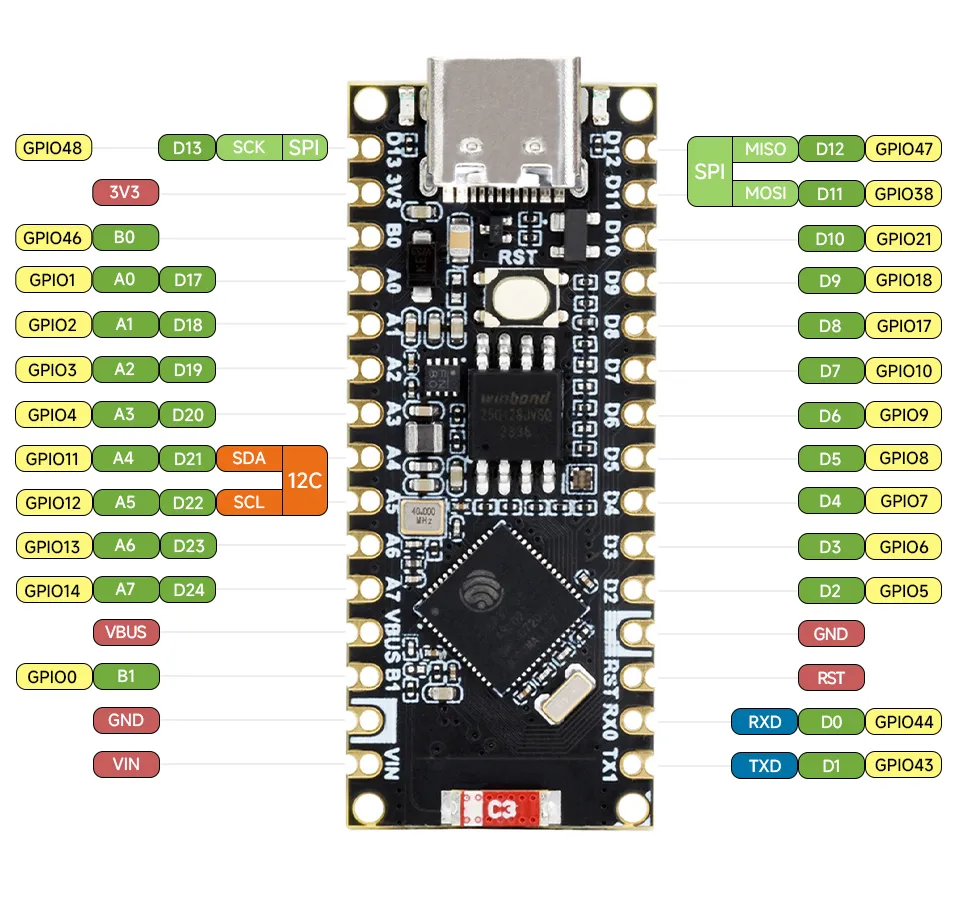
Pin Description
- D0-D13: Arduino digital input/output pin numbers
- A0-A7: Arduino analog input pin numbers
- GPIOxx: Native GPIO numbers of the ESP32-S3 chip
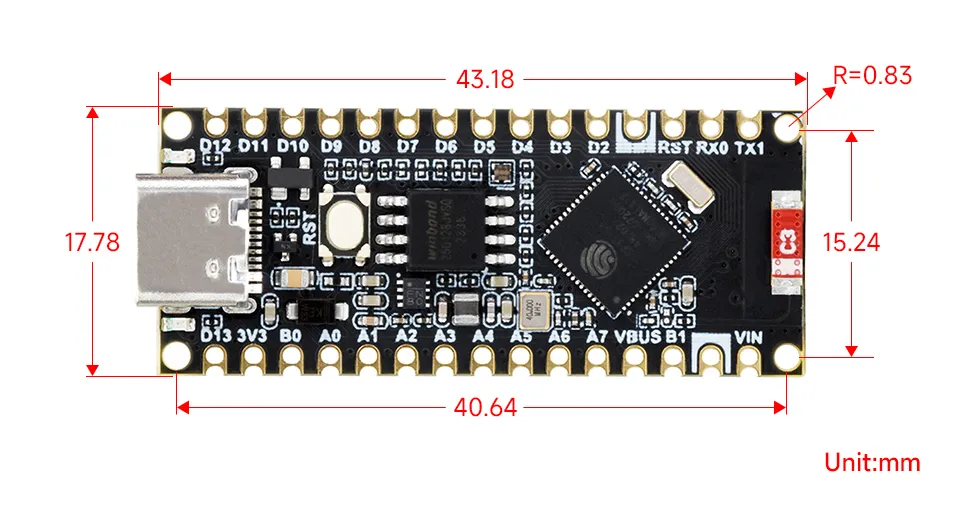
Dimensions
Development Methods
The ESP32 supports multiple development methods, allowing for professional development using the Espressif official ESP-IDF framework, or rapid prototyping using platforms like the Arduino IDE or MicroPython.
The main development platforms include:
-
Arduino: An open-source hardware and software platform that provides a standard C++ interface and supports many microcontrollers, including the ESP32. It offers a large number of libraries and example code, and is commonly used for prototyping and education. For the environment setup, please refer to Working with Arduino page.
-
MicroPython: The simplified version of Python 3 includes core features and is optimized for microcontroller environments. It supports instant execution without repeated compilation and flashing, making it suitable for developers familiar with Python to quickly get started with ESP32 development. For environment setup, please refer to the Working with MicroPython page.
-
Other Development Options: In addition to the platforms above, you can also develop using PlatformIO, Mongoose OS, Espruino (JavaScript), ESPHome, and other platforms.