ESP32-S31-Zero
- ESP32-S31-Zero (Without header)
- ESP32-S31-Zero-M (With pre-soldered header)
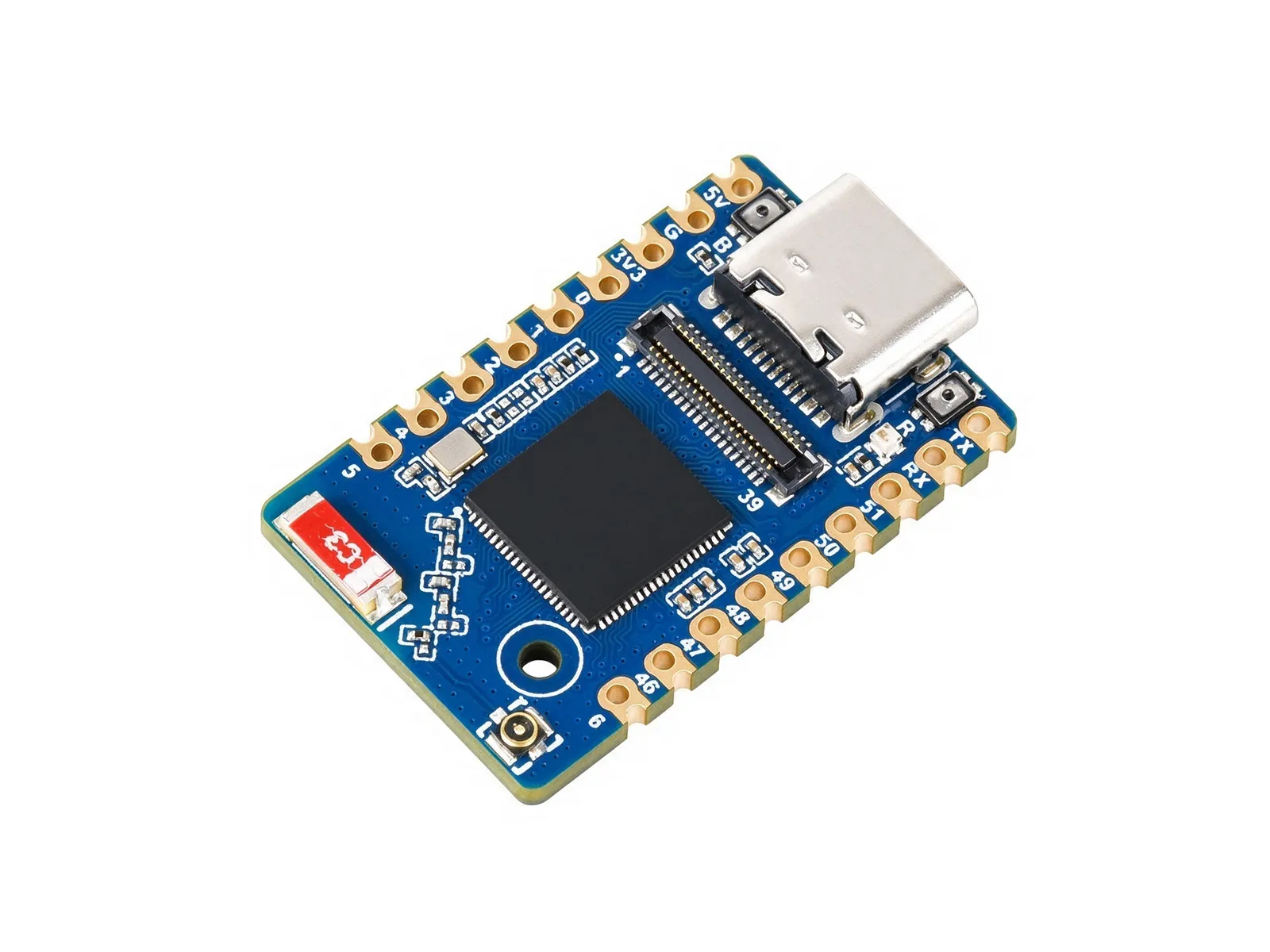
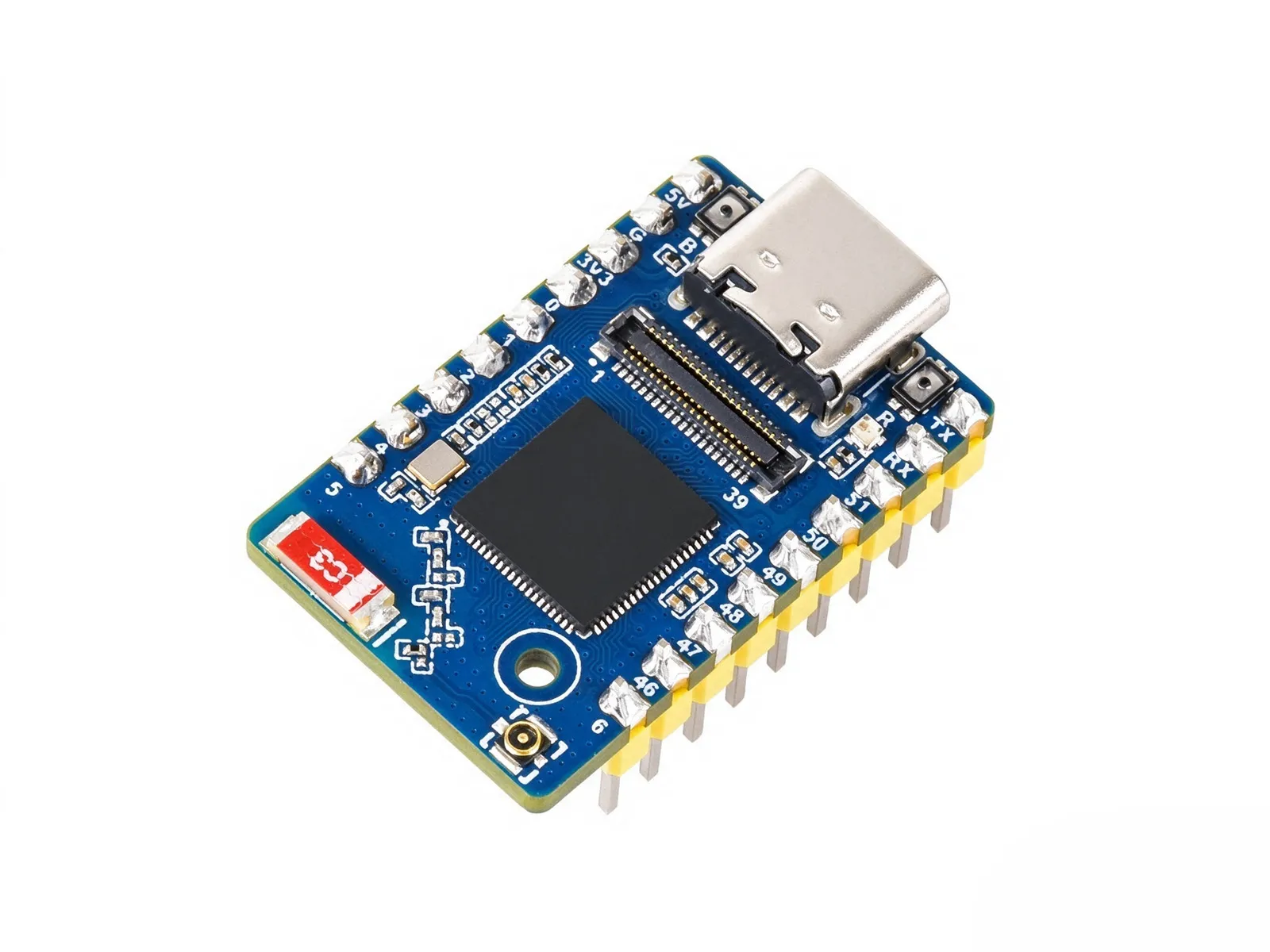
ESP32-S31-Zero is a compact wireless development board based on the ESP32-S31, available in both SMD and pin header versions, and can be used for embedded application development and prototyping. The main controller uses a 32-bit RISC-V dual-core processor with a clock speed of up to 320 MHz and built-in 512 KB SRAM. The chip integrates 2.4 GHz Wi-Fi 6, Bluetooth 5.4 (LE), Classic Bluetooth (BR/EDR), and IEEE 802.15.4, supports Thread and Zigbee protocols, and can be used for developing various wireless connectivity applications.
The development board features an onboard USB Type-C interface for program download and console communication via USB Serial/JTAG; it is equipped with a WS2812B-1010 RGB LED, BOOT and RESET buttons for observing program status, entering download mode, and resetting. It uses a castellated hole design, exposing 15 GPIOs, and exposes expansion signals such as RGB LCD, touch, and SD through a 40 Pin connector. The antenna configuration is either an onboard 2.4 GHz SMD antenna or an IPEX-4 external antenna connector, depending on the selected version.
It comes with 12 ESP-IDF examples covering GPIO control, RGB LED, button input, UART, I2C, Wi-Fi, BLE, and peripheral tests such as display, touch, and SD card, and can serve as a development reference for wireless networking, peripheral control, and interactive terminal prototypes. For the development environment, external device requirements, and usage limitations, see ESP32-S31-Zero ESP-IDF Development.
If you are looking for:
- Coding with AI tools: Click Ask AI and select an AI tool to ask questions about this page, or choose Copy page to copy its content and paste it into an AI tool for coding assistance.
- Schematics, datasheets, and example code: See Resources
- ESP-IDF development: See Working with ESP-IDF
- Downloading firmware or restoring download mode: See ESP32-S31-Zero Firmware Flashing.
- Troubleshooting: See Product FAQ
| SKU | Product |
|---|---|
| 35879 | ESP32-S31-Zero-N16R16 |
| 36165 | ESP32-S31-Zero-N16R16-M |
| 35880 | ESP32-S31-Zero-N32R16 |
| 36166 | ESP32-S31-Zero-N32R16-M |
| 35121 | ESP32-S31-Zero-N16R32 |
| 36167 | ESP32-S31-Zero-N16R32-M |
| 35763 | ESP32-S31-Zero-N32R32 |
| 36168 | ESP32-S31-Zero-N32R32-M |
Product Features
- The ESP32-S31 chip uses a 32-bit RISC-V dual-core processor with a clock speed of up to 320 MHz and built-in 512 KB SRAM.
- The chip integrates 2.4 GHz Wi-Fi 6, Bluetooth 5.4 (LE), Classic Bluetooth (BR/EDR), and IEEE 802.15.4, supporting Thread and Zigbee protocols; the current accompanying examples include Wi-Fi and BLE applications.
- The chip has 6 SPI interfaces, of which 2 are dedicated to PSRAM, 2 are dedicated to Flash, and 2 are general-purpose SPI, and also provides 1 low-power LP SPI.
- The chip has 2 I2C, 4 UART, 2 I2S, 2 12-bit SAR ADCs (up to 16 channels), and 2 DACs, and also provides 1 low-power LP I2C and LP UART each.
- Provides four storage combinations of 16 MB or 32 MB Flash and 16 MB or 32 MB PSRAM, corresponding to the N16R16, N32R16, N16R32, and N32R32 series respectively.
- Uses a castellated hole design, exposing 15 GPIOs, and can be soldered and integrated into a custom baseboard; a pre-soldered pin header version is also available.
- Equipped with either an onboard 2.4 GHz SMD antenna or an IPEX-4 external antenna connector, depending on the selected version.
- Integrates a 40 Pin expansion connector, which can connect RGB LCD, touchscreen, and SD card expansion devices.
- The USB Type-C interface connects to the chip's USB Serial/JTAG and can be used for program download and console communication.
- Onboard WS2812B-1010 RGB LED, as well as BOOT and RESET buttons.
- Comes with 12 ESP-IDF examples covering GPIO, RGB LED, button, UART, I2C, Wi-Fi, BLE, and peripheral tests such as display, touch, and SD card.
The peripheral counts are based on the pre-release version v0.5 of the ESP32-S31 Chip Datasheet and represent chip-level resources; the specific available signals depend on the board's exposed pins, pin multiplexing, and SDK support.
The accompanying examples use ESP-IDF v6.1. ESP32-S31 is a preview target and requires the --preview parameter. For version selection, environment setup, and build and flashing steps, see ESP32-S31-Zero ESP-IDF Development.
Resource Overview
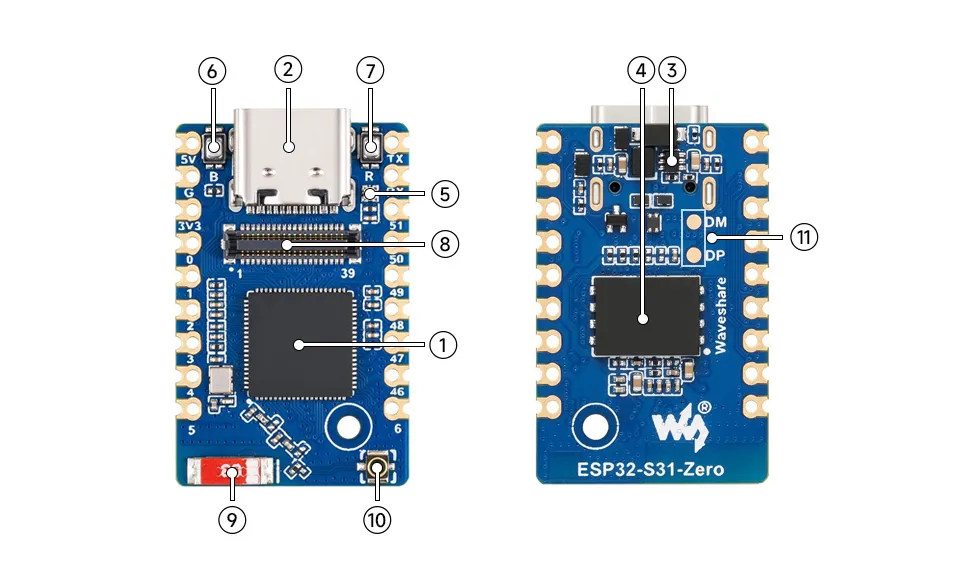
- ESP32-S31 Dual-Core Processor: Operating frequency up to 320 MHz.
- USB Type-C Interface: For power supply, program download, and debugging.
- MP1605GTF-Z DC-DC: Provides 3.3 V power.
- Flash Chip: Stores programs and data.
- WS2812 (LED): Programmable RGB indicator light.
- BOOT Button: Works with the reset button to enter download mode.
- RESET Button: Resets and restarts the development board.
- 40 Pin Board-to-Board Expansion Connector: For expanding RGB LCD, touchscreen, and SD card.
- SMD Antenna: For 2.4 GHz wireless communication; fitted only on the SMD antenna version.
- IPEX-4 Antenna Connector: Connects an external 2.4 GHz antenna; fitted only on the external antenna connector version.
- USB Host Solder Pads: Exposes the USB D+ and D− signals.
Pinout
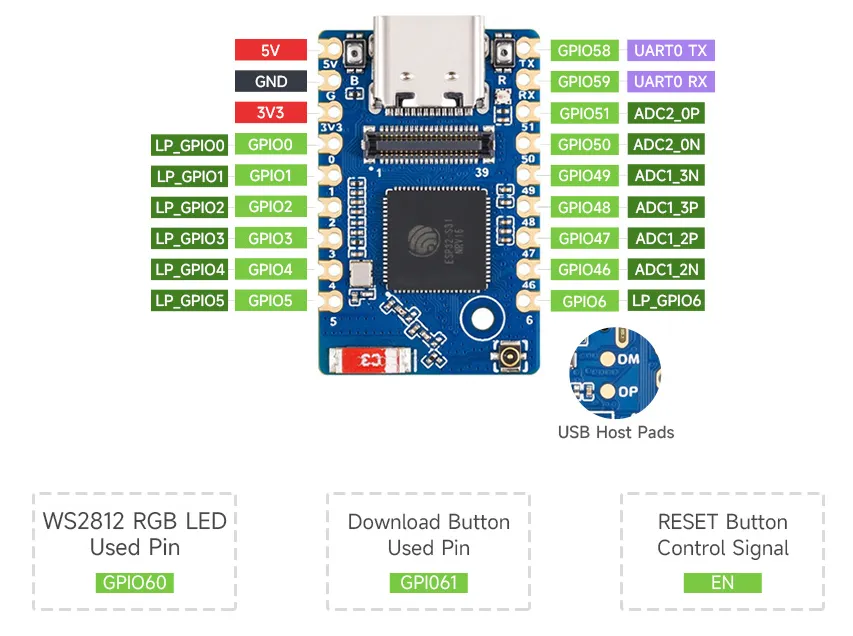
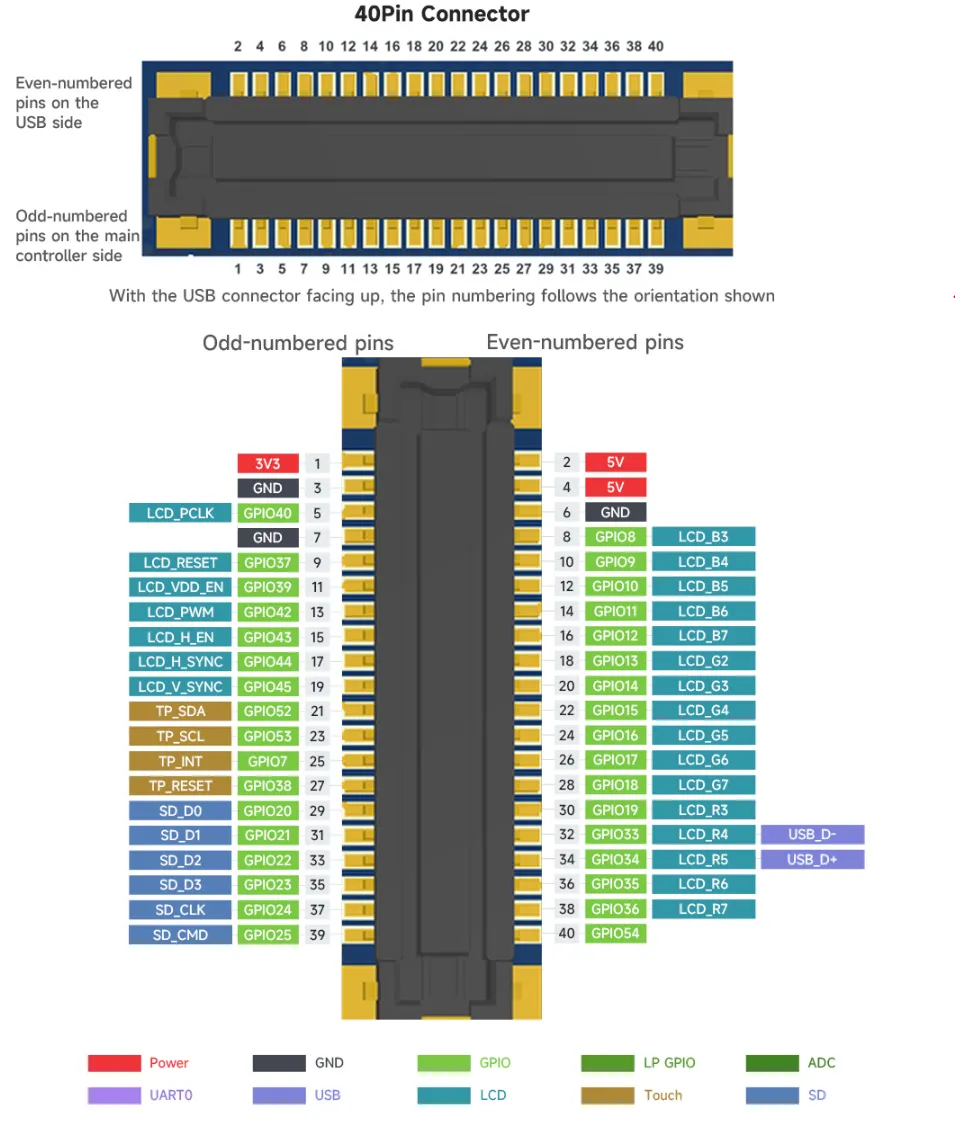
Antenna Versions
The development board uses either an onboard SMD antenna or an IPEX-4 external antenna connector, depending on the selected version. Keep the antenna area clear on the SMD antenna version; connect a suitable 2.4 GHz external antenna to the IPEX-4 version.
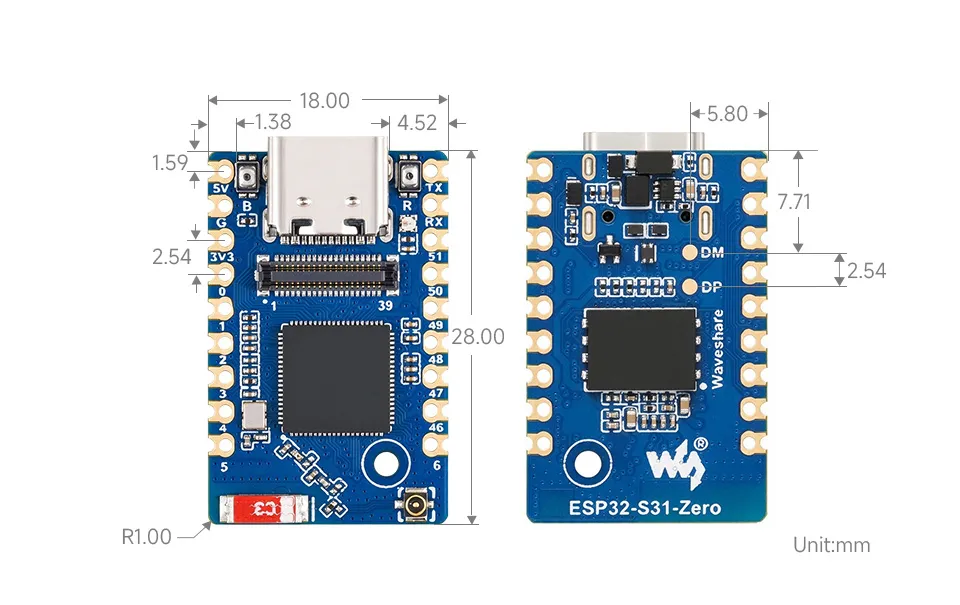
Product Dimensions
Development Approaches
- ESP-IDF: Espressif's official development framework, designed specifically for ESP32 series chips, providing a development toolchain, code libraries, and documentation, suitable for professional development and commercial mass-production projects.