ESP32-S3-Pico
- ESP32-S3-Pico (Standard Version)
- ESP32-S3-Pico-M (Header Version)
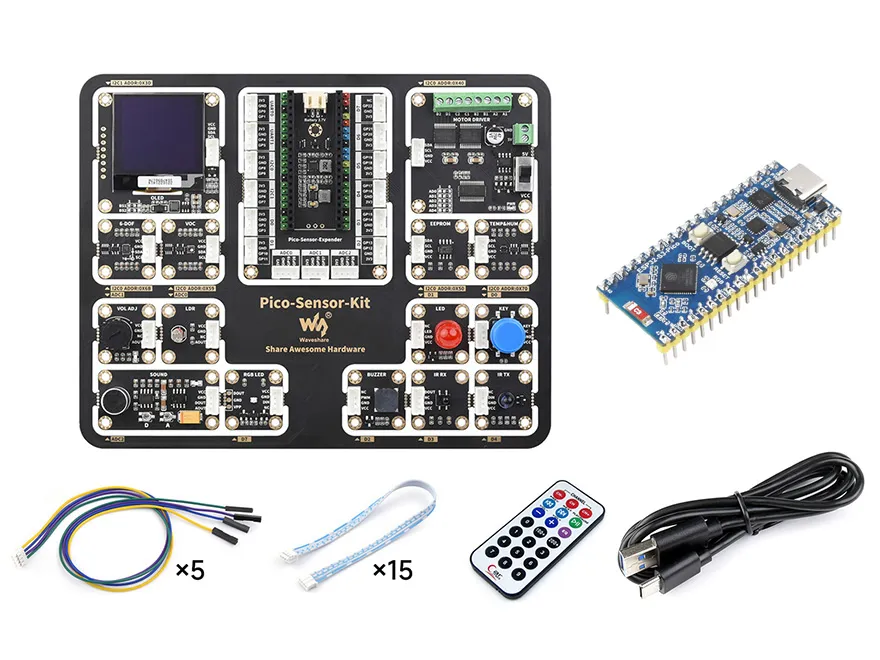
- ESP32-S3-Pico-Sensor-Kit-B (Basic Kit)
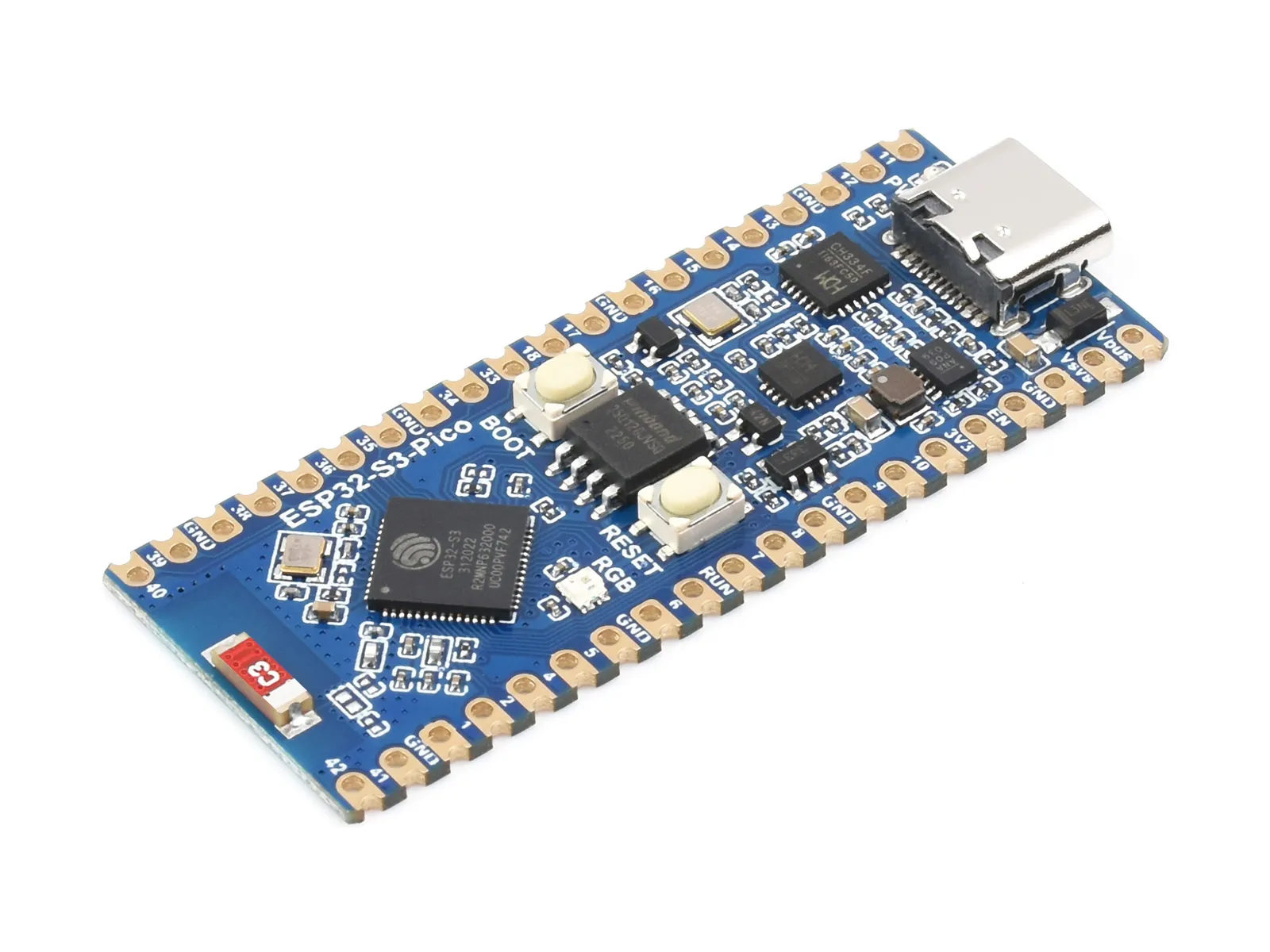
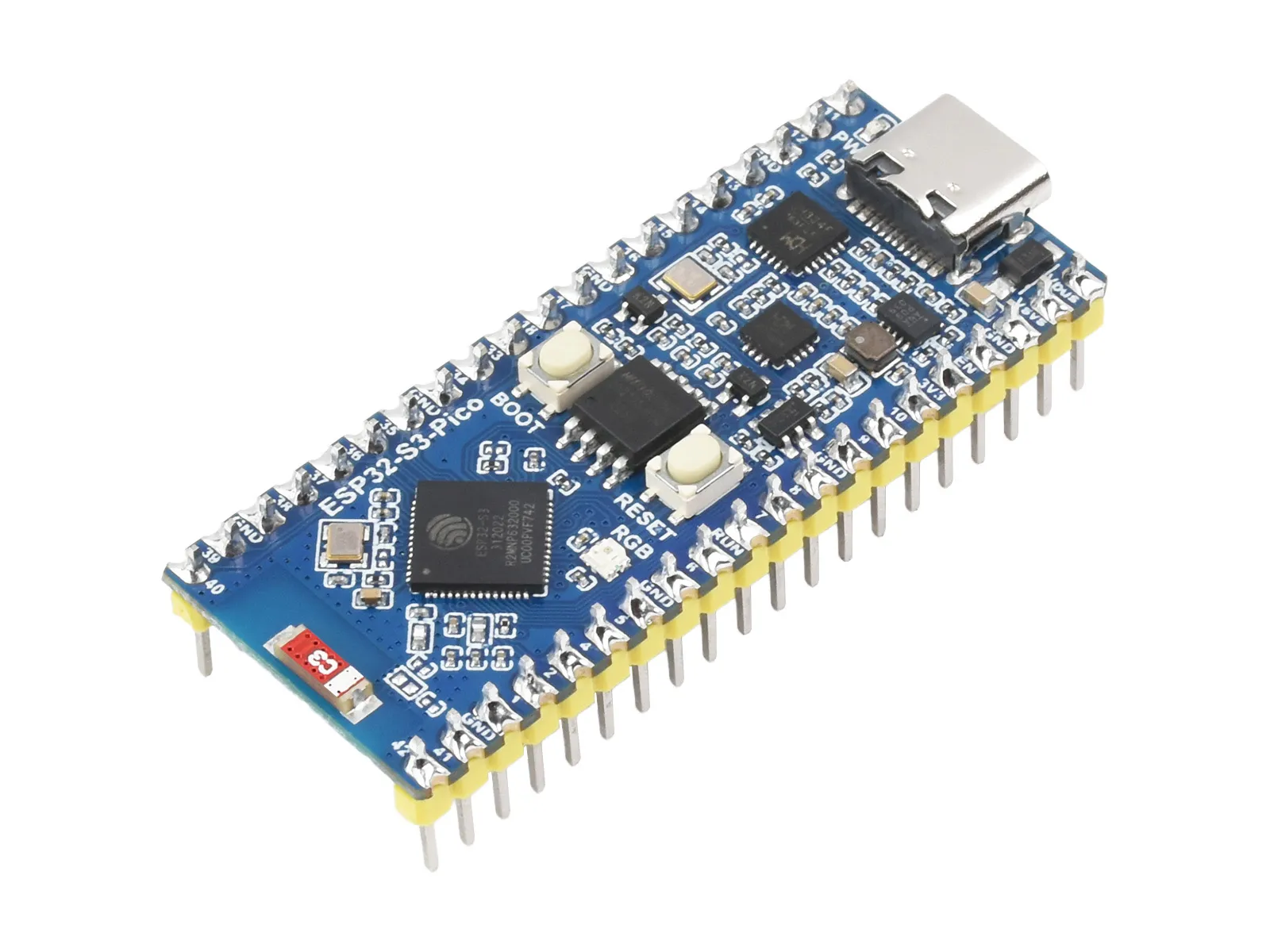
The ESP32-S3-Pico (Standard Version) and ESP32-S3-Pico-M (Header Version) are compact microcontroller development boards featuring a castellated design and equipped with a variety of digital interfaces. In terms of hardware, they adopt ESP32-S3R2 as the main chip, which is equipped with a dual-core Xtensa 32-bit LX7 processor with 240MHz running frequency, with built-in 512 KB SRAM (TCM) and 2MB PSRAM; Onboard CH343 and CH334 chips for USB and UART development via USB-C port; Onboard MP28164 high efficiency DC-DC buck-boost chip with load current up to 2A, ensuring the safety of the product. As for the software, you can choose ESP-IDF, Arduino, MicroPython, or other development environments so that you can easily and quickly get started and apply it to the product.
ESP32-S3-Pico-Sensor-Kit-B (Basic Kit) includes the ESP32-S3-Pico-M (Header Version) and Pico-Sensor-Kit-B Kit, which contains 15 common modules such as LEDs, buttons, buzzers, etc., ready to use out of the box or separately. It provides the core hardware needed to learn the Waveshare Arduino Getting Started Tutorial and the Waveshare MicroPython Getting Started Tutorial, making it suitable for quickly getting started with Arduino, MicroPython, and ESP-IDF programming.
| SKU | Product |
|---|---|
| 23803 | ESP32-S3-Pico |
| 24023 | ESP32-S3-Pico-M |
| 24319 | ESP32-S3-Pico-Sensor-Kit-B |
Features
- Adopts ESP32-S3R2 as the main chip, featuring a dual-core Xtensa 32-bit LX7 processor with a clock frequency up to 240MHz
- Integrated 512KB SRAM, 384KB ROM, 2MB PSRAM, and 16MB Flash memory
- Integrated 2.4GHz Wi-Fi and Bluetooth LE dual-mode wireless communication with excellent RF performance
- USB Type-C interface, eliminating concerns about plug orientation
- Onboard CH343 and CH334 chips, meeting USB and UART development needs through a single Type-C port
- Onboard DC-DC chip MP28164, a high-efficiency buck-boost converter capable of handling load currents up to 2A
- Up to 27 multifunctional GPIO pins exposed
- Rich peripheral interfaces, including Full-Speed USB OTG, SPI, I2C, UART, ADC, PWM, as well as DVP (8-bit ~ 16-bit camera interface) and LCD interface (8-bit ~ 16-bit parallel RGB, I8080, MOTO6800), enabling flexible implementation of various functions
- Castellated module design allows direct soldering and integration onto user-designed carrier boards
- Supports multiple low-power operating states, balancing communication distance, data rate, and power consumption to meet the power needs of various application scenarios
- Compatible with the Raspberry Pi Pico expansion board ecosystem, suitable for AIoT application development
Hardware Description
- When using the ESP32-S3-Pico with a carrier board, ensure the ceramic antenna area remains clear; avoid covering it with PCB material, metal, or plastic components.
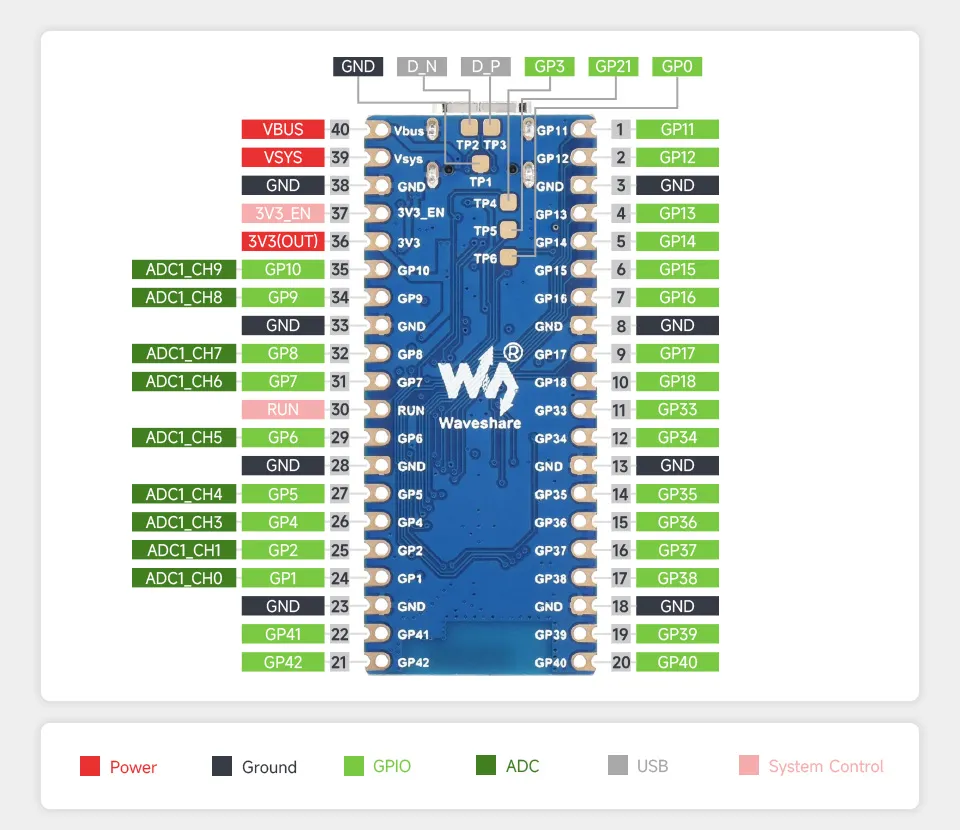
- On the ESP32-S3-Pico, GPIO33 to GPIO37 pins are used for the Octal PSRAM.
- The ESP32-S3-Pico uses GPIO21 to connect to the WS2812 RGB LED. Please refer to the WS2812 datasheet via this link.
- When using the USB port to download firmware onto the ESP32-S3-Pico, hold down the BOOT (GPIO0) button before connecting the Type-C cable. This step is not required when using UART.
Hardware Connection
- When powered by an external power supply, input 3.7V to 6V power at the castellated location marked with the 5V silkscreen.
Dimensions
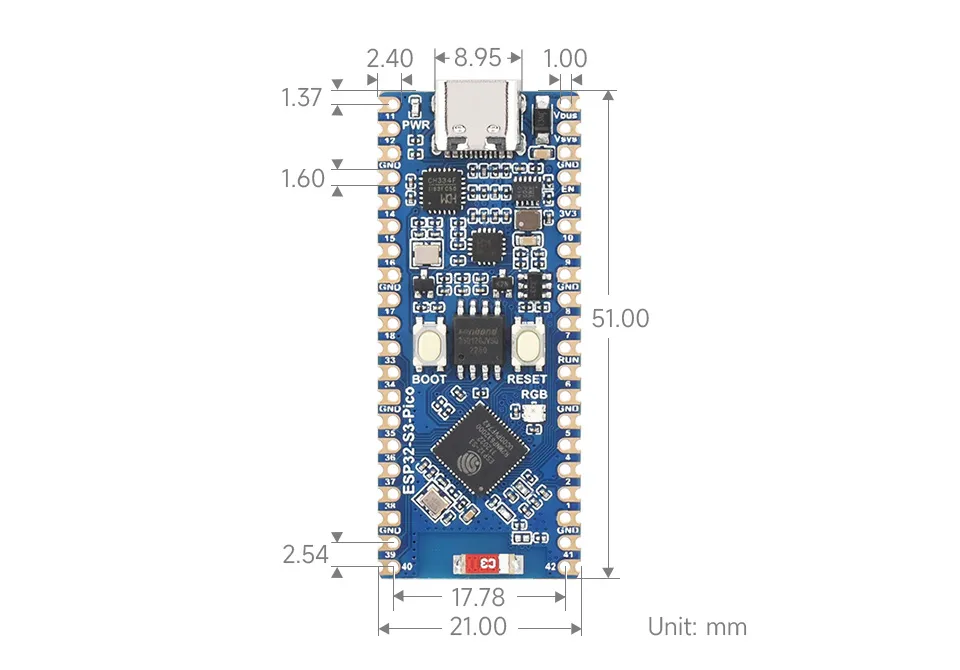
Pinout Definition
Resource Interface
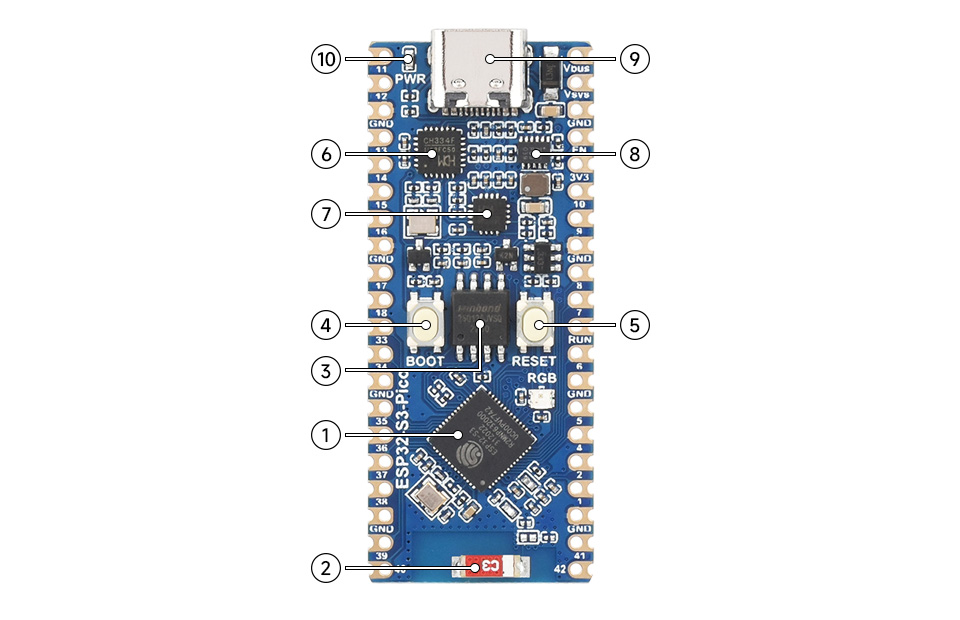
- ESP32-S3R2: Xtensa 32-bit LX7 dual-core processor, with onboard 2MB PSRAM
- 2.4G monopole ceramic antenna
- W25Q128JVSIQ: 16MB Flash memory
- BOOT button: Press it when resetting to enter download mode
- RESET button
- CH334F: USB HUB controller
- CH343P: USB to UART chip
- MP28164: High efficiency DC-DC buck-boost chip
- USB Type-C port
- Power indicator
Development Methods
The ESP32 supports multiple development methods, allowing for professional development using the Espressif official ESP-IDF framework, or rapid prototyping using platforms like the Arduino IDE or MicroPython.
The main development platforms include:
-
ESP-IDF: Espressif's official development framework, specifically built for the ESP32 series chips, providing a complete development toolchain, code libraries, and documentation. It can fully leverage all the performance and features of ESP32 and is the preferred solution for professional development and commercial products.
-
Arduino: A well-known open-source hardware/software platform offering a simple and standard C++ interface, supporting numerous microcontrollers including ESP32. Arduino has rich libraries and demos, widely used in prototyping and education, and is a popular entry-level platform for beginners. For the development environment configuration, please refer to Arduino Development page.
-
MicroPython: The simplified version of Python 3 includes core features and is optimized for microcontroller environments. It supports instant execution without repeated compilation and flashing. It provides an efficient way for developers familiar with Python to get started with ESP32 quickly. For development environment setup, please refer to the Working with MicroPython page.
-
Other Development Methods: The ESP32 development ecosystem is very rich. Besides the aforementioned platforms, development is also supported via platforms like PlatformIO, Mongoose OS, Espruino (JavaScript), ESPHome, etc., catering to the needs of developers with different technical backgrounds.